
Last updated November 2, 2026
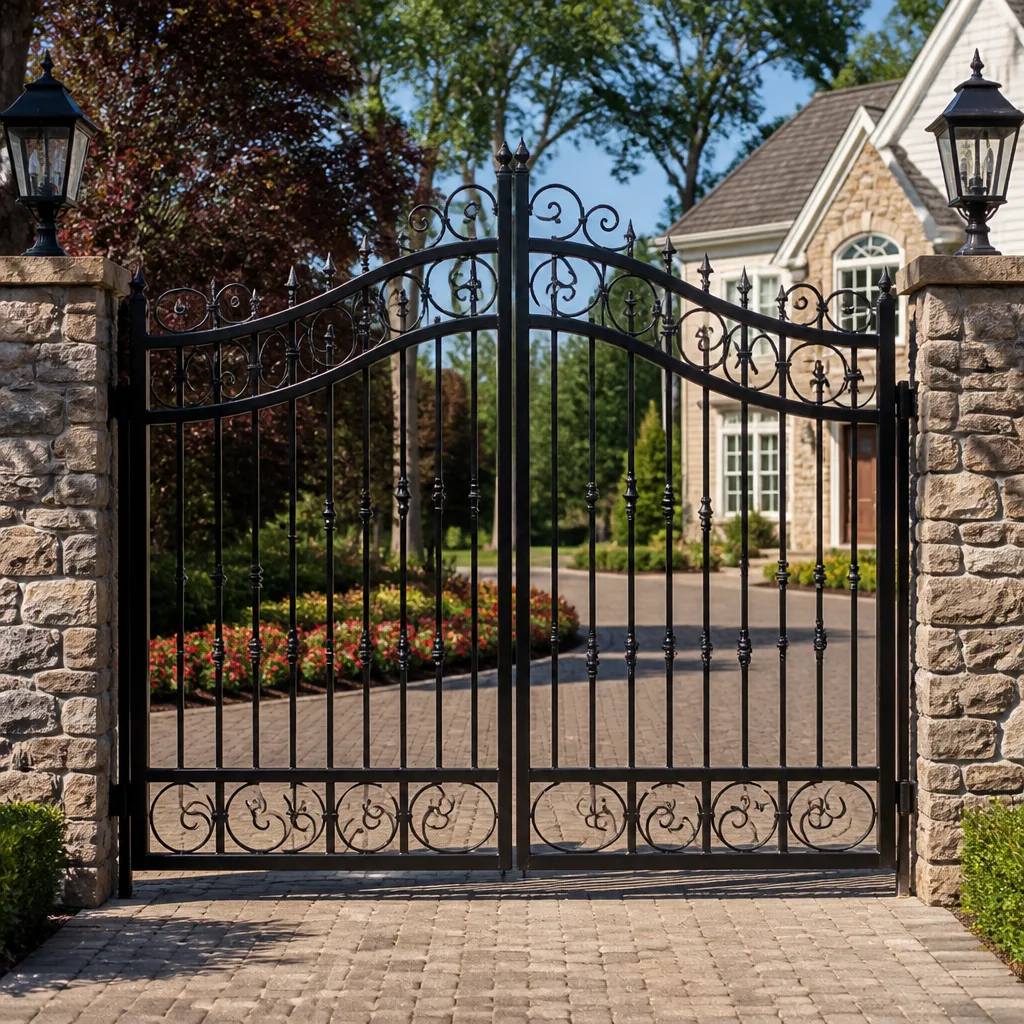 Wrought iron
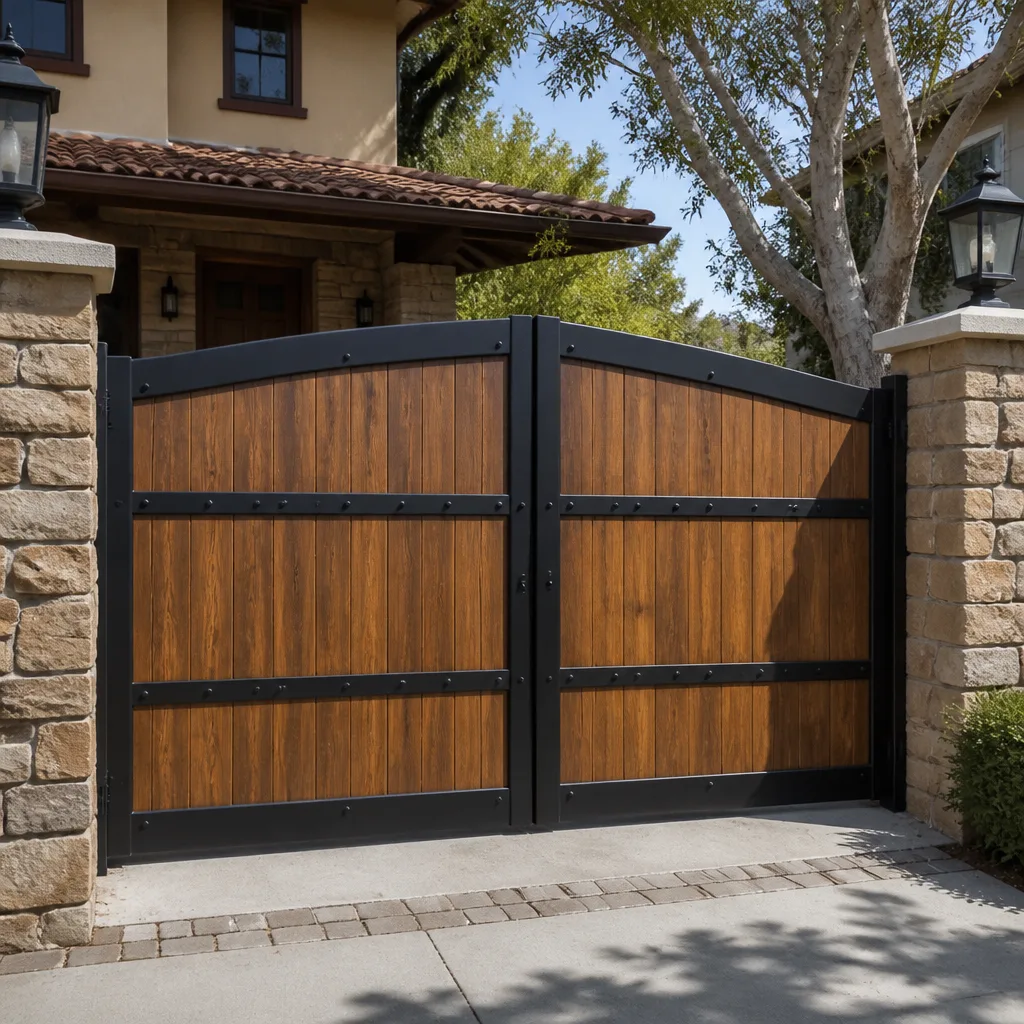 Wood & steel frame
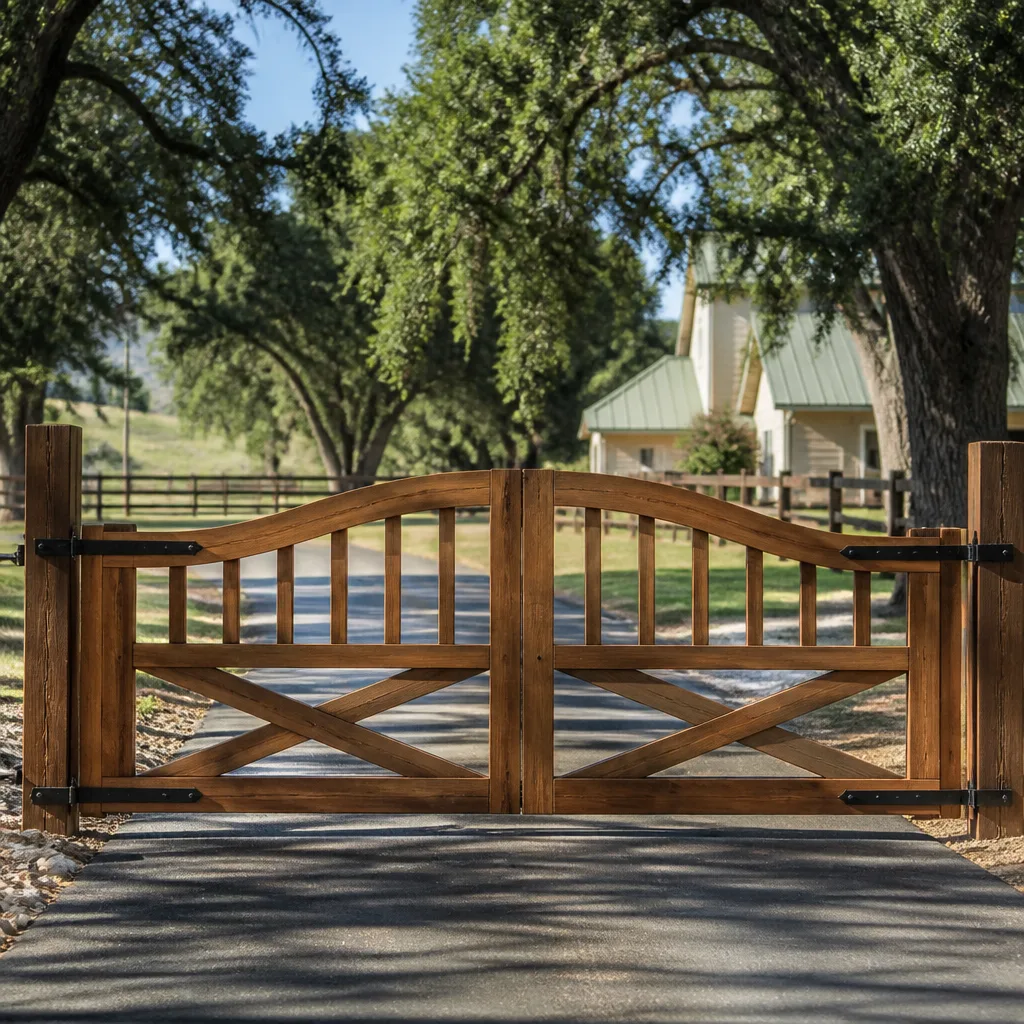 Farm & ranch
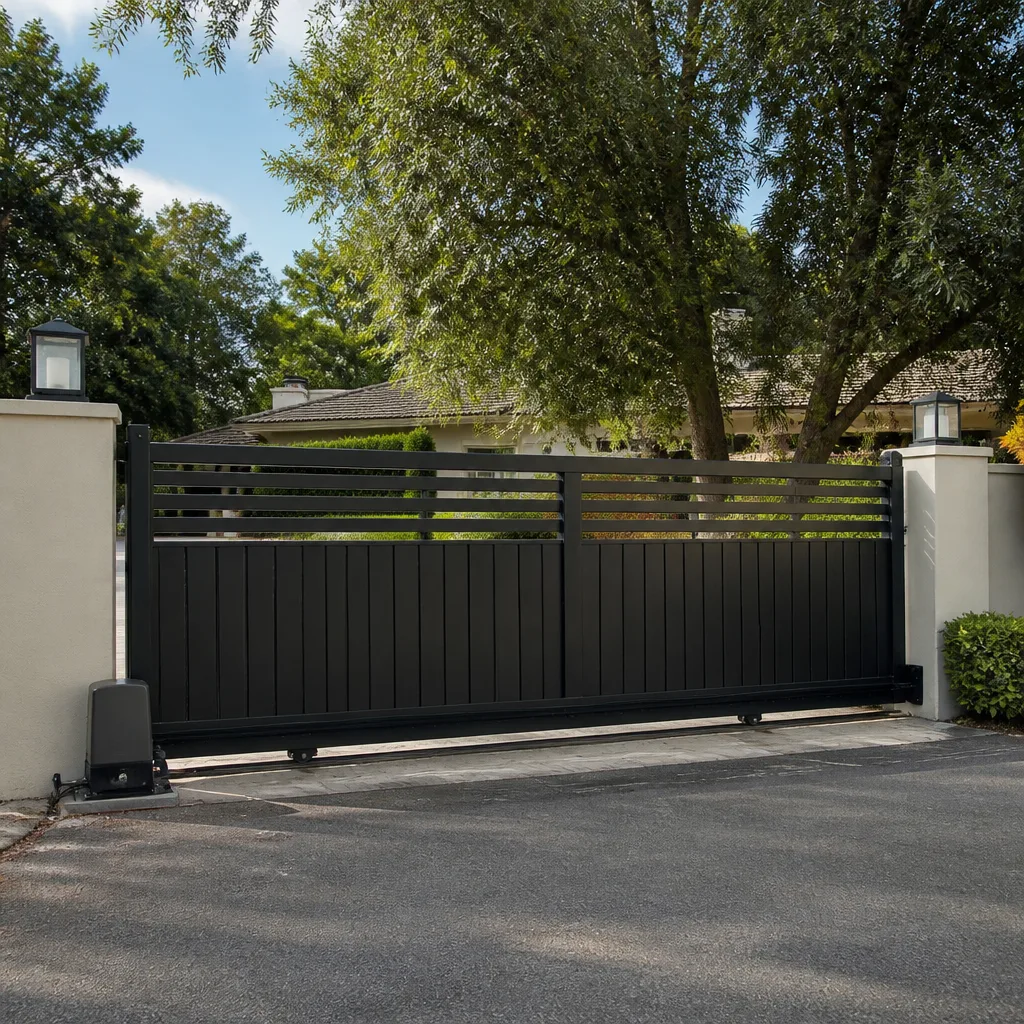 Sliding driveway gates
 LiftMaster operators
Free on-site gate assessment - hinges, posts, and your LiftMaster or Nice gate operator checked before anything is quoted
The assessment is free and the quote is the invoice.
Get your free estimateDIY vs Professional Gate Repair: The East Los Angeles Homeowner’s Decision Guide
A gate operator’s limit switch adjustment looks like a ten-minute job on YouTube. Turn one screw, the gate closes fully, done. But on a UL 325-compliant automated system, that same screw also governs where the entrapment protection sensors read resistance. Set the close limit too far and the gate presses into the post before reversing – which means you just disabled the safety mechanism that prevents a 400-pound gate from crushing a child against a fence. In East Los Angeles, where driveway gates on Whittier Boulevard and City Terrace hold back both cars and curious neighborhood kids, this is not a theoretical risk. This guide draws the line between what a homeowner can safely handle and what belongs in the hands of a Gate Repair services specialist, task by task, so you know exactly where you stand before you pick up a screwdriver.
Quick Answer
Whether you can fix your own gate in East Los Angeles depends almost entirely on where the failure lives. If the problem is mechanical and low-risk – a dead remote battery, a tripped manual release, dry hinges, a misaligned photo eye you can physically see – most homeowners can resolve it in under an hour without touching anything dangerous. If the problem involves the operator motor, control board, wiring, limit switches, or any entrapment protection component, California code and basic physics say call a professional. The 80/20 rule applies: roughly 20% of gate failures are true DIY territory, and the other 80% will cost you more in time, parts, and risk than a specialist’s service call ever would.
Styles & brands we work with
- Wrought iron
- Wood & steel frame
- Farm & ranch
- Sliding driveway gates
- LiftMaster operators
Table of Contents
- The 80/20 Rule: Where Your Gate Failure Actually Lives
- Safe DIY Tasks: The 4 Things Any East LA Homeowner Can Do
- California Law and Your Gate: What a C-61/D28 Contractor Handles
- The Manual Release: The One Skill You Need Before the Next Power Outage
- The Hidden Cost of DIY on Automated Systems
- Why Brand-Specific Knowledge Changes the Math
- When Calling a Specialist Costs Less Than Doing It Yourself
- Common Mistakes to Avoid
The 80/20 Rule: Where Your Gate Failure Actually Lives
We’ve been called to hundreds of gates across East Los Angeles, from the iron driveway gates in Boyle Heights to the automated pedestrian gates at apartment buildings near Mariachi Plaza. And here’s what most homeowners don’t realize until they’re standing in their driveway with the gate stuck half-open: the symptom you see almost never matches the component that failed. A gate that won’t open might be a dead battery in the remote, or it might be a failing capacitor on a LiftMaster control board. A gate that reverses mid-cycle might be dirty photo eyes, or it might be a wearing limit switch that’s about to burn out the motor.
The 80/20 rule is simple. About 80% of gate failures involve the automated system – the operator, the control board, the sensors, the wiring, the safety edges. That’s the 80% you should not touch. The other 20% is mechanical and low-voltage work that any careful homeowner can handle with a screwdriver and a can of lubricant. The skill isn’t in knowing how to turn a wrench. It’s in knowing which of those two categories your problem falls into before you start taking things apart.
Here’s the diagnostic shortcut we use on every call:
- Does the gate respond at all? If the operator hums or clicks but the gate doesn’t move, you have a mechanical bind or a capacitor/motor issue – professional territory. If nothing at all happens, check the remote battery and the breaker first.
- Does it move but behave erratically? Reversing mid-cycle, stopping short, creeping – these point to limit switches, safety sensors, or the control board. All three carry entrapment protection implications. Stop and call a gate specialist.
- Is the issue visible and mechanical? A sagging hinge, a dry roller track, a dead remote battery, a gate that’s stuck because a branch fell on the track – these are visible, mechanical, and safe to address yourself.
- Is there power to the operator? A tripped GFCI or a thrown breaker is a homeowner fix. Anything downstream of the breaker – the transformer, the control board, the motor wiring – is not.
East Los Angeles has a particular quirk that matters here: many homes in the older neighborhoods of City Terrace, El Sereno, and unincorporated East LA were built in the 1920s through 1960s, and a lot of the electrical panels date from that era. Undersized circuits, ungrounded outlets, and weathered conduit are common. When an automated gate system keeps tripping a breaker, the problem is sometimes the gate and sometimes the house. Diagnosing which takes a multimeter and a willingness to open a panel – which is precisely where the DIY line gets drawn for most people.
Safe DIY Tasks: The 4 Things Any East LA Homeowner Can Do
Let’s be direct about what’s actually in your lane. These four tasks are legal for a homeowner to perform in California, carry negligible injury risk when done correctly, and require no specialized tools. If your gate problem falls into one of these buckets, you don’t need us – go handle it and save the service call, or browse our more guides & resources for other maintenance tips.
1. Remote Battery Replacement
This is the most common “broken gate” call we get that isn’t a broken gate at all. The remote clicks, the gate ignores you, and the assumption is a dead operator. Before you do anything else, replace the battery in every remote and keypad. A CR2032 or A23 battery costs a few dollars and takes ninety seconds. If the gate still doesn’t respond after new batteries in all remotes, you’ve got a receiver or control board issue, and that’s when you call.
2. Remote Programming
Reprogramming a remote to a LiftMaster, DoorKing, or Mighty Mule operator is straightforward on most residential systems, and the manufacturer’s manual walks you through it. The key is following the sequence exactly – these systems use timed button presses, not intuitive menus. If you’ve lost the manual, most manufacturers post PDFs online by model number. Ten minutes of patience usually solves it. If the operator won’t enter programming mode no matter what you do, stop. The issue is now the receiver or the board, not the remote.
3. Manual Release Operation
Every automated gate has a manual release mechanism, and knowing how to use it is basic homeowner literacy in East Los Angeles, where Santa Ana winds knock out power a few times a year. We cover how to operate it safely in a section below. This is the one skill we wish every gate owner practiced before they needed it.
4. Basic Lubrication and Cleaning
Lubricating hinges, roller tracks, and chain drives with a lithium-based grease or silicone spray extends gate life and quiets operation. It’s safe, simple, and should happen every six months. Clean the photo eye lenses with a dry cloth. Remove debris from the track. Check that the gate doesn’t scrape the ground and that mounting bolts haven’t backed out. All of this is visible, mechanical, and well within homeowner range – and it’s genuinely preventive maintenance that reduces your chances of a real repair call later.
Notice what’s not on this list: adjusting limits, replacing springs, rewiring anything, opening the operator housing. Those live on the other side of the line.
California Law and Your Gate: What a C-61/D28 Contractor Handles
California classifies gate installation and repair involving automated systems under the C-61/D28 specialty contractor license – specifically, the Door and Gate classification. That’s not a bureaucratic footnote. It’s the state recognizing that automated gates are complex, safety-critical installations governed by UL 325 standards for entrapment protection. When you hire an unlicensed handyman to touch your gate operator, you’re hiring someone to work on a system that must detect a 2-inch obstruction and reverse within 2 seconds, every single time, or it can kill someone.
Here’s what a C-61/D28 contractor legally handles that a homeowner shouldn’t attempt:
- Entrapment protection adjustments. Photo eyes, safety edges, contact sensors, and the limit switches that govern reverse sensitivity are the core of UL 325 compliance. An incorrect limit adjustment doesn’t just make your gate close too far – it can increase the closing force beyond the legal maximum and disable the auto-reverse that stops the gate when it hits something. In East Los Angeles, where many homes have gates within a few feet of sidewalks and where children play in front yards, this is the difference between a gate that stops and a gate that keeps closing.
- Control board replacement. Boards on DoorKing, Elite, LiftMaster, and other brands carry line voltage and sensitive low-voltage logic circuits on the same PCB. A wrong wire placement during installation can energize the chassis or fry the board on startup. Boards also hold the programming for your specific gate’s weight, speed, and sensitivity parameters – a generic board swap without reprogramming produces a gate that operates outside its safety envelope.
- Electrical connections. Anything downstream of the breaker – the transformer, the motor leads, the capacitor, the wiring between the operator and the sensors – carries 120V or 240V in most residential systems. The risk isn’t just electrocution; a loose connection in a high-amperage motor circuit generates heat, and that heat is how gate operators catch fire in attached garages.
- Post-repair safety sensor testing. After any repair involving the operator, UL 325 requires testing the entrapment protection under load. That means placing a test object in the gate’s path and confirming the gate reverses with appropriate force. A licensed gate technician knows how to test this properly. Most homeowners don’t own the equipment to measure closing force.
The legal question is layered. California law doesn’t prohibit a homeowner from working on their own gate in the same way it prohibits unlicensed contracting for hire. But your homeowner’s insurance policy expects you to maintain the property in a reasonably safe condition, and if an unlicensed repair – yours or someone else’s – results in an injury, your carrier can deny the claim. East Los Angeles is a dense, pedestrian-heavy community with a high rate of renters and multi-generational households. Gates here serve more people than the average suburban driveway. The liability stack is real, and it doesn’t take a lawyer to understand why insurance companies write exclusion clauses for unpermitted modifications to safety equipment.
The Manual Release: The One Skill You Need Before the Next Power Outage
Every automated gate has a manual release, and most homeowners discover this fact for the first time at 11:40 PM during a blackout, standing in the dark with a phone flashlight and a locked gate between them and their driveway. Our Gate Repair Emergency Preparedness Guide for East Los Angeles Homes covers how to avoid this scenario. The Santa Ana winds knock out power across East LA county regularly, and when the power goes, your gate doesn’t open. Period. Unless you know how to release it.
Here’s the step-by-step for operating a typical manual release on most residential systems:
- Locate the release mechanism. On most slide and swing gate operators, the manual release is a pull-handle or key-operated lever on the side or face of the operator housing. On chain-driven systems, it disengages the chain from the drive sprocket. On hydraulic operators, it opens a bypass valve.
- Disengage the operator. Pull the handle or turn the key. You should hear or feel the drive mechanism release. On some DoorKing and Elite systems, the release is a red T-handle marked “MANUAL.” On LiftMaster operators, look for the yellow release cord, similar to a garage door’s emergency release.
- Move the gate by hand. Once released, the gate should move freely. Push it slowly to the fully open or fully closed position. Don’t force it – if it binds, something is mechanically wrong, and you should call us rather than muscle through it.
- Re-engage when power returns. Once the operator powers back on, the system will typically re-engage automatically on the next cycle, or you’ll need to manually reset the release to the engaged position. Check your owner’s manual for the specific reset procedure on your brand.
- Test the safety sensors. After re-engagement, the operator should run a self-test or you should manually verify the auto-reverse function. If the gate doesn’t reverse when it meets resistance, leave it disengaged and call a professional before anyone uses it.
There’s a failure mode worth knowing about: if the gate loses power mid-cycle – partially open – and you disengage and move it manually, some control boards lose their limit reference. When power returns, the board doesn’t know where the gate is, and the next cycle runs the gate into the wrong end of the track, tripping the safety and stranding the gate again. This is particularly common on older LiftMaster slide operators and some Mighty Mule residential models. If your gate acts confused after a power event, the fix is a limit relearn procedure – a five-minute job for a gate technician with brand-specific knowledge, and a two-hour YouTube rabbit hole for everyone else.
We recommend every gate owner in East Los Angeles practice the manual release once, during daylight, before you actually need it at midnight. It takes ten minutes and removes the panic factor when the winds knock out your block.
The Hidden Cost of DIY on Automated Systems
The cheapest repair is the one you do once. The most expensive is the one you do three times, then call a specialist to fix correctly. For a detailed look at typical expenses, see our Gate Repair Cost Breakdown: The East Los Angeles Homeowner’s Reference for 2026. We see this pattern in East Los Angeles constantly: a homeowner attempts a board swap on a DoorKing operator, the gate starts working again for two weeks, then the motor burns out because the replacement board was programmed for a lighter gate and the force settings were wrong. Now the bill is a board plus a motor instead of just a board.
The cascade works like this:
Incorrect Limit Adjustment → Entrapment Sensor Failure → Board Damage
When a homeowner adjusts a limit switch too aggressively to “fix” a gate that’s not closing fully, the gate now travels further in each direction than the system was designed for. The extra travel stresses the motor, but more importantly it changes where the safety sensors read. The board compensates by adjusting sensitivity parameters on the fly – and boards on older LiftMaster and DoorKing systems weren’t designed for constant recompensation. They run hot. Then they fail. The $0 screw-turn fix becomes a $400 board replacement.
Wrong Replacement Part → Impedance Mismatch → Motor Burnout
Automated gates are not like cars where “close enough” parts work. A capacitor rated for a Viking operator is not a drop-in replacement for a FAAC. The winding impedance on motors varies by brand and model year. Install the wrong capacitor or the wrong transformer and the motor runs hot for weeks before it seizes. By the time the gate stops moving, you’ve got a fried motor on top of the original problem.
Failure to Test Post-Repair Safety → Liability Exposure
Even if your DIY repair technically works, if you didn’t test the entrapment protection under load and someone gets hurt, you personally own that outcome. No license shield, no insurance backstop, no company liability. In East Los Angeles, where gates open onto walkways used by school children and neighbors, the exposure is constant. The cost of a professional repair starts looking small compared to a premises liability lawsuit.
The uncomfortable math: a typical automated gate repair in the East LA area involves a diagnostic visit, the part, and the labor for installation and safety testing. A homeowner attempting the same repair usually spends $50 – $150 on the wrong or incompatible part online, six to eight hours of troubleshooting and research, and ends up calling a professional anyway. At any reasonable hourly rate for your own time, you paid more than the service call would have cost up front.
Why Brand-Specific Knowledge Changes the Math
Here’s the thing about gate operators: they all look roughly the same from the outside, and they all behave differently on the inside. A DoorKing board communicates with its sensors differently than a Mighty Mule board. An older Elite swing operator uses a different limit switch architecture than a current LiftMaster operator. The learning curve for any homeowner is steep because you’re starting from zero on a machine you’ve never opened.
This is where the specialist advantage is most concrete. We work on DoorKing, Elite, Mighty Mule, and LiftMaster systems constantly – these four brands cover a large share of the residential and small commercial gates in East Los Angeles. When we show up to a Mighty Mule that won’t open, we already know the likely failure points on that model line, the common board revisions, and which diagnostic tests isolate the problem in ten minutes instead of three hours. That brand familiarity isn’t trivia. It’s the difference between a diagnostic visit that costs one hour of labor and a diagnostic visit that takes half a day because the technician is reading the manual for the first time.
For a homeowner, the same learning curve applies, except you don’t have the accumulated context from hundreds of similar systems. You’re reading a forum thread from 2018 about a similar, but not identical, model. You’re watching a video where the gate is a swing model and yours is a slide. You’re guessing. When a repair requires knowing exactly which revision of a control board is in your operator and what its known failure modes are, guessing is expensive.
There’s also the matter of electric gate repair in East Los Angeles, which occupies its own category entirely. Electric gate systems aren’t just mechanical gates with a motor bolted on. They’re integrated systems: the operator, the control board, the safety sensors, the access controls, the power supply, and the programming that ties them together. Repairing one component without understanding how it talks to the others is how cascading failures happen. This is the core of why specialist knowledge matters more than general mechanical aptitude.
When Calling a Specialist Costs Less Than Doing It Yourself
There’s a tipping point in every DIY gate repair where the project stops being about saving money and starts being about how much your time is actually worth. Let’s look at the real economics.
The Parts-Sourcing Problem
Gate operator parts are not stocked at Home Depot. You can’t buy a DoorKing control board at the local hardware store. The parts ecosystem lives in specialty distributors online, and navigating it without brand knowledge means ordering the wrong revision or an incompatible substitute. Return shipping and restocking fees eat the savings. A specialist already has supplier relationships and can often source the correct part faster and at wholesale cost – the markup you pay is for the part being right the first time.
The Diagnostic Time Problem
A gate that intermittently fails – works in the morning, dead in the afternoon, only misbehaves on hot days – is the hardest problem to diagnose because the symptom isn’t present when you’re looking. Homeowners spend weeks chasing intermittent failures, replacing parts speculatively. A technician has seen the failure pattern before and knows what to test. What takes you three weekends takes us an hour. The specialist’s hourly rate is higher, but the total hours are a fraction of yours.
The Hidden Liability Problem
If a professional repair fails, the company is insured and responsible. If your DIY repair fails and injures someone, you’re not. That’s not abstract risk. Automated gates are heavy – a 400-pound sliding gate carries enough momentum to break bone. A swing gate closing on a child is a catastrophic injury. The liability calculus alone pushes most automated system repairs into professional territory, regardless of your mechanical skill.
The decision isn’t really about what you’re capable of doing. It’s about what the downside looks like if you get it wrong. On battery replacements and lubrication, the downside is measured in wasted minutes. On control boards and limit switches, the downside is measured in property damage, injury, and denied insurance claims. That asymmetry is the whole guide, in one paragraph.
Common Mistakes to Avoid
- Adjusting limit switches without understanding force settings. The limit and the force are connected. Change one without recalibrating the other and you’ve changed how hard the gate pushes before it reverses. This is the single most dangerous homeowner adjustment on any automated system.
- Buying the cheapest replacement part online. A $30 no-name capacitor for a LiftMaster operator will fail, and when it does it may take the motor with it. Brand-specific boards and motors are matched for impedance and load. Don’t substitute.
- Skipping the manual release until you need it. The middle of a blackout is the wrong time to learn where the release handle is. Practice it once in daylight and you’ll know exactly what to do when the Santa Anas hit.
- Ignoring a gate that’s getting progressively slower. Gates don’t slow down for no reason. Slow operation usually means a failing motor, a dragging mechanical issue, or a board that’s limiting power to protect itself. Waiting until it stops entirely turns a repair into a replacement.
- Forcing a gate that’s binding. If the gate doesn’t move freely in manual mode, something is physically wrong – a bent track, a broken roller, a seized hinge. Pushing harder breaks the wrong thing. Find the bind instead of overpowering it.
- Attempting board work on a live circuit. This should go without saying, but we’ve seen it too many times. Line voltage and logic voltage share the same board. Kill the breaker at the panel before you touch anything inside the operator housing.
- Using the wrong lubricant. WD-40 is not a gate lubricant. Use white lithium grease on metal-on-metal contact points and silicone spray on nylon rollers. The wrong product attracts dust and grime, which accelerates wear.
When to Call a Professional
Here’s the short version. Call a professional when the gate has power but doesn’t work correctly, when it works intermittently, when it makes any noise it didn’t make last month, when it reverses without touching anything, or when it touches anything and doesn’t reverse. Call when the problem involves the operator housing, the control board, the wiring, or the safety sensors. Call when a power outage has confused the gate’s limit settings and it won’t relearn them. Call when you’ve already tried the safe DIY fixes and the gate still won’t co-operate. Gate Repair East Los Angeles offers free estimates in East Los Angeles – call (833) 620-4315 and we’ll diagnose exactly what’s wrong and what it’ll take to fix it, before any work starts.
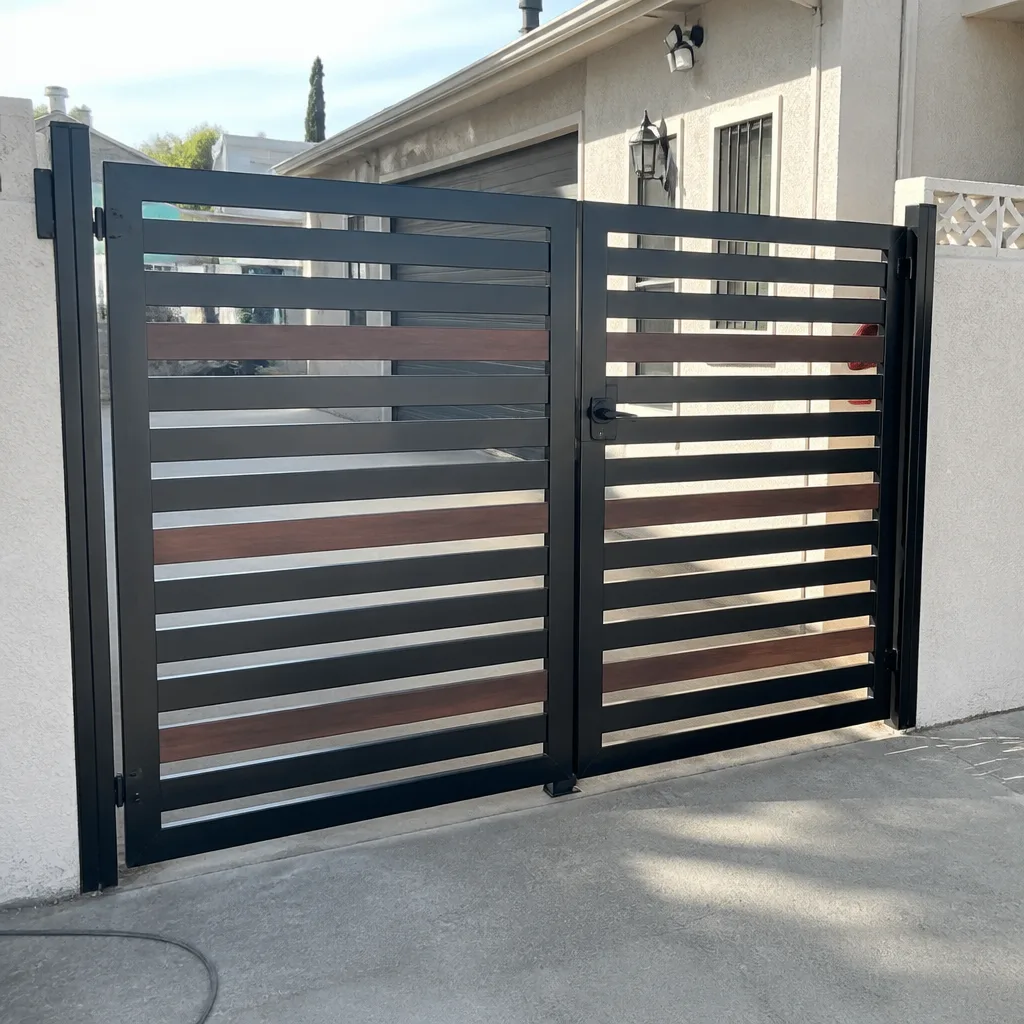
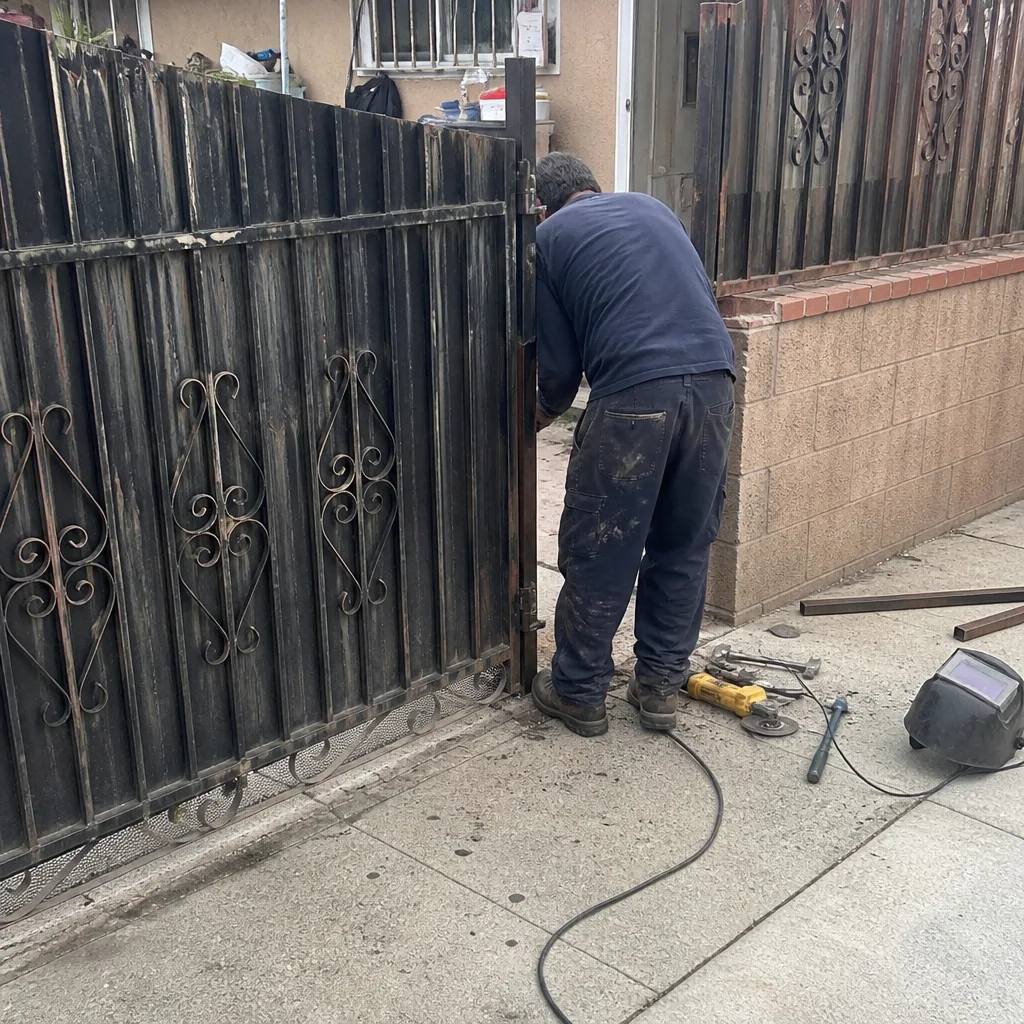
See the difference
 Before
 After
 Before
 After
 Before
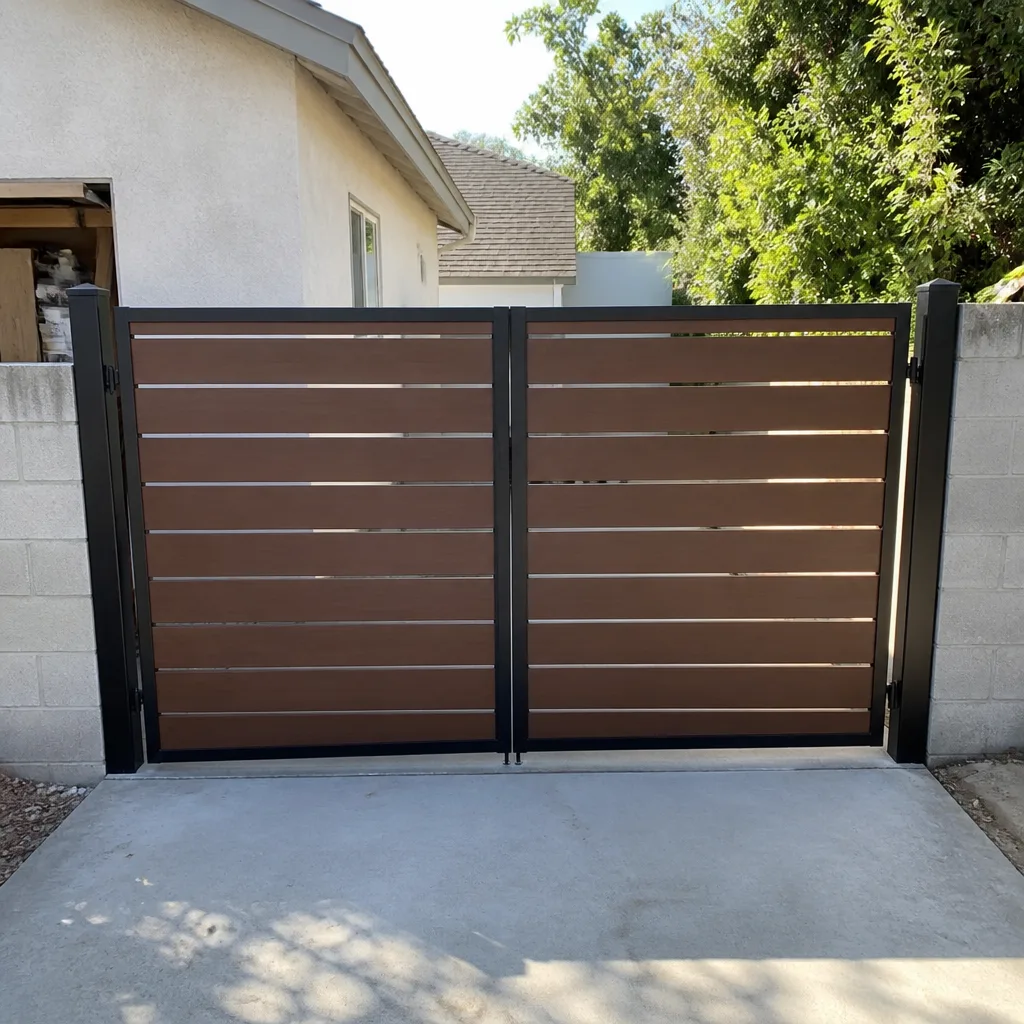 After
Frequently Asked Questions
Most gate repairs in the East LA area run between $150 and $500 depending on what failed. Simple fixes – a new remote, a sensor realignment, a limit relearn – sit at the low end. Control board replacements run $250 – $450 with parts and labor. Motor replacements run higher. A full gate installation in East Los Angeles costs more and depends on the system and site. Call (833) 620-4315 for an exact quote – estimates are free.
You can handle the low-risk mechanical and battery-powered issues yourself, but anything involving the control board, limit switches, wiring, or entrapment sensors should go to a professional. These components carry both electrical and legal liability, and California’s UL 325 compliance requirements mean specific testing procedures after any repair.
The manual release disengages the operator so you can move the gate by hand. It’s designed for use during power outages and operator failures. Every gate owner should practice using it before they need it. Most residential systems have a pull-handle, keyed lever, or cord release on the operator housing.
If the operator hums but the gate doesn’t move, it’s usually the motor or capacitor. If the gate moves erratically, reverses for no reason, or the controls respond inconsistently, the control board is a more likely culprit. The definitive answer requires a diagnostic visit with a multimeter and brand-specific testing procedures.
Our gate technicians work on DoorKing, Elite, Mighty Mule, LiftMaster, and most other major brands. The brand-specific diagnostic knowledge means faster, more accurate repairs – we know where each brand typically fails and what to test first. For full gate repair in East Los Angeles, call us directly.
Use the manual release to disengage the operator and move the gate by hand. Park inside if you can, and re-engage when power returns. If the gate acts confused after power is restored – running the wrong direction or stopping short – don’t force it. Call a professional to perform a limit relearn. This is a five-minute fix for us and a common post-outage issue in East LA.
The Bottom Line
The DIY vs professional gate repair decision in East Los Angeles comes down to a single question: does the failure live in the 20% of mechanical, visible, low-risk issues, or the 80% of automated-system problems governed by UL 325 safety standards and California contractor law? Replace your own remote batteries, lubricate your own hinges, and practice your manual release. Leave the control boards, limit switches, wiring, and entrapment sensors to a gate specialist – the cost of doing it wrong is measured in more than dollars, and the people walking past your gate every day deserve better than a guess. If you’re not sure which side of the line your problem falls on, call (833) 620-4315 for a free estimate. We’ll tell you straight what needs fixing and what it costs, before any work starts.
Written by the team at Gate Repair East Los Angeles, serving East Los Angeles since 2014.