
Last updated November 2, 2026
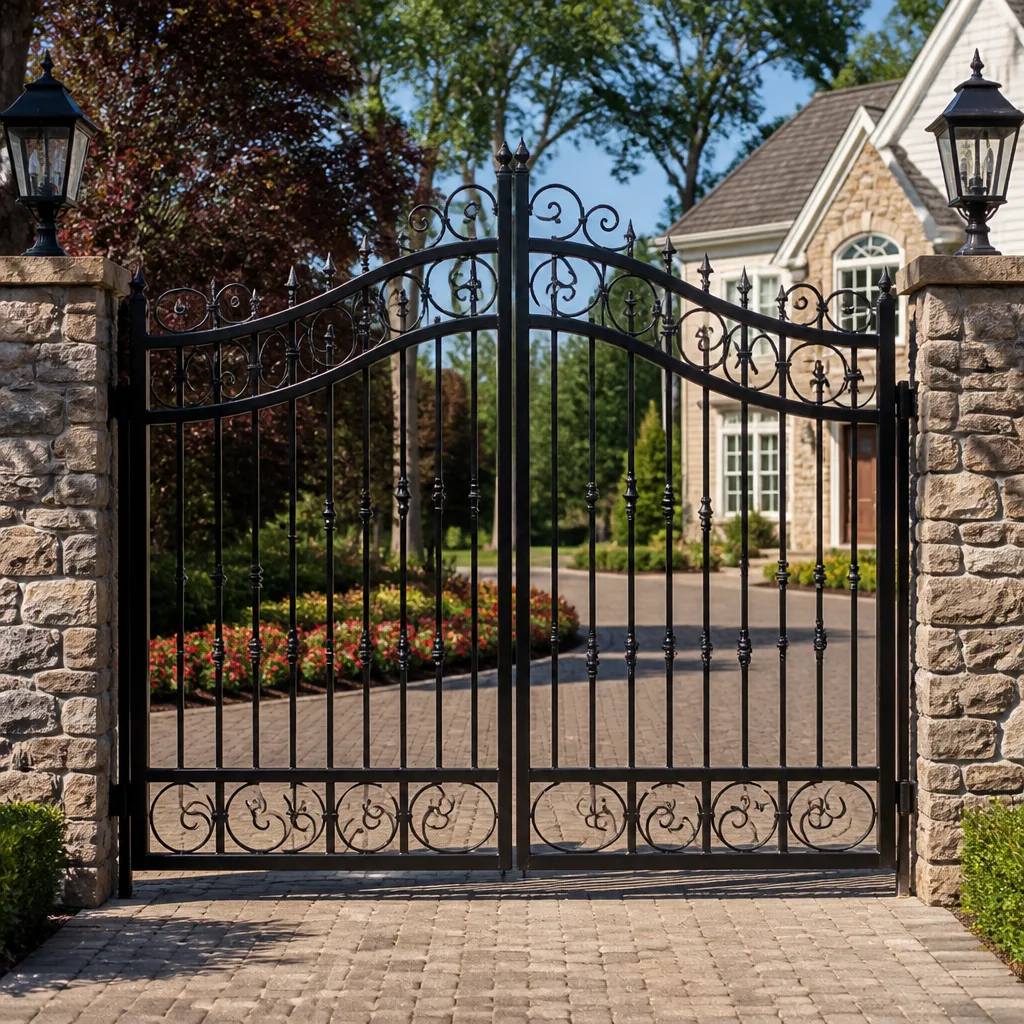 Wrought iron
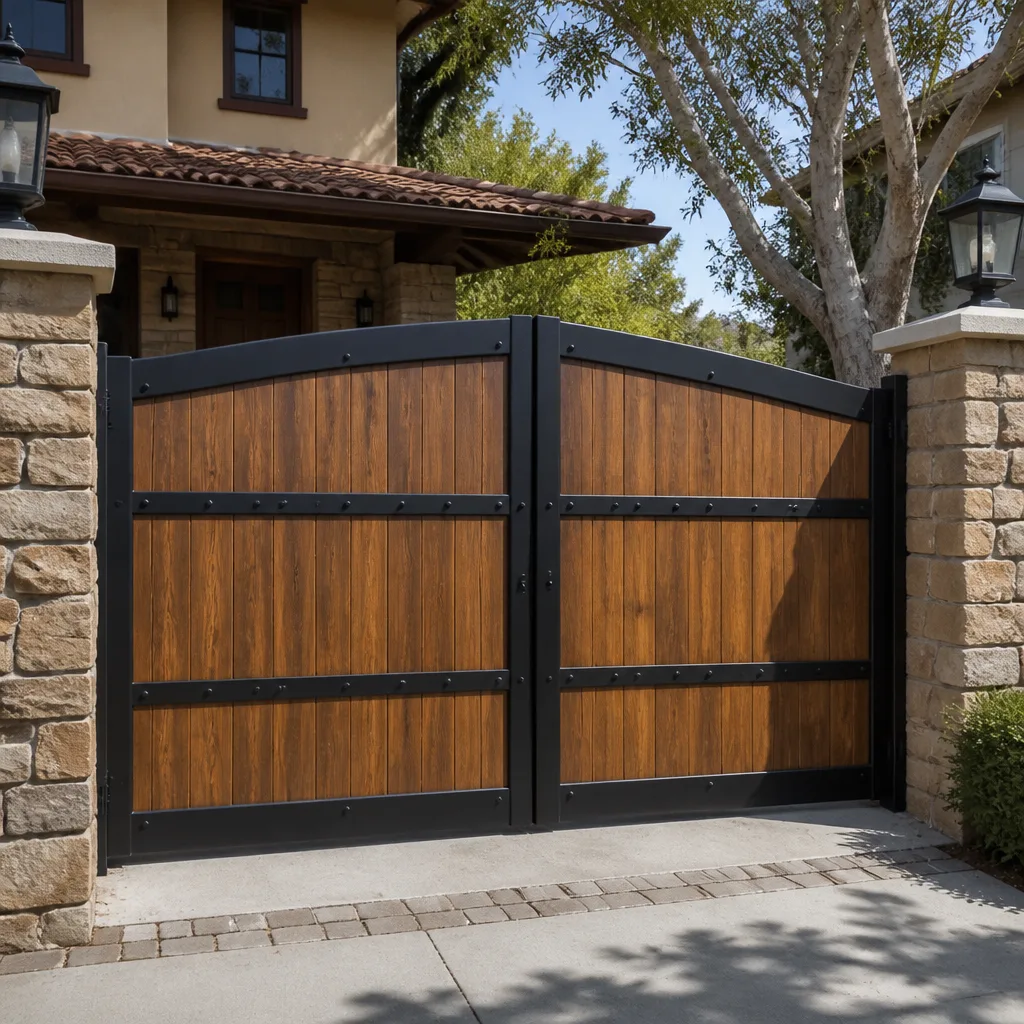 Wood & steel frame
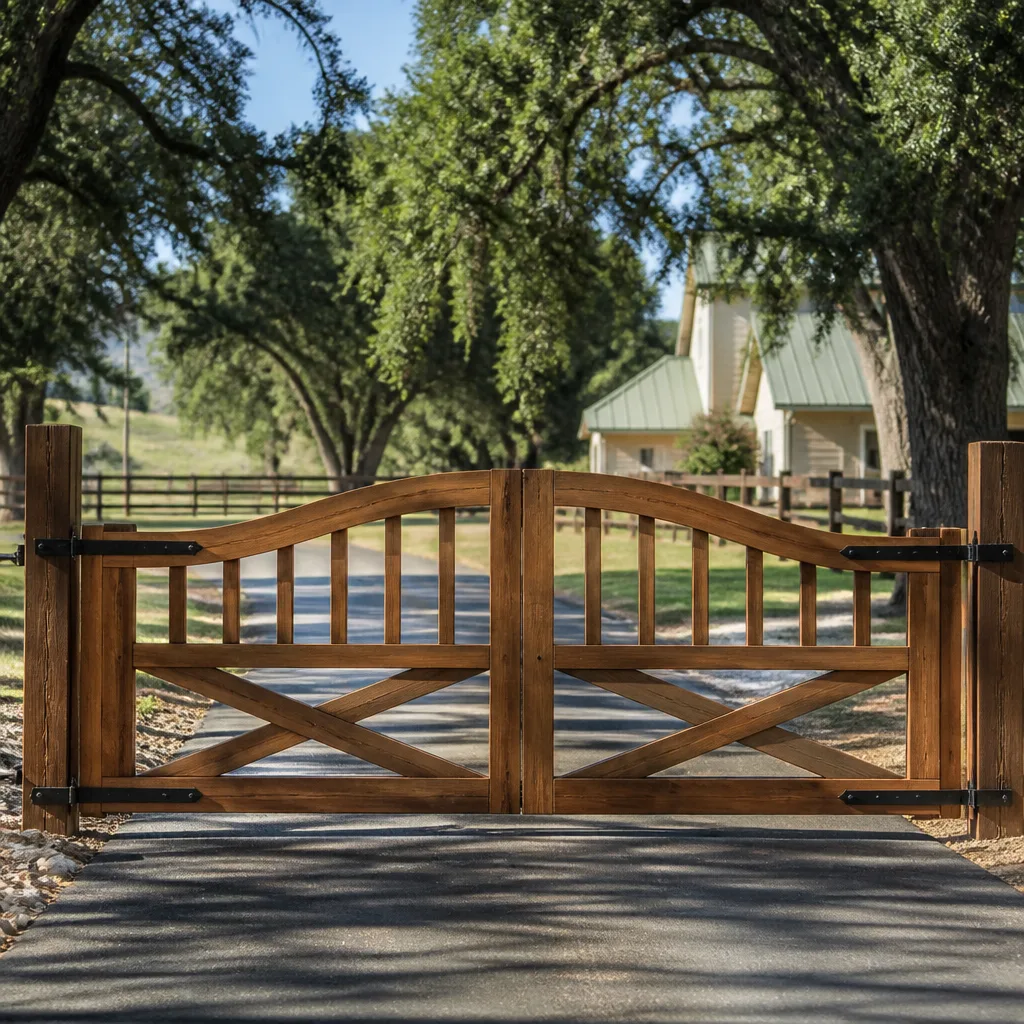 Farm & ranch
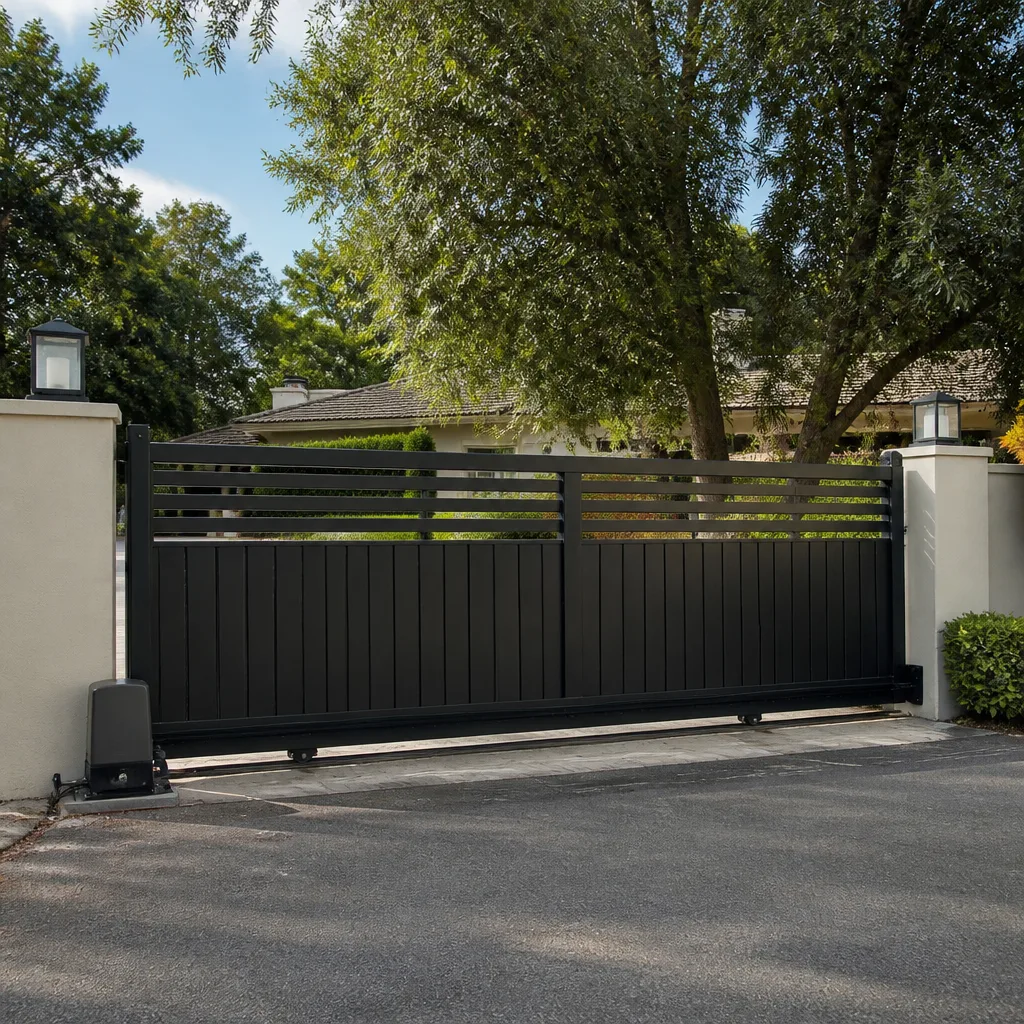 Sliding driveway gates
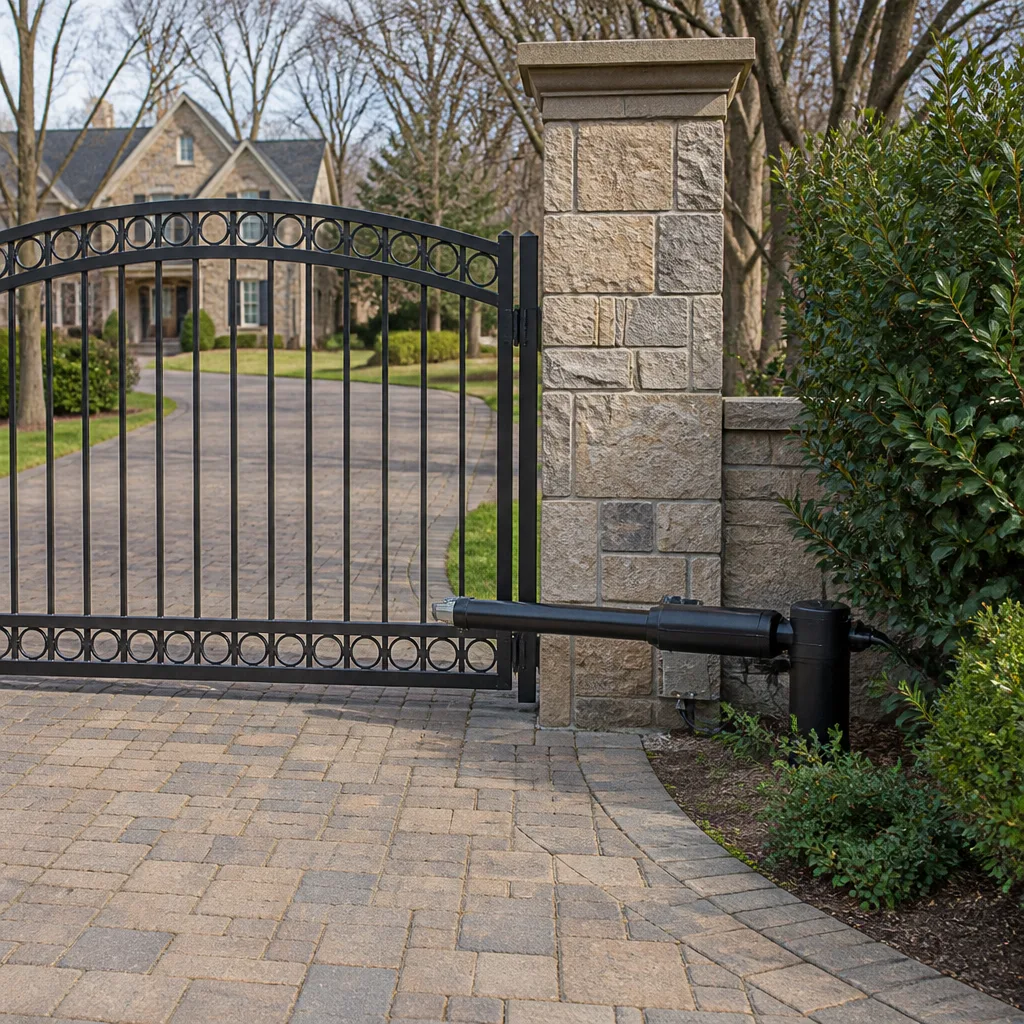 LiftMaster operators
Free on-site gate assessment - hinges, posts, and your LiftMaster or Nice gate operator checked before anything is quoted
The assessment is free and the quote is the invoice.
Get your free estimateGate Repair Warning Signs: An East Los Angeles Homeowner’s Reference Guide
In East Los Angeles, a gate rarely fails without warning. It telegraphs its decline through a series of specific mechanical and electrical symptoms that most homeowners notice but don’t know how to read. The grinding you hear at 7:00 a.m. on a Tuesday is not a personality quirk; it’s a bearing wearing down on a specific pivot point. This guide decodes those signals so you can schedule our Gate Repair services before a minor wear item becomes a complete system failure that locks you out of your driveway, or worse, leaves your property unsecured overnight.
Styles & brands we work with
- Wrought iron
- Wood & steel frame
- Farm & ranch
- Sliding driveway gates
- LiftMaster operators
Quick Answer
The most common gate repair warning signs in East Los Angeles are: a change in operating noise (grinding, clicking, buzzing, or humming from the operator or hardware), a visual change in gate posture (sagging, scraping the ground, a widening gap at the hinge or the latch side), and an electrical behavior change (slow cycle times, intermittent operation, or a shrinking remote range). These symptoms rarely fix themselves and point to a specific failing component: a bearing, a hinge, a drive belt, a capacitor, or a control board. Ignoring them typically converts a $250 targeted repair into a $1,200+ operator or structural replacement within 60 to 90 days.
Table of Contents
- 1. Sound-Based Diagnostics: What Your Gate Is Actually Telling You
- 2. Visual Warning Signs by Gate Type: Swing, Slide, and Cantilever
- 3. Electrical Warning Signs That Homeowners Misread as Operator Failure
- 4. The “False Fix” Trap: Symptoms of a Looming 30 – 90 Day Failure
- 5. East LA – Specific Accelerators: Why Your Gate Wears Faster Here
- 6. The Five-Minute Inspection You Can Do This Weekend
- 7. Repair or Replace: How to Read the Decision Point
- Common Mistakes to Avoid
- When to Call a Professional
- Frequently Asked Questions
- The Bottom Line
Sound-Based Diagnostics: What Your Gate Is Actually Telling You
A gate produces a finite set of sounds. Each one maps to a specific mechanical event happening at a specific point in the gate’s travel cycle. The single most useful diagnostic habit you can develop is to stand near your gate and note when the sound occurs during the cycle: at the first movement, mid-travel, at the limit stop, or only when reversing. That timestamp narrows the diagnosis down from “a dozen possible causes” to two or three.
Here are the four sounds we hear reported most often, and what they mean when we trace them.
Grinding on Open vs. Grinding on Close: Two Different Problems
This distinction is the clearest example of why sound timing matters. A slide gate that grinds only on open typically has a worn V-groove wheel set or debris buildup on the lower track, especially if the sound is rhythmic and matches the wheel rotation. A gate that grinds only on close, by contrast, usually has a drive chain tension problem, a bent guide roller bracket, or a misaligned rack. If the same gate grinds on both open and close, the most common culprit is a failing gearbox inside the operator itself, which means the sound is coming from the motor housing, not the gate leaf.
On a swing gate, grinding on open frequently points to a dry or worn bearing in the bottom hinge, while grinding on close often points to a shift in the gate’s vertical alignment causing the leaf to rub on the concrete or the strike post. These are two separate repairs with two separate costs. Reporting which direction triggers the sound gets a gate technician to the root cause on the first visit instead of the second.
Clicking: A Relay, a Capacitor, or a Failing Limit Switch
A rapid, repetitive clicking from an operator box is almost never the motor. It’s typically a control board relay chattering, which can be a failing start capacitor, a low-voltage condition on the incoming power, or a limit switch that isn’t registering. On a LiftMaster or FAAC operator, a single loud click from the control box followed by no movement is frequently the start capacitor refusing to energize the motor. A softer tick-tick-tick that repeats during travel often indicates a limit cam that has drifted out of adjustment.
The critical point: a clicking sound means something in the electrical start or stop circuit is degraded, not that you need a new gate. Replacing the capacitor on an Elite or LiftMaster swing gate operator is a routine repair. Replacing the entire operator because you ignored the click and eventually burned out the motor windings is a much larger bill.
Buzzing and Humming: The Motor Is Trying But Not Moving
A buzz or hum that lasts one to three seconds and then stops, without any gate movement, is a motor that is receiving power but cannot rotate. Causes include a seized gearbox, a jammed drive chain, a failed start capacitor on single-phase operators, or a physical obstruction binding the gate. On a Mighty Mule or Ghost Controls system, which are residential-grade units with lighter-duty gearboxes, a buzz is often the first sign that the internal plastic gear has stripped.
If you hear a buzz, stop pressing the remote. Repeatedly cycling the operator while the motor is stalled draws excessive current and accelerates damage to windings and the control board. This is the sound where a one-hour evaluation call saves you from buying an entire new operator.
What to Do About a Sound You Can’t Identify
- Record a 10-second clip with your phone, standing far enough back to capture both the gate and the operator housing.
- Note the direction (open or close), the approximate cycle point (start, mid, stop), and the outside temperature.
- Stop using the gate on auto-close if the sound has appeared within the last 48 hours. Run it manually if the operator has a manual release.
- Call a gate specialist before the next rain event, or before any scheduled heavy use.
We listen to these recordings on dispatch calls all the time. A homeowner who says “it clicks once and then nothing” gives us a working diagnosis before we’ve even parked the truck. That’s the difference between a targeted fix and a parts-fishing expedition.
Visual Warning Signs by Gate Type: Swing, Slide, and Cantilever
Your eyes can catch what your ears miss. Visual inspection is the most reliable early-warning system for upcoming structural repairs, and you can do most of it from the curb without touching any hardware.
Swing Gate: The Hinge Gap Progression
A swing gate in East Los Angeles spends its life supporting several hundred pounds of steel on two or three hinge points. Those hinges wear in a predictable sequence. First, the gap between the hinge pin and the hinge barrel widens, often visible as a slight droop of the gate leaf away from the post. Then the leaf’s latch side dips, so the bolt no longer lines up with the receiver. Finally, the gate begins to drag or scrape on the concrete, which you’ll see as a crescent-shaped wear mark on the driveway surface.
The gap progression matters because each stage has a different repair cost. A worn hinge bearing on a wrought-iron swing gate is a replacement part under $80. A gate that has dragged on the concrete for six months has almost certainly bent the leaf or cracked a weld at the hinge side, and that’s a structural repair measured in hours of welding and realignment, not minutes of part swapping. If your latch bolt no longer seats cleanly, don’t shim the post. Find the hinge that’s worn.
Slide Gate: V-Groove Wheel Wear Pattern
Slide gates ride on steel wheels that roll along a track or a V-shaped rail. As the wheels wear, they develop a flat spot or an uneven groove. The telltale sign is a gate that shudders or hops slightly as it travels, or a visible metallic dust line on the track that reappears within a week of cleaning it. The dust is wheel material, not dirt.
There’s a second visual cue on slide gates that homeowners miss: the gap between the gate’s bottom rail and the first support post. On a properly adjusted gate, this gap is consistent for the entire travel. If it narrows or widens as the gate moves, either the track has settled or a wheel bracket has bent. In East Los Angeles, where many driveways are poured over old fill and shift with seasonal moisture, track settlement is common. Catch it before the wheel flange eats into the track surface, and you avoid replacing the track run entirely.
Sagging Gate Panels: Frame vs. Post Failure
A sagging gate panel is not always a bad post. More often, the post is fine and the gate’s diagonal brace has failed. A square gate frame that loses its diagonal brace becomes a parallelogram under load. The visual cue is a gate whose top corner is no longer square to the post, while the post itself still reads plumb. This is a frame repair, usually involving a new brace and some welding, and it’s a much smaller job than excavating and re-setting a post.
The diagnostic step that separates the two: stand back and compare the post angle to a known vertical reference, like a house corner or a power pole. If the post is vertical but the gate still sags, it’s the frame. If the post leans, you’re looking at a post reset, which involves concrete work and a longer downtime. Knowing which one you have before you call saves a diagnostic visit.
Electrical Warning Signs That Homeowners Misread as Operator Failure
When an electric gate acts up, most people assume the operator motor is dying. In practice, the motor is often the last thing to fail. These are the symptoms that point elsewhere in the system.
Intermittent Operation
Your gate opens fine at 3 p.m. but refuses at 11 p.m. You call it “temperamental.” We call it an electrical fault. Intermittency points to a loose wire at a terminal block, a photo eye that is slowly going out of alignment, a failing loop detector under the driveway, or a control board solder joint that opens and closes with temperature swings. On a BFT or DoorKing operator, an intermittent no-response is often traced to a corroded connection in the junction box, not the motor.
Intermittency is the most dangerous symptom to ignore because it tends to get worse during the exact moment you need the gate most: late at night, when temperatures drop and a marginal connection contracts. If your gate has failed twice in the last week, and then worked again, you have an active electrical fault. It will not self-heal.
Slow Cycle Times
A gate that opens noticeably slower than it did six months ago isn’t “getting old.” It’s telling you something about the mechanical load or the power supply. Slow travel is most commonly a failing capacitor, low incoming voltage, a partially seized bearing, or a drive belt slipping. On a 12-volt Ghost Controls or Mighty Mule system, slow operation is often the battery reaching end of life while the solar panel can’t keep up. Replacing the battery before it dies completely is a $150 fix. Waiting until it dies turns it into a service call plus a battery plus a possible control board voltage spike.
If your gate’s travel time has increased by more than a second or two, have it checked. Normal wear should not change cycle speed perceptibly on a properly maintained operator.
Remote Range Reduction
You used to open the gate from three houses down. Now you have to be in the driveway. That loss of range is not a tired remote battery in most cases. It’s usually a receiver sensitivity issue, a failing capacitor on the receiver board, or new interference. In East Los Angeles, interference sources include nearby cell towers, commercial radio equipment along the 710 corridor, and dense electrical infrastructure.
The practical test: replace the remote battery first, because it’s cheap. If range doesn’t return, try a second remote. If both remotes behave the same way, the problem is on the receiver or board side, not in your hand. Don’t keep edging closer to the gate and accepting it as normal. Range loss is a warning sign that the receiver stage is degrading.
The “False Fix” Trap: Symptoms of a Looming 30 – 90 Day Failure
The most expensive gate failures are the ones that look like they got better. A gate that failed, then resumed operation, and held for two weeks is not fixed. It’s waiting. Here’s what we mean.
A capacitor that fails intermittently will often allow the motor to start on the second or third attempt. Homeowners retry the remote, the gate opens, and they move on. But the capacitor is still degraded. The next episode comes sooner, and eventually the motor stalls under load and burns a winding. That converts a $120 capacitor replacement into a $900+ operator replacement.
A photo eye that loses alignment and then gets bumped back into place operates fine for weeks, until a delivery truck nudges the gate post and the beam drifts just enough to fail again. The underlying issue is a loose mounting bracket, not the sensor itself.
A ground loop detector with a small crack in the wire insulation works when the soil is dry and fails when it rains. The gate “seems fine” all summer, then violently refuses during the first winter storm. In East Los Angeles, the seasonal shift from dry to wet happens quickly, and that’s when the intermittent loop failure becomes a hard failure.
The “false fix” pattern applies to any repair that was made by jiggling, resetting, or re-tightening without replacing a degraded part. If you didn’t understand why the gate failed, and no component was actually swapped, assume the failure is still in the system, waiting for the next temperature or load cycle. Schedule a diagnostic before the next event forces an emergency call.
East LA – Specific Accelerators: Why Your Gate Wears Faster Here
Manufacturer maintenance intervals are written for national averages. East Los Angeles is not a national average. Our climate and geography impose a specific set of accelerants on gate hardware, and they change which warning signs you should watch for first.
The 710 corridor and the surrounding freeway network put a constant load of fine particulate matter into the air. The area around the 710, the 5, and the 60 interchanges carries heavier airborne dust than neighborhoods up against the hills. That particulate settles on gate tracks, infiltrates operator housings, and mixes with bearing grease to form an abrasive paste. A slide gate track in East Los Angeles will accumulate wear-accelerating grit at two to three times the rate of a comparable gate in a coastal community. The V-groove wheel wear and track dust mentioned earlier appears here faster, which means the visual inspection window is shorter.
Summer heat is the second accelerator. East LA sees consistent temperatures in the high 80s and 90s from June through September. Capacitors degrade faster in sustained heat, and control boards fail earlier when they run hot. An operator mounted on a south-facing wall in direct afternoon sun operates at a higher internal temperature than the same model mounted in shade. That heat load reduces the service life of the start capacitor, and in our experience, most capacitor failures reported in East Los Angeles happen between August and October, after a full summer of heat cycling.
The third accelerant is irrigation overspray. Many East LA properties run sprinklers on narrow side yards and parkway strips near the gate. Overspray lands on the gate post, the operator housing, and the electrical conduit. Repeated wet-dry cycles from irrigation cause the same corrosion damage as rain, but more consistently and with more dissolved minerals in the water. If your gate post is within reach of a sprinkler head, you should be inspecting the bottom hinge and the conduit entry point every two months, not twice a year.
The practical takeaway: in East LA, halve the manufacturer’s recommended service interval. A gate in Boyle Heights, El Sereno, or City Terrace is not the same machine as a gate in a mild coastal climate, and it won’t wait politely for a calendar reminder.
The Five-Minute Inspection You Can Do This Weekend
You don’t need a technician to collect 80% of the diagnostic information we use on a first visit. Here’s a five-minute inspection that covers the highest-value warning signs for any East Los Angeles gate. For more guides & resources, explore our blog.
- Listen to one full open-close cycle. Stand near the operator and then near the gate leaf. Note any sound, its location, and its timing in the cycle. Any sound you haven’t heard before is a data point.
- Watch the gate travel from the side. Does it move smoothly or does it hesitate, hop, or shudder at any point? Shudder marks show up as a stutter in the leaf’s motion.
- Check the gap consistency. For a slide gate, watch the wheel-to-track contact for the full travel. For a swing gate, look at the gap between the latch side and the strike post when closed. Any change over the last month is a warning sign.
- Look for new wear marks. Check the driveway surface where the gate travels, the track itself, and the underside of the gate leaf. Fresh metal shavings or a new crescent scrape mark are significant.
- Check the post bases. Look at the concrete around each post for new cracks, gaps, or a visible lean. Use a vertical reference. A post that has moved a quarter inch in a year is moving toward failure.
Do this once a month. The purpose isn’t to diagnose everything yourself; it’s to detect change. A gate that has changed in any of these dimensions between two inspections has an active wear process underway.
Repair or Replace: How to Read the Decision Point
There’s a threshold at which repairing a gate no longer makes economic sense. Knowing where that threshold sits helps you negotiate a repair quote with clear expectations instead of being surprised by a replacement recommendation.
The decision is usually driven by three factors: the age of the operator, the condition of the gate’s structure, and the cost of the failed component relative to the replacement unit. Here’s how those factors interact in practice.
An operator over ten years old with a failed control board, a seized gearbox, or a burned motor winding is usually a replacement candidate, not a repair. The reason is that on older LiftMaster, FAAC, or DoorKing units, the parts are either discontinued or priced to push you toward a new unit. We’ve seen cases where a replacement control board for a 12-year-old DoorKing costs more than a complete new operator with a warranty. In that situation, repairing is the wrong financial decision.
A gate structure that has multiple failed welds, a bent leaf, or hinge posts that have moved beyond re-alignment is a structural liability. Patching a gashed diagonal brace or re-welding the same cracked joint for the third time is putting money into a frame that has already told you it’s done. In those cases, we tell customers directly: this frame has reached its service life, and further welding is a temporary stay, not a fix. Whether you choose a targeted repair or a full replacement, our team handles the entire gate installation scope from frame work to operator wiring.
On the other hand, a three-year-old operator with a failed capacitor, a worn hinge bearing, or a misaligned photo eye is a clear repair. Components fail at predictable intervals, and replacing a good unit because one wear item failed is wasteful. The general rule from our side of the truck: if the installed base is structurally sound and the operator is under eight years old, repair wins. If the structure is compromised or the operator is past its serviceable parts lifecycle, replacement wins. And when you can’t tell, get a diagnostic from someone who works on your actual brand.
See our detailed page on Gate Repair in East Los Angeles for more on what a thorough repair visit includes, and read Electric Gate Repair in East Los Angeles if your system is automated.
Common Mistakes to Avoid
- Lubricating without cleaning. Shooting grease or white lithium into a gritty hinge or track without first removing the particulate creates a grinding paste that accelerates wear. In East LA’s dusty air, this mistake is especially destructive. Always clean, then lubricate.
- Repeatedly cycling a buzzing operator. Holding the remote button or pressing it again while the motor is stalled draws excessive current through the windings and control board. One long buzz is a diagnostic signal. Three more buzzes are a bill increase.
- Shimming a latch that no longer lines up. A gate that won’t latch is telling you a hinge is worn or the post has shifted. Shimming the strike plate masks the problem while the structural wear continues. Fix the hinge or the post, not the symptom.
- Ignoring a slow-cycling gate because it still opens. Slow travel is a measurable change with a root cause. Every month of slow travel is a month of additional load on the motor, capacitor, and drive components. The cheap fix window closes on this one.
- Assuming remote range loss is a dead battery, three batteries in a row. If two fresh batteries don’t restore range, the problem is the receiver, not the remote. Each battery swap that doesn’t fix it delays the actual repair.
- Welding a cracked gate leaf without fixing the underlying alignment. A weld crack on a swing gate usually means the gate has been moving off-plane, which means the hinge or the post is the root cause. Re-welding the crack without addressing alignment creates a stronger weld and a new crack next to it.
- Painting over rust without treating the rust. East Los Angeles’s combination of airborne particulate and irrigation overspray creates the conditions for surface rust. Painting over active rust traps moisture and lets the corrosion continue underneath. Treat, then paint.
When to Call a Professional
Call a gate specialist when the gate fails intermittently, when you hear a new sound you can’t trace, when the gate’s travel time changes, or when the gate no longer fully closes. Call immediately if the gate won’t latch and your property can’t be secured, if an operator buzzes without moving, or if you see a post leaning. Don’t attempt to adjust high-tension springs, run electrical checks on a live control board, or weld a gate leaf without HVAC-level experience. These are not DIY tasks, and the consequences of a wrong move range from a destroyed operator to a personal injury. Gate Repair East Los Angeles offers free estimates in East Los Angeles and works on LiftMaster, FAAC, BFT, Linear, Viking, Ghost Controls, DoorKing, Elite, and Mighty Mule systems. Call (833) 620-4315.
Frequently Asked Questions
Gate repair in East Los Angeles typically costs between $200 and $600 for most mechanical and electrical component replacements, with operator replacements running higher depending on the brand and model. A hinge bearing replacement or a capacitor swap sits at the low end of that range; a control board replacement on a commercial operator sits at the high end. The exact quote depends on what failed, which is why a diagnostic visit is the first step. Every repair we quote is priced and agreed before any work starts. Call (833) 620-4315 for an exact quote, estimates are free.
Rapid clicking from an electric gate operator is usually a failed start capacitor, a chattering relay, or a limit switch that’s out of adjustment. On LiftMaster and FAAC units, a single loud click followed by no movement points most often to the capacitor. This is a repairable component failure, not necessarily a dead operator, but continued retries will eventually damage the motor. Call for a diagnosis before the click becomes a complete no-response.
Yes, in most cases a sagging gate is repairable by replacing the worn hinge bearing or repairing the failed diagonal brace. The repair path depends on whether the sag is in the leaf’s frame or in the post. If the post is still plumb and the frame is square, a hinge or brace repair typically restores the gate. If the post has moved, the fix involves re-setting the post in new concrete.
We service both Mighty Mule and Ghost Controls residential operators, including the gear and battery wear patterns common to those units. These systems are lighter-duty than commercial operators, so their wear items fail on a faster timeline, especially under East LA heat. We also work on LiftMaster, FAAC, BFT, Linear, Viking, DoorKing, and Elite systems. See our home page for the full gate repair East Los Angeles home brand list.
Rain-specific failures are almost always an electrical fault that’s sensitive to moisture: a cracked ground loop in the driveway, a corroded wire junction, or a failing photo eye seal. The water changes the resistance across the fault and triggers the failure. Once the ground dries, the circuit returns to normal. The fix is to locate the compromised insulation or connection, not to wait for a dry season.
In most cases, a 12-year-old operator with a failed control board, gearbox, or motor should be replaced, not repaired. Parts for units that age are often discontinued or priced high enough that a new operator costs less. The exception is simple wear parts like a remote receiver or a limit switch, which can still be replaced economically if the rest of the unit is healthy.
The Bottom Line
Your gate doesn’t fail without warning. It fails with a sound you dismissed, a gap you didn’t measure, and an intermittent no-response you explained away. The entire playbook for avoiding emergency gate repair in East Los Angeles is to notice those changes early, interpret them correctly, and act on the specific component while the repair is small. Grinding on open is different from grinding on close. A clicking control box is different from a buzzing motor. A dirty track wears differently than a settling post. Once you know what each signal means, you’re no longer at the mercy of a surprise failure. You’re scheduling a fix. That’s the difference between a $250 repair in July and a $1,200 replacement in December.
Written by the team at Gate Repair East Los Angeles, serving East Los Angeles since 2014.
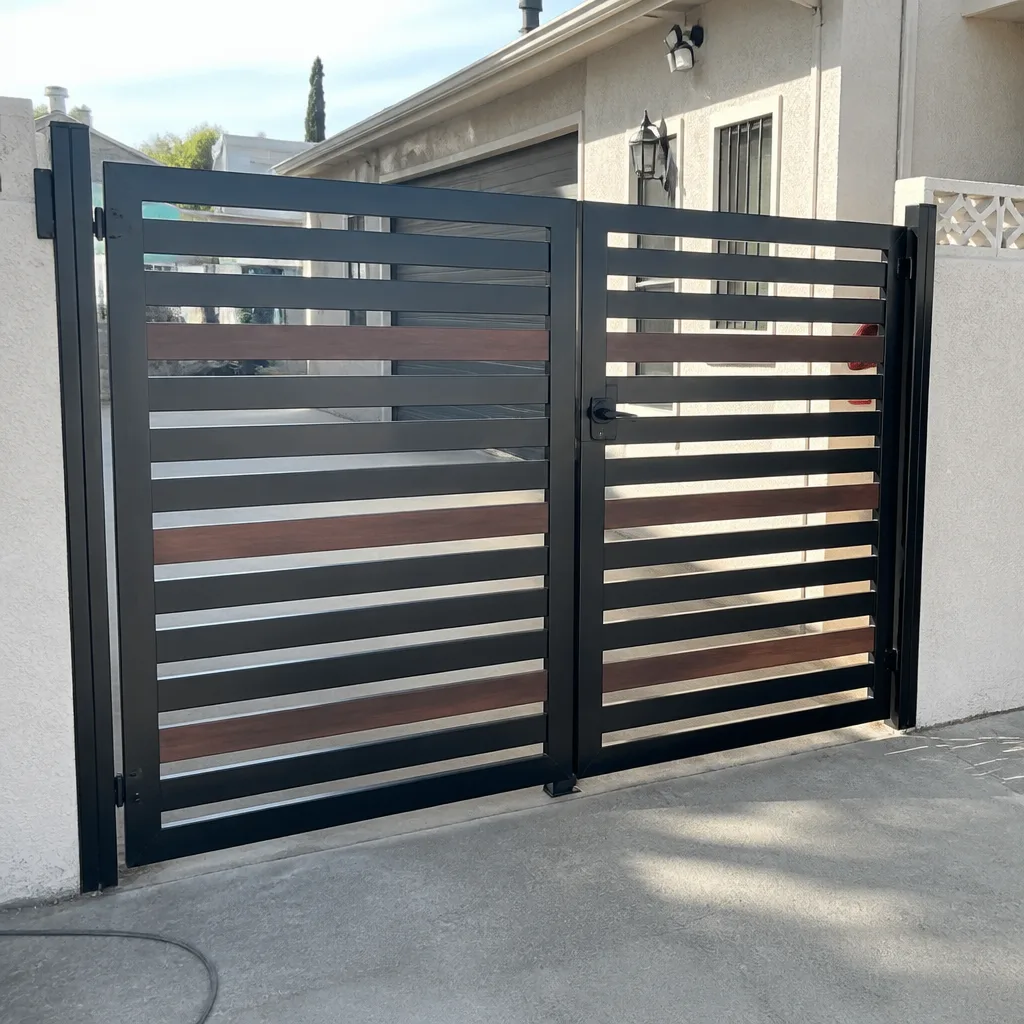
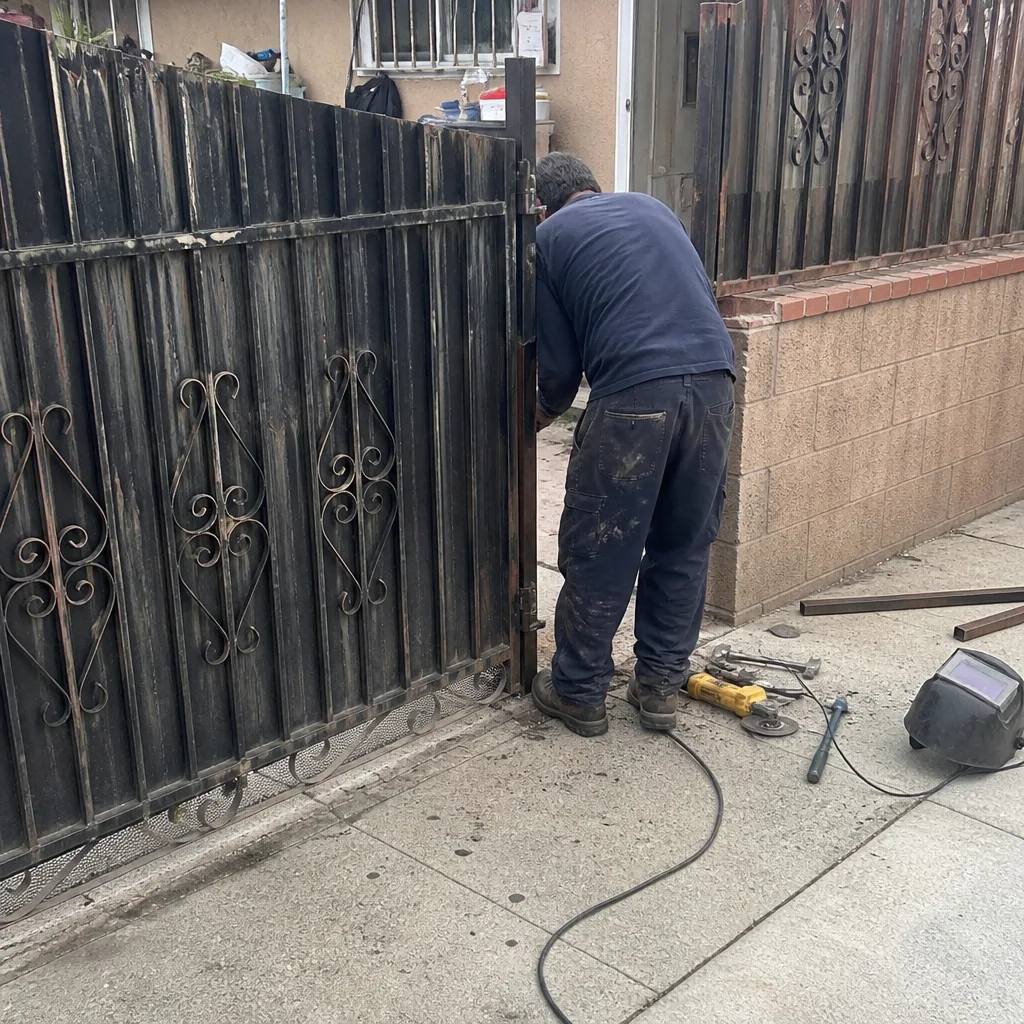
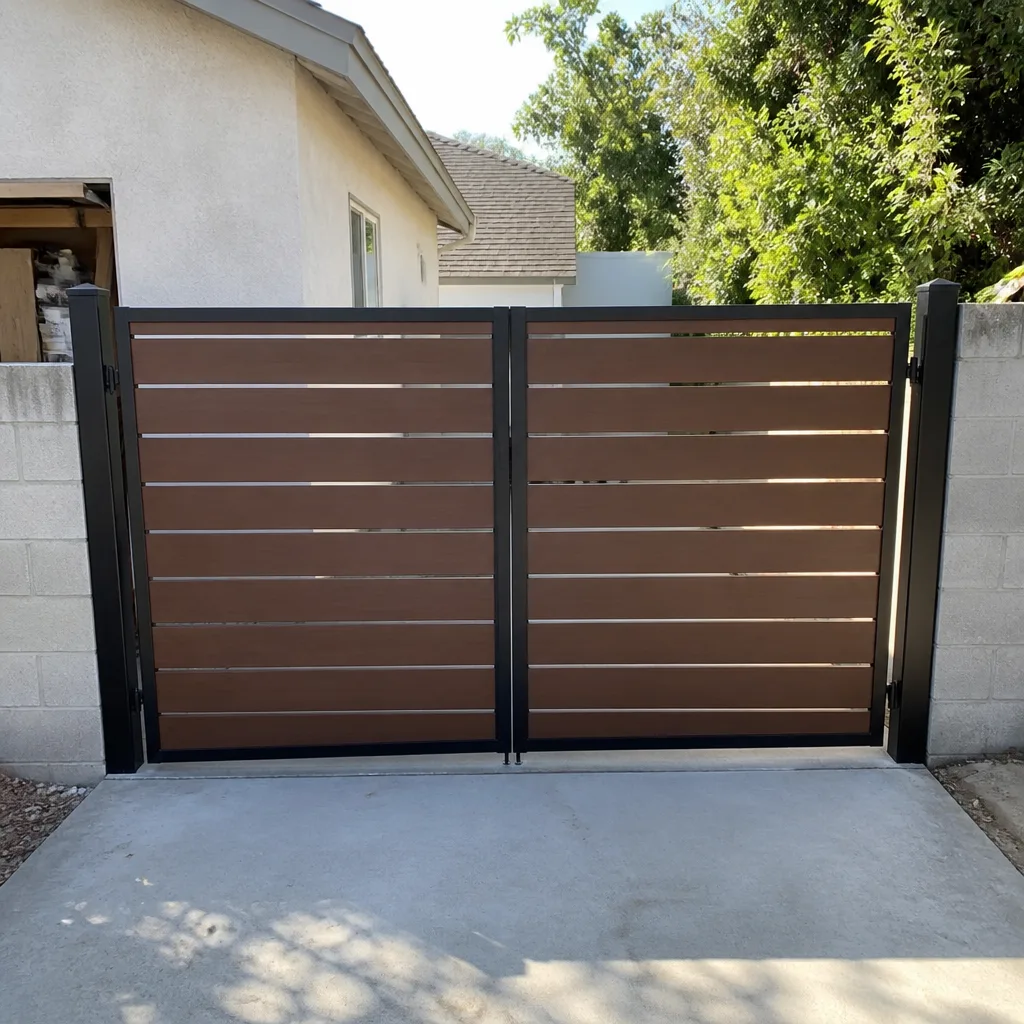
See the difference
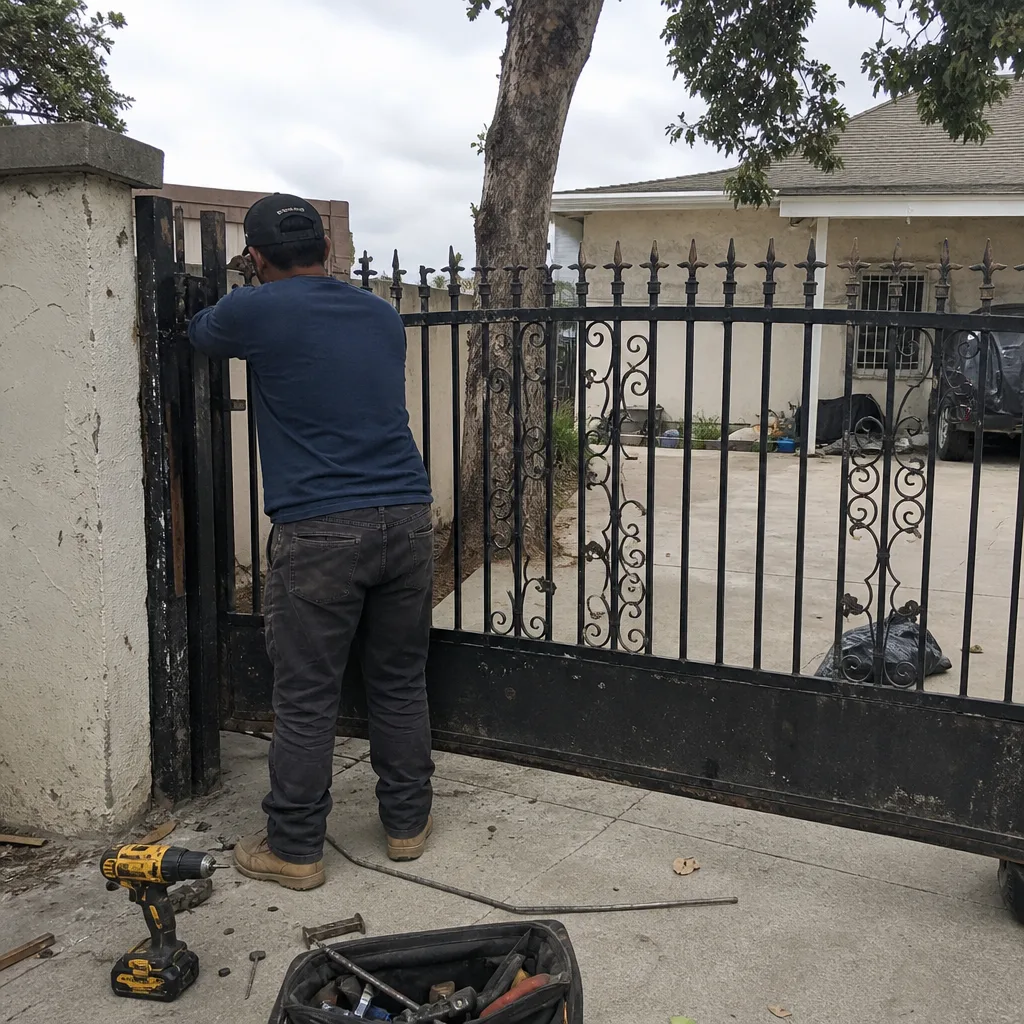 Before
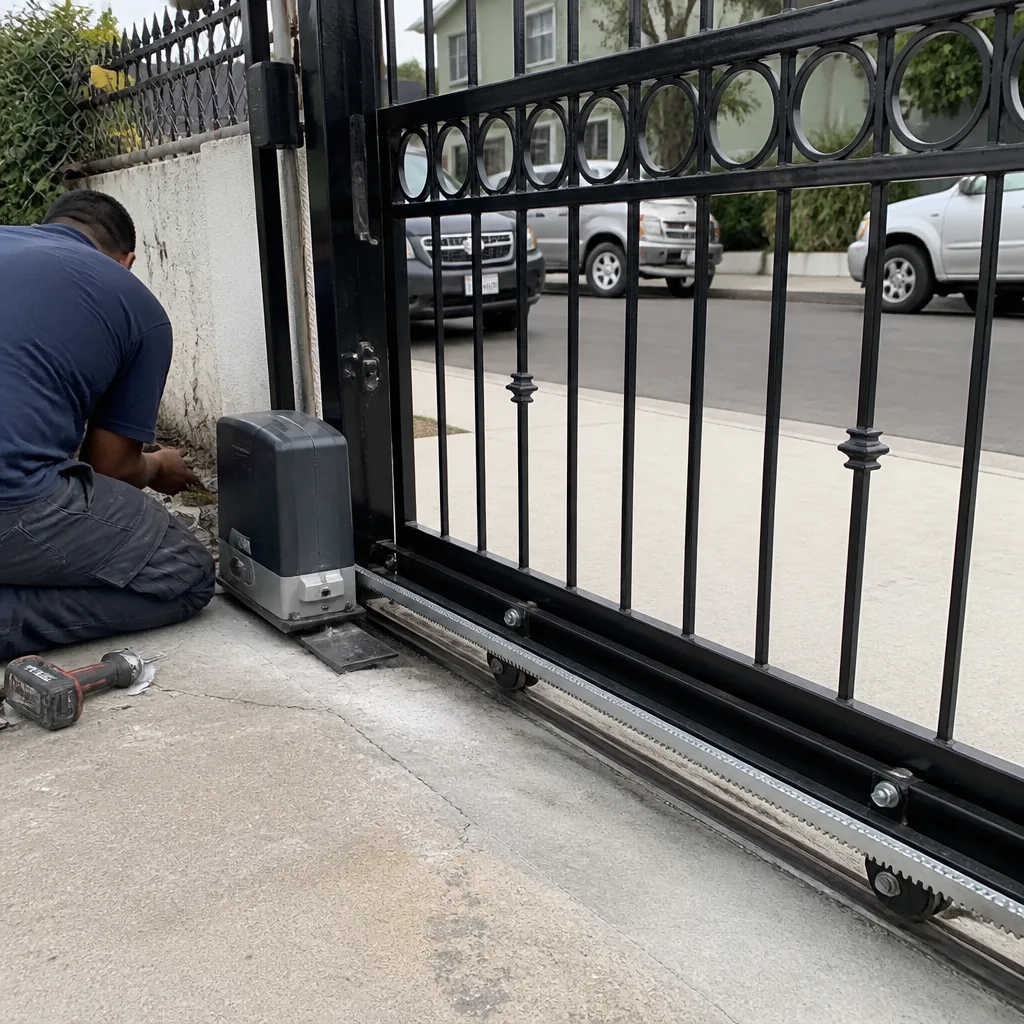 After
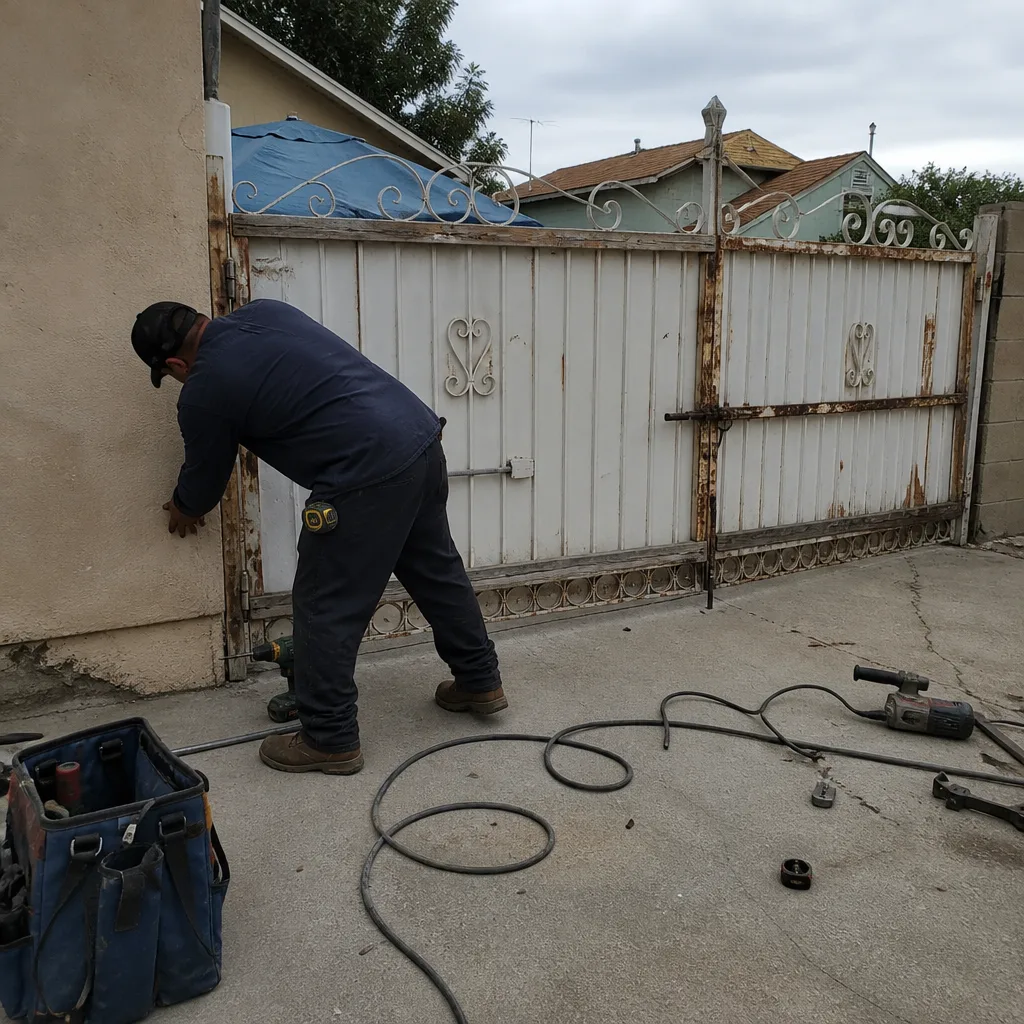 Before
 After
 Before
 After