
Last updated November 2, 2026
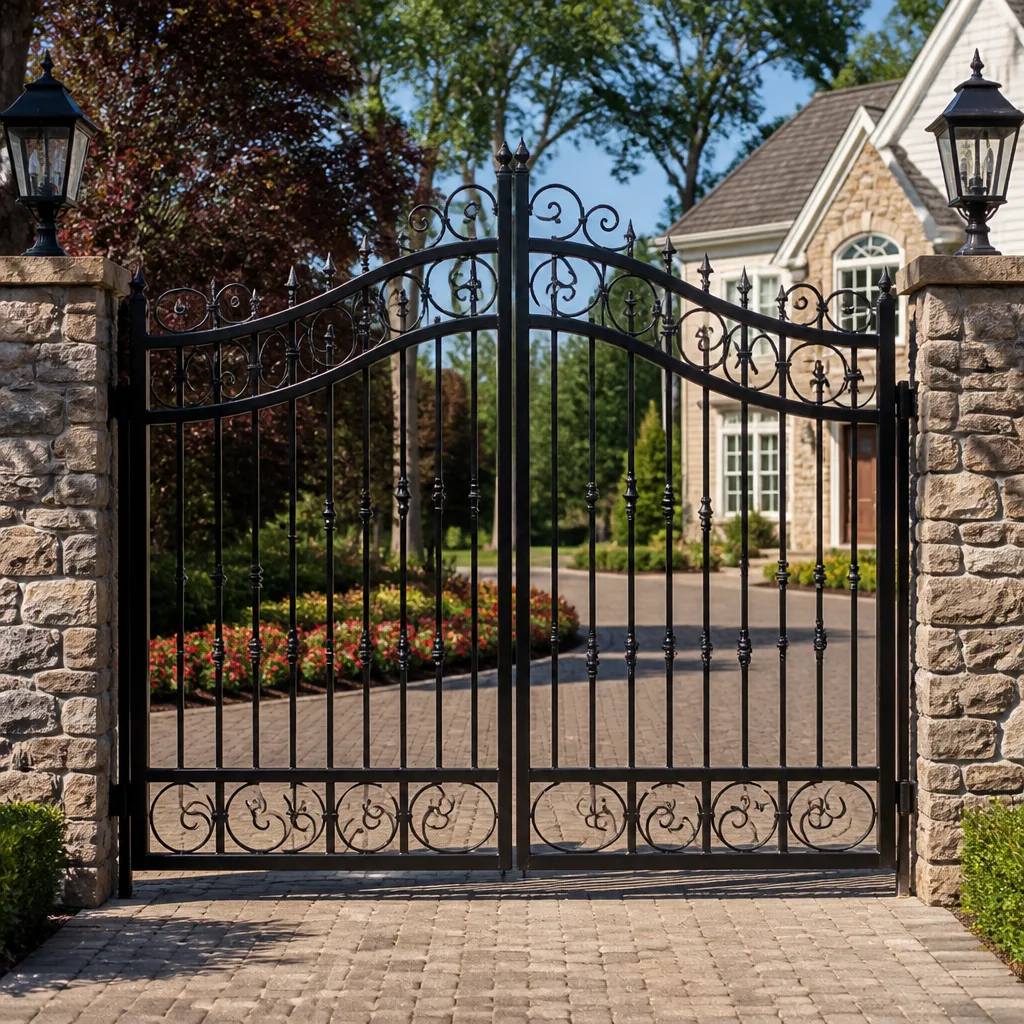 Wrought iron
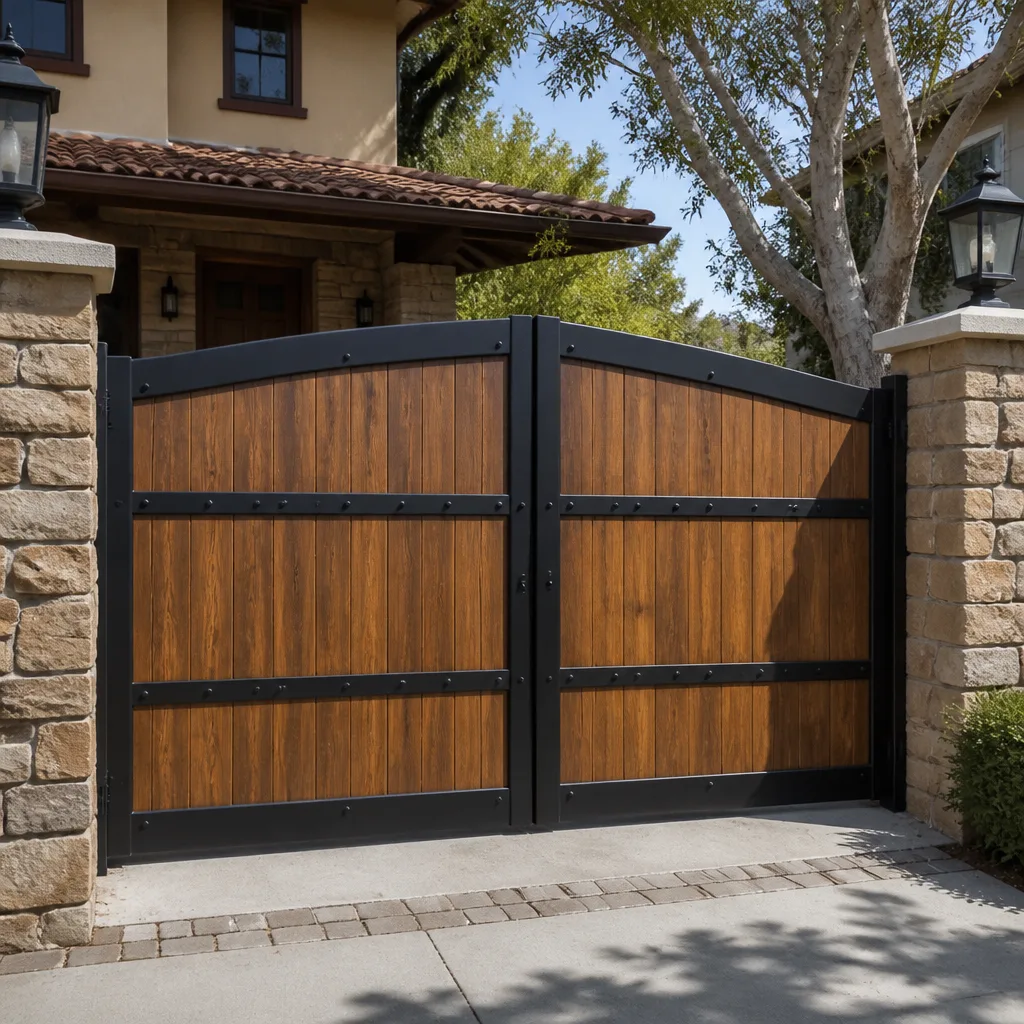 Wood & steel frame
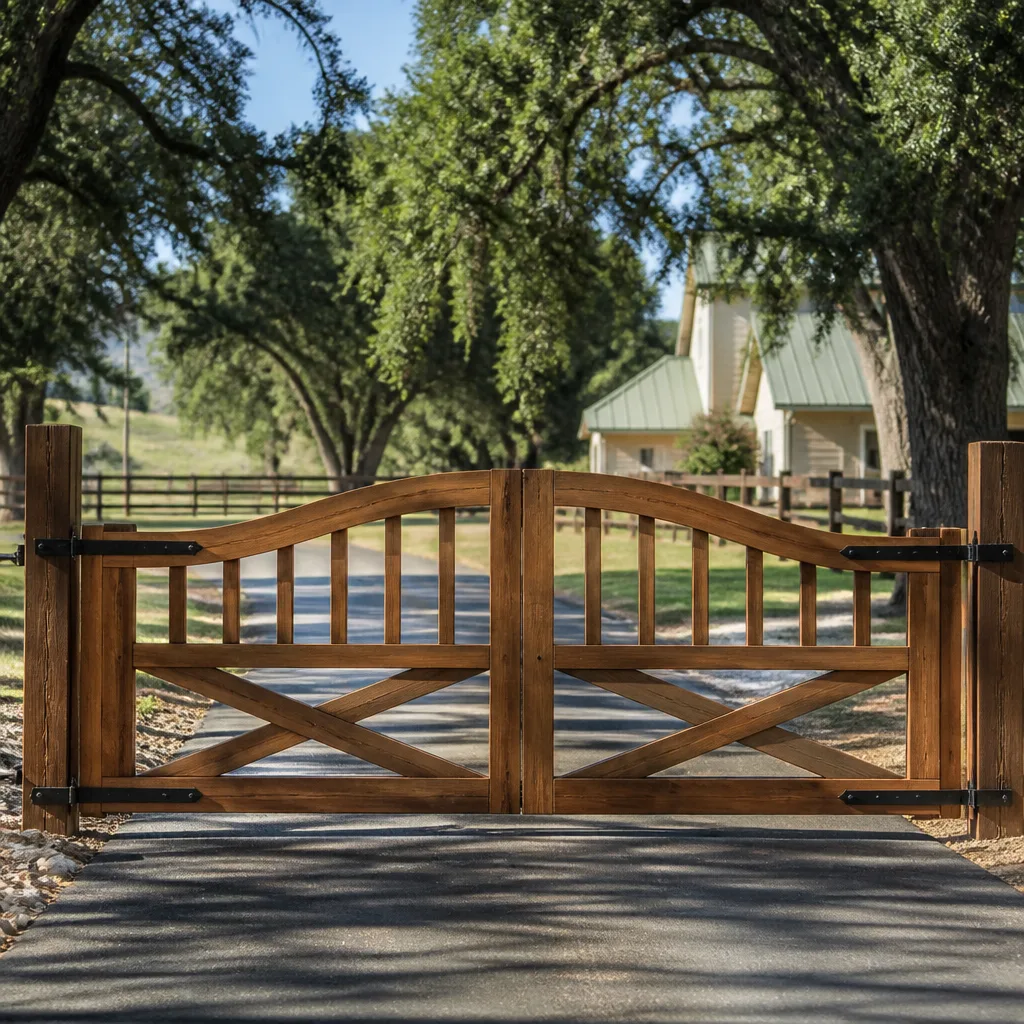 Farm & ranch
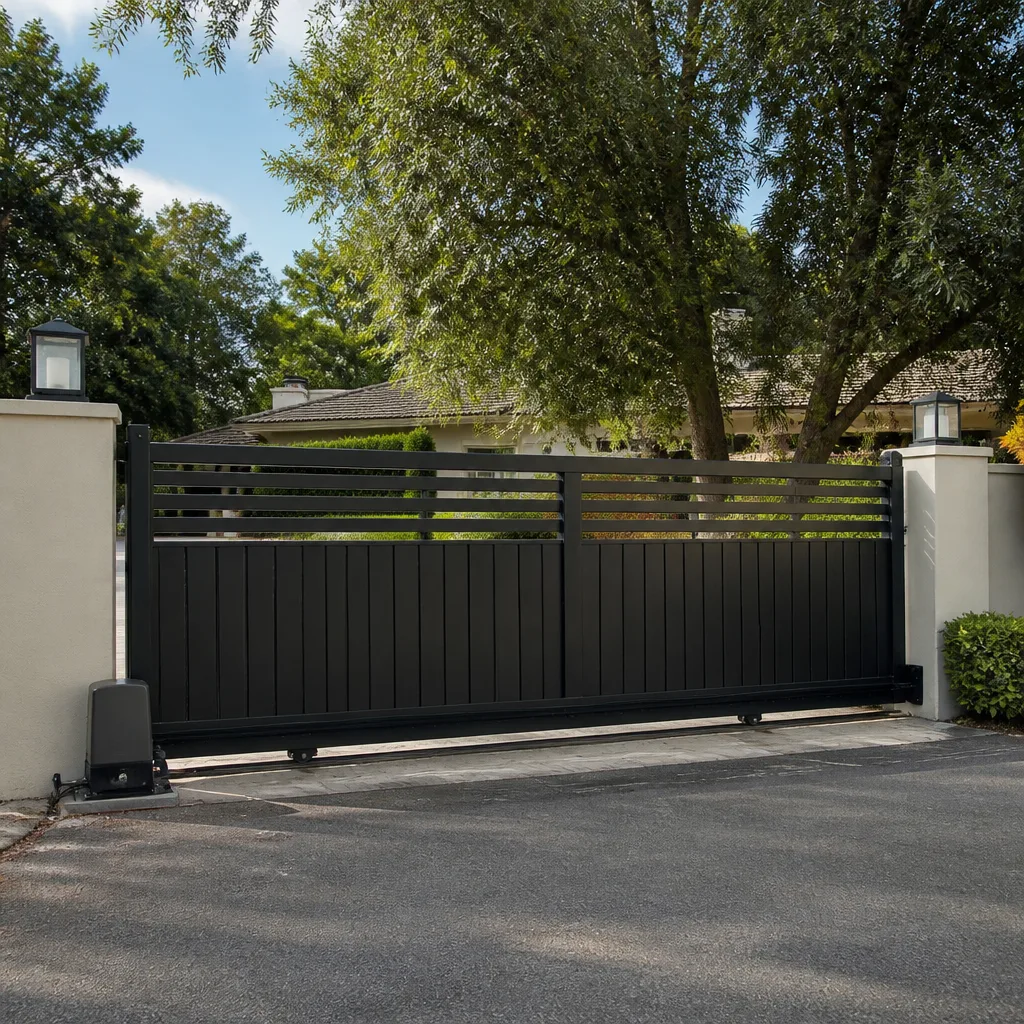 Sliding driveway gates
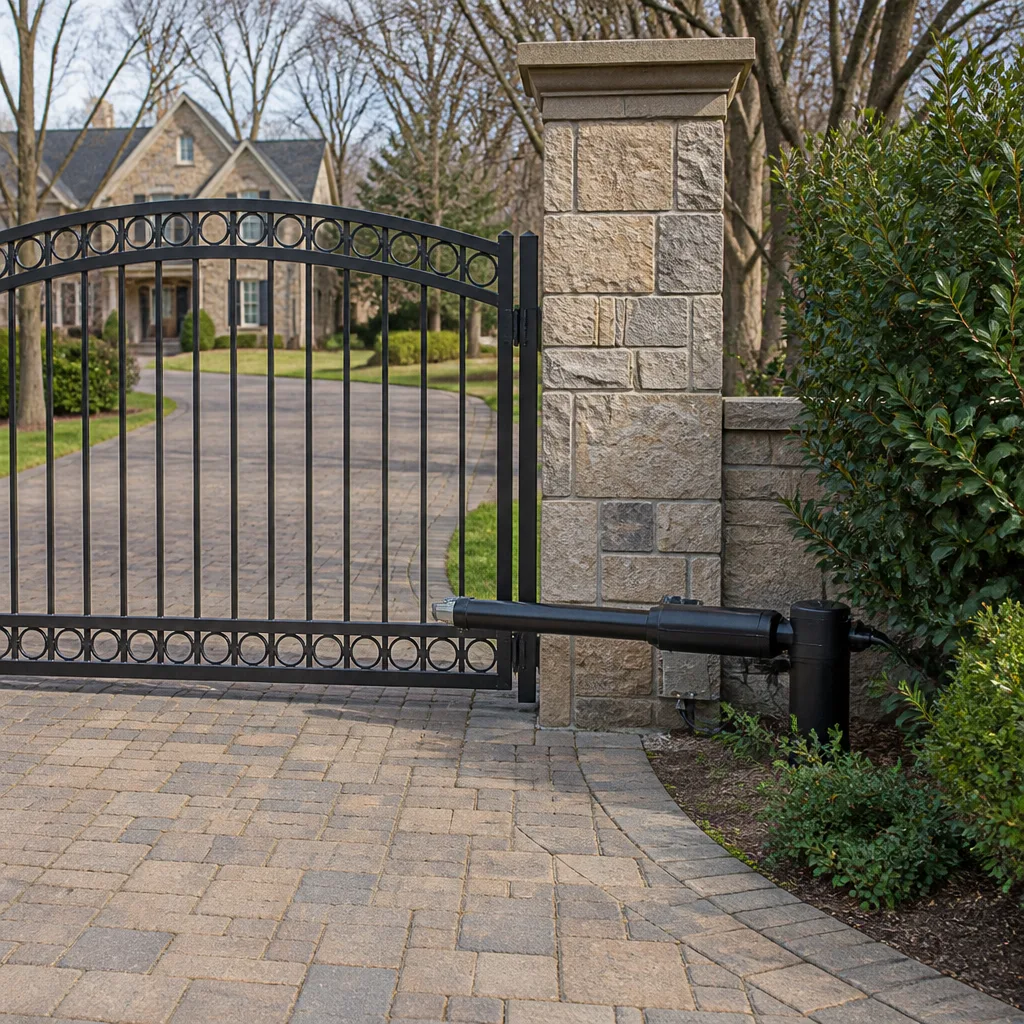 LiftMaster operators
Free on-site gate assessment - hinges, posts, and your LiftMaster or Nice gate operator checked before anything is quoted
The assessment is free and the quote is the invoice.
Get your free estimateSeasonal Gate Repair Care for East Los Angeles: Year-Round Homeowner’s Guide
The most common month for gate operator failure in East Los Angeles isn’t January. It’s October. By the time autumn rolls around, a summer’s worth of heat has baked the lubricant off chains and drive gears, and the first Santa Ana wind event hits a gate that hasn’t been checked since spring. The result: a motor that burns out pushing against a stop bolt that’s worked itself loose, or a hinge weld that finally lets go under a 50 mph gust. This guide maps the four stress windows that actually matter for gate systems in East Los Angeles, what breaks in each one, and what to do about it before you’re standing at the end of your driveway with a gate that won’t move. For a deeper dive, see our The Complete Gate Repair Guide for East Los Angeles Homeowners.
Styles & brands we work with
- Wrought iron
- Wood & steel frame
- Farm & ranch
- Sliding driveway gates
- LiftMaster operators
Quick Answer
Seasonal gate care in East Los Angeles means servicing your gate four times a year, not once or twice. Each season stresses different components: Santa Ana winds in fall punish hinges and stop bolts, marine layer humidity in spring accelerates corrosion on steel hardware, summer heat degrades circuit boards and nylon gears inside operators, and winter storms test drainage, wiring seals, and battery backups. A targeted inspection at the start of each of these windows prevents most of the failures we see at Gate Repair East Los Angeles home.
Table of Contents
- Santa Ana Wind Season (September – November): The Gate Killer
- Marine Layer Humidity (May – June): Corrosion Without Rain
- Summer Heat-Soak (July – September): What 100°F Does to Gate Operators
- Winter Storm Prep (December – February): Drainage, Seals, and Battery Backup
- The East LA Annual Gate Service Calendar
- What Homeowners Can Safely Do vs. What Needs a Gate Technician
- Common Mistakes to Avoid
- When to Call a Professional
- Frequently Asked Questions
- The Bottom Line
Santa Ana Wind Season (September – November): The Gate Killer
Santa Ana winds aren’t just a fire hazard. They’re the single most destructive force for gate hardware in East Los Angeles. We’re talking sustained gusts of 40 to 60 mph, sometimes higher through the canyons, hitting a gate that acts like a sail. A standard 12-foot driveway gate in a 50 mph gust can exert several hundred pounds of lateral force on the hinges and operator. Hardware that was fine at 10 mph will fail spectacularly at 50.
What actually breaks during Santa Ana season, in order of frequency:
- Stop bolts and physical stops. These take the brunt of every wind gust. Over time they loosen, bend, or rip out of the concrete. Once a stop fails, the gate over-travels and the operator arm gets hyper-extended.
- Hinge welds and hinge pins. Cast-iron or welded steel hinges develop micro-fractures from years of wind cycling. A Santa Ana event is when those fractures finish their work.
- Operator arms and brackets. When the gate slams against a worn stop, the kinetic energy transfers into the operator. Bent arms, cracked brackets, stripped gears.
- Latch and lock assemblies. A gate that’s slammed repeatedly against a latch will eventually destroy it. The gate then swings freely in the wind, which accelerates every other problem on this list.
Here’s what to inspect before the winds pick up, and again after the first major event:
- Check every stop bolt for tightness. Put a wrench on them. If a bolt turns easily by hand, it’s loose enough to fail under wind load.
- Look at the hinge welds with a flashlight. Surface rust is normal. Hairline cracks are not. If you see a dark line running through a weld, call a gate technician before the next wind event.
- Operate the gate and watch it seat against the stops. It should contact both stops evenly and stop immediately. If it bounces, over-travels, or the operator keeps pushing for a second after contact, the limits need adjustment.
- Secure any loose pickets, panels, or decorative elements. Anything that rattles in a normal breeze will tear off in a Santa Ana.
A note on gate operators in high-wind zones: if you have a slide gate, pay extra attention to the track and rollers. Wind pushes the gate sideways against the track, and worn rollers will bind under that load. If you have a swing gate, the operator’s limit switches are the failure point. When a gate gets slammed repeatedly, the limits drift, and the operator starts pushing past the stop. Every cycle after that grinds the gear. By October, a year’s worth of small limit drift becomes a stripped drive gear.
One more thing specific to East Los Angeles: the hills. If you’re in Monterey Park Hills, City Terrace, or anywhere with elevation, your wind exposure is higher than flat areas like Boyle Heights or the 60 corridor. Gates on ridgelines get wind from multiple directions, and we’ve seen those fail at double the rate of gates in the flats. That’s not an exaggeration; it’s a function of sustained gust duration, not just peak speed. A gate that takes 40 mph gusts for six hours straight accumulates more stress than one that takes a 55 mph gust for ten minutes.
Marine Layer Humidity (May – June): Corrosion Without Rain
May Gray and June Gloom aren’t just a mood. They’re a corrosion accelerant. Morning marine layer brings 80 to 90 percent relative humidity to East Los Angeles almost every day for six to eight weeks. The air doesn’t dry out until well past noon. Then it comes back the next morning. That daily wet-dry-wet cycle is more aggressive on exposed steel than a single rainstorm. Rain comes and goes. The marine layer parks itself on your gate for two months.
The components most affected by marine layer humidity:
- Exposed steel hardware. Hinges, brackets, latch bars, and threaded fasteners. Any scratch or chip in the paint or zinc coating becomes a corrosion cell. In East LA, a scratch that’s unprotected through one June Gloom season will have visible rust by July.
- Control boards in non-weatherproof enclosures. Seal failure on a control box gasket means condensation forms on the board every morning. The result: oxidized solder joints, corroded terminals, and intermittent faults that are hell to diagnose because they only happen when the board is cold and damp.
- Chain and sprocket assemblies. Chains that aren’t lubricated properly collect moisture between the links. Surface rust forms, and then the chain starts wearing the sprockets unevenly. A chain that’s been through two or three marine layer seasons in East Los Angeles without lubrication will stretch enough to jump teeth under load.
- Wiring connections. Wire nuts, butt splices, and terminal blocks exposed to daily humidity cycles develop green corrosion on copper. This increases resistance, which generates heat, which accelerates the corrosion further. It’s a slow cascade that ends in a dead motor or a fried board.
- Inspect every exposed fastener for surface rust. Surface rust is a warning sign, not an emergency. But it tells you where to focus before it becomes structural.
- Check the control box gasket. Open the box on a dry afternoon. Look for condensation stains, rust trails on the board, or any sign of moisture ingress. If the gasket is brittle or cracked, replace it. That’s a fifteen-dollar part that protects a three-hundred-dollar board.
- Lubricate chains and hinges. Use a dry lubricant on exposed chain. Wet lubricants attract dust, and East LA has plenty of that. The goal is a moisture barrier that doesn’t turn into a grinding paste.
- Tighten any connection that’s worked loose. Vibration plus thermal cycling loosens terminals over time. Loose connections arc, arc generates heat, heat kills boards.
- Electrolytic capacitors. The single most common heat-related failure in gate operators. Capacitors have a rated lifespan that drops by half for every 18°F increase above their rated temperature. A capacitor rated for 10,000 hours at 105°F lasts about 2,500 hours at 140°F. That’s roughly one East LA summer of daily cycles.
- Nylon drive gears. Most residential operators, including Ghost Controls and many Linear models, use nylon or composite gears in the drive train. At sustained temperatures above 130°F inside the housing, nylon softens measurably. Under load, softened gears strip. The failure is often sudden: the gate worked fine in the morning, and by 3 p.m. on a hot day, the motor spins but the gate doesn’t move.
- Control board solder joints. Repeated thermal cycling, expanding and contracting every day from morning marine layer to afternoon heat, eventually cracks solder joints on boards. Intermittent failures follow: the gate works, then doesn’t, then works again, and the problem gets worse as the crack widens.
- Transformer insulation. Constant heat dries out the varnish on transformer windings. Eventually, the insulation fails and the transformer shorts. The symptom: a gate operator that trips its breaker or blows its fuse every time it tries to run.
- Verify the operator’s thermal relief is working. Most quality operators have a thermal protection circuit. If your gate shuts down during a heat wave and won’t respond for 20 to 30 minutes, that’s the thermal protection doing its job. If the gate shuts down and never comes back, the protection failed, and the component cooked.
- Check that the operator housing has adequate ventilation. We’ve seen plenty of installations where someone painted over the vent slots or the housing was installed too close to a wall. Restricted airflow means higher internal temperatures means shorter component life.
- Consider the gate’s duty cycle. A gate that cycles 40 times a day in the summer heat is working its operator much harder than a gate that cycles 10 times. If your household or building runs a lot of traffic, the operator needs more frequent service, full stop.
- Lubricate with a high-temperature product. Standard lubricants thin out and run off at 120°F. A high-temp chain lubricant stays in place when the gate is hot. This is a small thing that extends chain and sprocket life substantially.
- Visual inspection of hinges, welds, and stop bolts
- Clearing debris from slide gate tracks
- Lubricating chains and hinges with the correct product
- Checking control box gaskets for visible cracking
- Running a battery backup test by switching off the breaker
- Cleaning photo-eye lenses
- Any adjustment to operator limit switches. Getting this wrong means the gate over-travels, and the next Santa Ana event converts that mistake into a stripped gear.
- Spring or counterbalance adjustments on heavy gates. A 400-pound gate under spring tension can cause serious injury if the spring lets go. Do not attempt this without proper tools and training.
- Control board diagnostics or replacement. This requires understanding the specific board’s wiring, voltage requirements, and safety circuit logic. Guesswork here can destroy a board in seconds.
- Welding repairs. A bad hinge weld repair fails under wind load. The gate comes off its hinges. That’s a life-safety issue, not a cosmetic one.
- Any repair involving the operator’s high-tension components. Gate operators, particularly large swing arms and slide mechanisms, store mechanical energy. A sudden release can cause severe injury.
- Waiting until the gate breaks to service it. By the time a gate fails, the root cause has usually been developing for months. Seasonal inspection catches the loose stop bolt in August before it strips the gear in October.
- Using WD-40 as a lubricant. WD-40 is a water displacer and solvent, not a long-term lubricant. It cleans, then evaporates, leaving metal unprotected. Use a proper chain lubricant or a dry film lubricant designed for gate hardware.
- Ignoring a slow-moving gate. A gate that opens slower than it used to is telling you something: the rollers are binding, the chain is tight, the capacitor is fading, or the battery is weak. Slow movement is a warning light. Address it before it becomes a dead gate.
- Painting over hinges and moving parts. Paint on a hinge pin creates friction. Paint on a chain creates a mess. Paint on limit switch components makes adjustments harder. Keep paint off moving parts.
- Skipping the battery backup test because “power rarely goes out.” The point of a backup is the rare event. When that rare event happens and the battery is dead, you’re fixing something that a ten-minute test in November would have caught.
- Assuming a gate needs replacement when it actually needs a targeted repair. We see homeowners in East Los Angeles quoted for full gate replacement when the real problem is a 150-dollar capacitor or a misaligned photo-eye. Get a specific diagnosis before committing to a big-ticket replacement.
What to do during marine layer season:
We work on gates from BFT and Linear all over East Los Angeles, and the corrosion pattern is consistent: units installed within three miles of the 710 or 5 freeways corrode faster than units further from freeway corridors because airborne exhaust particulates settle on surfaces and hold moisture. That’s not something a generic maintenance checklist mentions, but it’s real. If your property sits near a freeway or a major artery like Atlantic Boulevard or Whittier Boulevard, treat your gate hardware as if it’s in a higher corrosion zone. More frequent lubrication, more frequent inspection.
Summer Heat-Soak (July – September): What 100°F Does to Gate Operators
East Los Angeles regularly sees summer afternoons above 95°F, with surface temperatures on dark-colored metal gates reaching 130°F to 150°F in direct sun. Inside the operator housing, where the motor, control board, and transformer live, the ambient temperature runs 30 to 40 degrees hotter than the air outside. On a 100°F day, that’s 140°F inside the box. Electronics don’t like 140°F.
Here’s the specific damage timeline we see at Gate Repair in East Los Angeles for components exposed to East LA summer heat:
What you can do to reduce summer heat damage:
One East LA-specific tip: if your gate faces west or southwest, it takes the brunt of the afternoon sun at its hottest. Dark iron gates get hottest; lighter colors or aluminum gates run cooler. We’re not suggesting you replace your gate based on this, but if you’re already considering a new installation, the orientation and material choice matter for long-term operator life. Gate Installation in East Los Angeles is a conversation worth having before you commit to a material.
Winter Storm Prep (December – February): Drainage, Seals, and Battery Backup
Winter in East Los Angeles isn’t snow and ice, but it’s not nothing either. Atmospheric river events bring sustained rain. Power outages accompany the worst of those storms. And when the power goes out, your electric gate’s battery backup, if it has one, is the only thing keeping your property accessible or secured. A gate that’s never been tested in winter will reveal its weaknesses at the worst possible moment.
The three winter failure points that matter most:
1. Slide gate track drainage. Slide gates run on a steel track set into the ground. If that track sits in a low spot where water pools, the rollers sit in water. Water plus steel bearings equals rust. Rust equals rolling resistance. Rolling resistance means the motor draws more current to move the gate, which generates heat, which stresses the board and the capacitors. It’s a chain reaction that starts with standing water. In East LA neighborhoods with older concrete work or uneven driveways, track drainage is a real problem. The fix: verify the track drains properly, clear any debris that blocks runoff, and inspect the rollers for rust or pitting after any sustained rain event.
2. Control box penetrations. Anywhere a wire enters the control box is a potential water entry point. Conduit fittings loosen over time. Grommets crack. Caulk fails. In a driving rain with the wind hitting the box at the right angle, water follows the conduit into the box and drips onto the board or the wiring terminals. The failure might not be immediate, but the corrosion starts and three months later the gate stops responding. Before winter, inspect every penetration point on the control box, confirm all fittings are tight, and look for any signs of water intrusion from previous storms.
3. Battery backup systems. A battery backup keeps your gate operational during a power outage. For properties where the gate is the only vehicle access point, and for anyone with a loved one who needs medical access, a dead battery backup is a serious problem. Batteries have a service life, usually three to five years, and they degrade faster in the heat. By winter, after a hot summer, many backup batteries in East LA are at the edge of their capacity. The test is simple: cut power to the operator at the breaker and run the gate. If it’s slow or won’t move, the battery needs replacement. Do this test in December, not during the storm.
For Viking and DoorKing commercial operators, battery backup systems also run the loop detectors and safety edges. A failing battery in one of these units can cause false obstruction signals, which means the gate refuses to close or opens and closes erratically. Property managers in East LA see this every winter, and it’s almost always traced back to a battery that was never tested.
The East LA Annual Gate Service Calendar
Here’s the scheduling logic most homeowners miss. You don’t service a gate “twice a year” on some arbitrary schedule. You service it before each of the four stress windows starts. The timing in East Los Angeles is actually quite predictable. Here’s the calendar we recommend:
| Month | Service Task | Stress Window Being Prevented |
|---|---|---|
| Late August | Full inspection: stops, hinges, welds, operator limits, chain tension | Santa Ana wind season (Sep – Nov) |
| Early May | Corrosion check: fasteners, control box gasket, wiring connections, marine layer lubrication | June Gloom humidity cycle (May – Jun) |
| Late June | Heat prep: thermal protection test, ventilation check, high-temp lubrication, capacitor visual inspection | Summer heat-soak (Jul – Sep) |
| Late November | Winter prep: track drainage, penetration seals, battery backup test, photo-eye alignment | Winter storm season (Dec – Feb) |
Each of these service visits is a 30 to 45 minute job for a technician who knows what to look for. The cost of all four visits combined is less than the cost of a single emergency operator replacement through our Gate Repair services. That’s the math we wish more East Los Angeles homeowners would do before October.
What Homeowners Can Safely Do vs. What Needs a Gate Technician
Some of the tasks in this guide are well within a homeowner’s ability. Others are not, and attempting them creates real risks. Here’s the honest breakdown.
Safe for homeowners:
Leave to a gate technician:
We work on gate systems from Ghost Controls and BFT regularly in East Los Angeles, and the honest truth is that brand familiarity matters even for seasonal maintenance. Limit switch procedures differ between manufacturers. Lubrication specs differ. A technician who already knows your brand’s hardware gets the service done correctly in one visit. A generalist learning on the job might miss things or apply the wrong approach.
Common Mistakes to Avoid
When to Call a Professional
You should call a gate specialist when the gate makes a grinding noise, moves unevenly, stops mid-cycle, or won’t respond to remotes or keypads. Any of these indicates a component-level problem that won’t improve with lubrication. You should also call before storm season if you haven’t had the gate inspected in the past year. For Electric Gate Repair in East Los Angeles, the diagnostic approach is root cause identification before any repair is recommended: motor, control board, sensor, or wiring. Gate Repair East Los Angeles offers free estimates in East Los Angeles. Call (833) 620-4315 to schedule an inspection or discuss a repair. The price is quoted and agreed before any work starts.
Frequently Asked Questions
Four times a year, aligned with the four stress windows described in this guide: late summer before Santa Ana winds, late spring before marine layer humidity, early summer before peak heat, and late fall before winter storms. Each visit is short, but together they prevent the vast majority of failures we see in East Los Angeles. Call (833) 620-4315 to set up a seasonal inspection schedule.
October in East Los Angeles combines the first major Santa Ana wind events with the cumulative effects of a full summer of heat degradation. Lubricants have thinned and baked off. Capacitors are weakened. Stop bolts have been vibrating loose for months. The wind event is the trigger, not the root cause. An August inspection addressing the accumulated summer damage prevents most October failures.
A typical residential gate operator replacement in East Los Angeles generally ranges from 1,200 to 3,500 dollars depending on the operator type, gate size, and access system. Slide gate operators typically run higher than swing gate operators. Commercial operators start higher still. The best way to know your exact number is a free estimate at your property. Call (833) 620-4315 and we’ll quote the price before any work begins.
Yes. We work on gate systems from nine major manufacturers including BFT, Linear, Viking, and Ghost Controls, covering the vast majority of residential and commercial systems installed in East Los Angeles. If your operator has a brand label, we already know it. If it doesn’t, we’ll identify it on site by the board and motor configuration.
Switch off the circuit breaker that powers your gate operator, then operate the gate normally using the remote or keypad. It should open and close at near-normal speed. If it’s noticeably slower, struggles, or won’t move, the battery is failing and should be replaced before winter storm season. After the test, turn the breaker back on.
Yes. The morning humidity cycle from May through June in East Los Angeles deposits moisture on exposed metal surfaces daily. Over weeks, that daily moisture accelerates corrosion on hinges, fasteners, chains, and any scratched or chipped surfaces. It’s less dramatic than a rainstorm but more cumulative. Proper lubrication before June Gloom and a corrosion check after is cheap insurance.
The Bottom Line
East Los Angeles gate systems fail on a seasonal schedule, and knowing that schedule is the biggest advantage a homeowner can have. Four stress windows, four targeted inspections, and the vast majority of breakdowns simply never happen. The alternative is the October scenario: a Santa Ana wind event hits a gate that’s been quietly deteriorating since spring, and a 200-dollar repair becomes a 1,800-dollar operator replacement. Seasonal gate care isn’t about being fastidious with maintenance, and you can find more guides & resources on our blog. It’s about understanding what the East LA climate actually does to gate hardware and staying ahead of it.
Written by the team at Gate Repair East Los Angeles, serving East Los Angeles since 2014.
See the difference
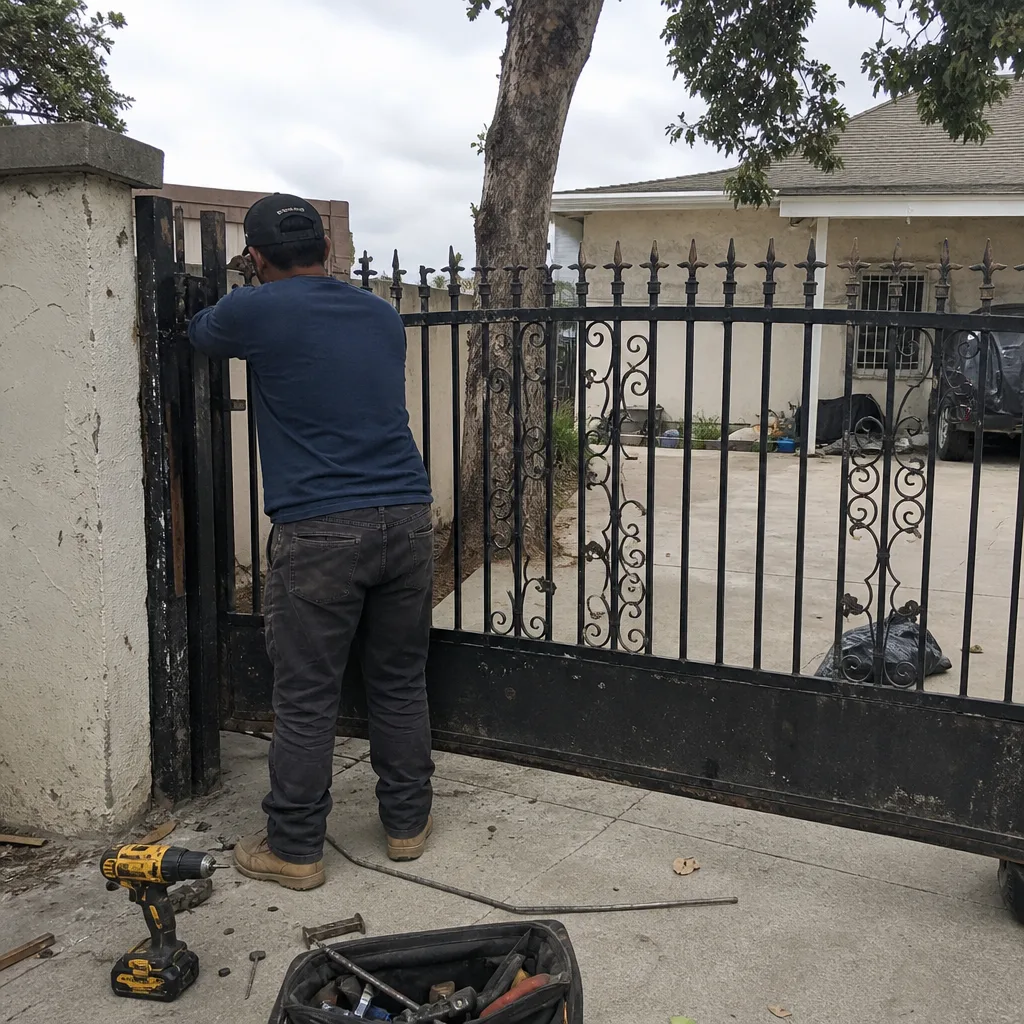 Before
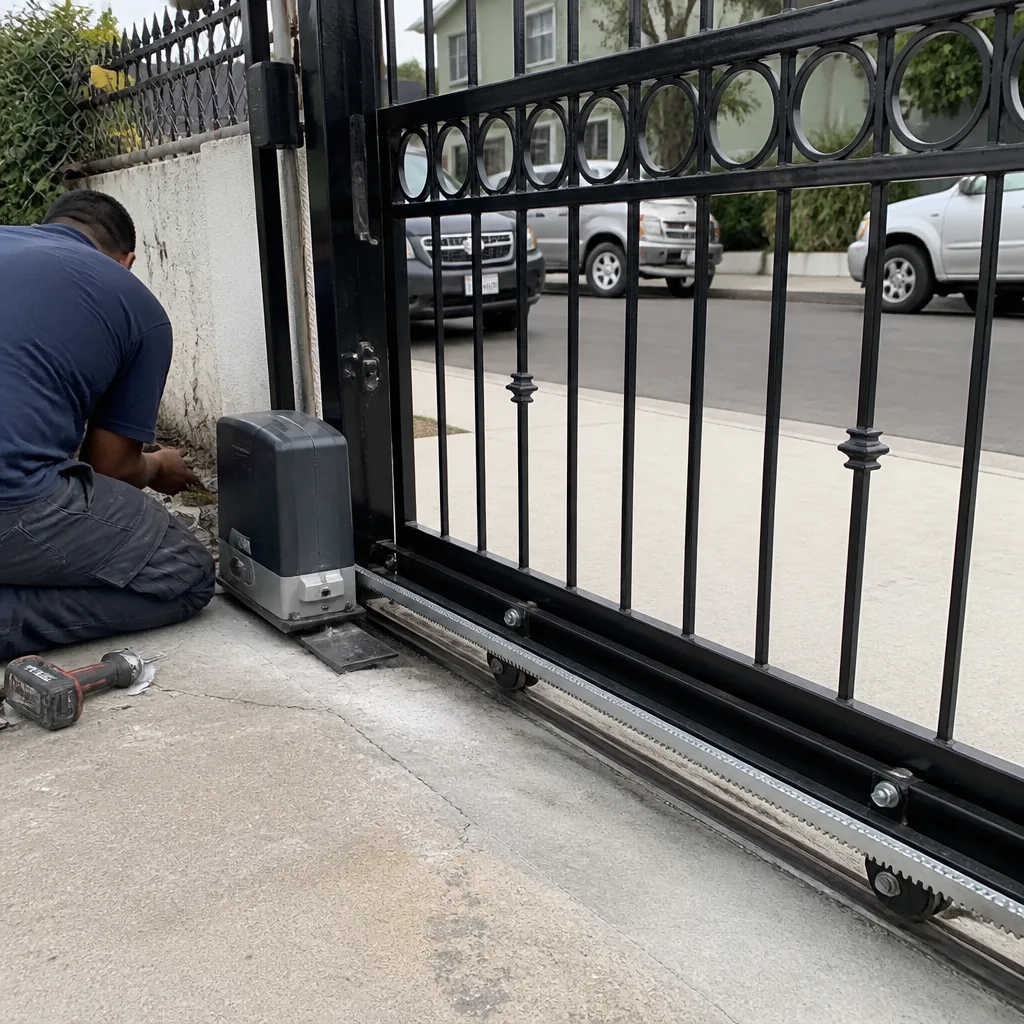 After
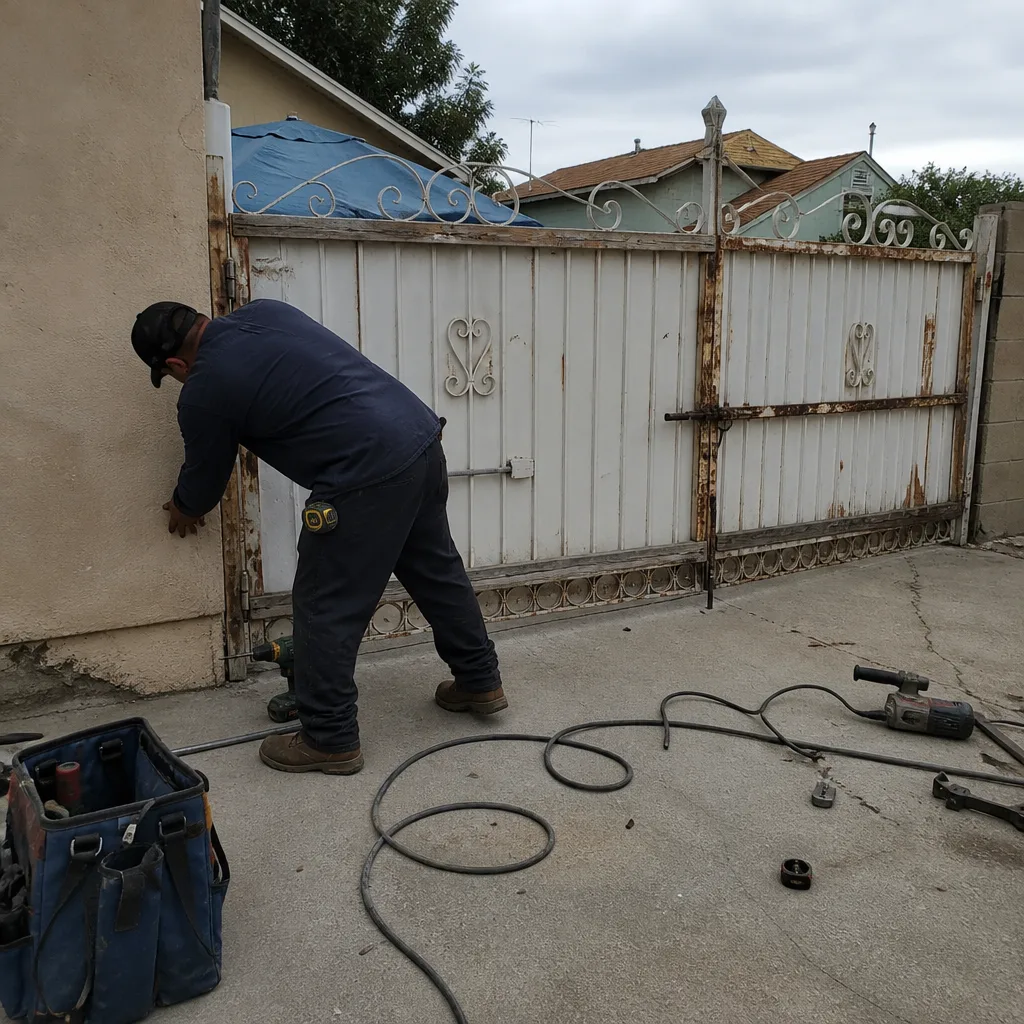 Before
 After
 Before
 After