
Last updated November 2, 2026
 Wrought iron
 Wood & steel frame
 Farm & ranch
 Sliding driveway gates
 LiftMaster operators
Free on-site gate assessment - hinges, posts, and your LiftMaster or Nice gate operator checked before anything is quoted
The assessment is free and the quote is the invoice.
Get your free estimateGate Repair Troubleshooting: Common Problems and How to Fix Them
Here’s something most troubleshooting guides won’t tell you: a gate that reverses immediately after starting isn’t the same problem as a gate that reverses halfway through its cycle. The first points to a safety sensor or obstruction detection fault. The second points to a mechanical bind, a failing capacitor in the operator, or a control board that’s losing its mind. Yet most articles lump both into “gate keeps reversing” as if they’re identical. They aren’t. And when you call a technician without knowing the difference, you end up paying for a diagnostic fishing expedition instead of our Gate Repair services that would provide a targeted fix.
This guide is built differently. It’s a symptom-first diagnostic tree based on the failure signatures we actually see in East Los Angeles driveways, apartment complexes, and commercial properties. By the end, you’ll know what’s wrong before you pick up the phone, and you’ll be able to describe it to a technician in language that gets you the right fix on the first visit. For more guides & resources, explore our blog.
Quick Answer
Gate repair troubleshooting starts with identifying the exact symptom: won’t open at all, opens but won’t close, reverses mid-cycle, moves slowly, or grinds during movement. Each symptom maps to a small set of likely causes, from dead operator motors and failed control boards to misaligned safety sensors and worn mechanical drives. Most electrical faults require professional diagnosis, but many mechanical and sensor issues can be identified with basic observation before you call a gate specialist. If you’re unsure whether your gate needs immediate attention, review Gate Repair Warning Signs: An East Los Angeles Homeowner’s Reference Guide.
Styles & brands we work with
- Wrought iron
- Wood & steel frame
- Farm & ranch
- Sliding driveway gates
- LiftMaster operators
Table of Contents
- Symptom-Diagnostic Table: What Your Gate Is Telling You
- Gate Won’t Open at All: The First Five Things to Check
- Opens but Won’t Close: Sensor Faults and Limit Switch Failures
- Reverses Mid-Cycle: The Cast of Culprits
- Opens Slowly: Voltage, Lubrication, and Load Problems
- Grinding or Screeching During Movement: Mechanical Failure Signatures
- Intermittent Failures: Why Wiring Is Almost Always the Answer
- Error Code Patterns for Common Gate Operators
- Common Mistakes to Avoid
- When to Call a Professional
- Frequently Asked Questions
Symptom-Diagnostic Table: What Your Gate Is Telling You
Before you touch anything, watch the gate through one full cycle. Note exactly what it does and when it does it. In our work across East Los Angeles, we’ve found that the precise symptom description cuts diagnostic time in half. Here’s the table we use with every customer who calls us:
| Symptom | Most Likely Cause | What to Check Before Calling |
|---|---|---|
| Gate doesn’t respond at all, no hum, no click | No power to operator, blown fuse, or dead control board | Breaker, GFCI outlet, disconnect switch |
| Gate hums but doesn’t move | Failed capacitor, seized drive mechanism, or motor failure | Manual release, listen for continuous hum |
| Gate opens but won’t close | Blocked or misaligned safety sensors, bad limit switch | Check sensor alignment, look for obstruction in path |
| Gate closes but won’t open | Failed opener limit switch, keypad or remote signal issue | Try manual release, test remote battery |
| Gate reverses immediately after starting | Obstruction detection triggered, sensor shorted | Clear path, check sensor wiring for damage |
| Gate reverses halfway through cycle | Mechanical bind, worn roller, sagging hinge, overload sensor | Inspect track and wheels, look for rust or wear |
| Gate moves slowly | Low voltage, failing capacitor, lack of lubrication | Check power source, listen for straining motor |
| Grinding or screeching noise | Worn bearings, damaged gear train, unlubricated hinges | Locate the source of the sound, inspect moving parts |
| Gate works sometimes, not others | Loose wiring connection, corroded terminal, failing receiver | Note weather and time patterns, inspect connections |
The key takeaway: your gate’s behavior is a language. A short reversal is a sensor conversation. A mid-cycle reversal is a mechanical complaint. Silence is an electrical problem. Understanding the difference means you won’t pay for a full diagnostic when a visual inspection already tells you where to look.
Gate Won’t Open at All: The First Five Things to Check
When a gate sits dead silent, the cause is almost always one of five things. Here’s the order we check them, and the order you should too. This is the exact sequence our technicians run on every no-response call in East Los Angeles:
- Power to the operator. Check the breaker, the GFCI outlet, and any disconnect switch near the operator. In East Los Angeles, older homes with shared circuits are especially prone to tripped breakers when a gate operator shares a line with landscape lighting or a pool pump. If the breaker trips again immediately, that’s a short in the operator, not a coincidence.
- The manual release. Every automated gate has a manual release lever, usually on the operator arm or the gate itself. Pull it and try to move the gate by hand. If it moves freely, the mechanical side is fine and the problem is electrical. If it doesn’t move, you have a mechanical failure: broken gear, seized bearing, or a bent track. This single test separates electrical faults from mechanical ones.
- The remote and keypad. Try every access method you have: remote, keypad, intercom, interior button. If none of them trigger the gate, the fault is in the operator or its power supply. If some work and some don’t, the problem is in the access device, not the gate itself. A dead remote battery is the easiest fix in the book.
- The operator’s diagnostic light. Most modern operators, including LiftMaster and FAAC units we service in East Los Angeles, have a small LED or LCD that blinks a code when something fails. Count the blinks or write down the code before you call. It tells the technician exactly where to look.
- Obvious physical damage. Look at the track, the wheels, the hinges, and the operator arm. A fallen branch, a vehicle bump, or years of East Los Angeles heat and dust can cause visible damage that locks the gate in place. If you see a bent track or a snapped chain, you’ve found your answer.
If all five check out and the gate still won’t move, the fault is internal to the operator: a failed motor, a blown capacitor, or a dead control board. At that point, the fix requires opening the operator housing, which we recommend leaving to a gate specialist with the right test equipment.
Opens but Won’t Close: Sensor Faults and Limit Switch Failures
A gate that opens fine but refuses to close is almost always a safety system doing its job, or a safety system that thinks it’s doing its job. The distinction matters. Here’s how to tell the difference:
Safety sensors: Every automated gate has photoelectric sensors mounted near the gate opening. Their job is to detect anything in the gate’s path and prevent it from closing. If the sensor is misaligned, dirty, or blocked by a shrub that grew over the summer, the gate will refuse to close because it thinks something is in the way. Check the sensors first. Clean the lenses. Make sure they’re pointed directly at each other. In East Los Angeles, dust and direct sun can foul sensor lenses faster than you’d expect.
Limit switches: These tell the operator when the gate has fully opened or fully closed. When the close limit switch fails, the operator doesn’t know the gate is open, so it won’t attempt to close. A bad limit switch often produces a specific behavior: the gate opens, stops, and the operator clicks or hums quietly but nothing moves. This is the switch failing to send the “gate is open” signal.
Obstruction in the track: Before you assume electrical fault, walk the track. A small rock, a wedge of dirt washed down during a storm, or a child’s toy can sit in the track and trigger the safety system. Remove the obstruction and test again.
One more possibility we see regularly on BFT and Viking units in East Los Angeles: a failing capacitor. When the capacitor can’t hold enough charge to start the motor under load, the gate opens because it’s moving with gravity or with less resistance, but it won’t close against the full load. That’s a replacement part, not a sensor adjustment.
Our electric gate repair team handles these failures this way: sensor alignment first, limit switch second, capacitor third. That order resolves the majority of open-but-won’t-close calls without replacing anything unnecessary.
Reverses Mid-Cycle: The Cast of Culprits
This is the symptom that most confuses homeowners, because the gate looks like it’s working until it suddenly isn’t. The key diagnostic detail: when does the reversal happen?
Reversal at startup (first 1-2 seconds): The operator’s obstruction detection is being triggered immediately. The most common causes are a misaligned safety sensor, a bad sensor connection, or a gate that’s too heavy for the operator’s force settings. If the gate has always worked and suddenly started doing this, look for something new in the sensor path: a parked car too close, a new trash bin, a plant that grew into the beam.
Reversal after 3-5 seconds: The gate is meeting resistance. The overload protection in the operator is cutting power because the motor is working harder than it should. The cause could be a sagging hinge, a wheel that’s worn flat, a section of track that’s bent from a vehicle bump, or a chain that’s skipping teeth. In East Los Angeles, where driveways are often narrow and gates are close to the street, we see a lot of this after a delivery truck or a distracted driver clips the gate.
Reversal at the same point every time: This is the signature of a mechanical bind at a specific spot in the travel. A bent track section, a damaged wheel, or a hinge that binds only at a certain angle. Mark the spot where the gate reverses, then inspect that exact section of track and hardware. This is the most localized, most fixable version of the problem.
Reversal at random points: Intermittent reversals point to electrical noise, a failing control board, or a capacitor that’s intermittently dropping voltage. These are the hardest to diagnose without testing equipment, because the fault may not reproduce on demand.
Our approach is consistent: we identify whether the fault is in the sensor circuit, the mechanical drive, or the operator electronics before touching a single component. The symptom timing tells us which of the three it is, and that’s what keeps the repair bill honest.
Opens Slowly: Voltage, Lubrication, and Load Problems
A slow gate isn’t just annoying. It’s a symptom of a system that’s working harder than it was designed to. Left unchecked, that extra strain shortens the life of the operator motor and the mechanical components. In our East Los Angeles service area, slow gates typically trace back to one of three causes:
Low voltage at the operator: Gate operators need a full 120V (or 240V for some commercial units) at the motor to run at rated speed. Long wire runs from the panel to the gate, corroded connections, or undersized wire can drop that voltage. If your gate has always been slow, or slowed gradually over years, low voltage is a strong suspect. A technician with a multimeter can confirm this in minutes.
Failing capacitor: In AC operators, the capacitor provides the initial surge that gets the motor spinning. A capacitor that’s losing its capacity means the motor starts weakly and runs below speed. The symptom: the gate hesitates briefly at startup, then moves sluggishly. Capacitors degrade with age and heat exposure, both of which East Los Angeles has in abundance.
Lack of lubrication: This is the simplest cause and the most commonly overlooked. Gate wheels, hinges, and chains need periodic lubrication. When they run dry, friction increases and the gate moves slower. In a dusty environment like East Los Angeles, old lubricant becomes a grinding paste. A proper cleaning and re-lubrication with the right product restores speed immediately. Use a silicone-based lubricant designed for gate hardware; WD-40 is not the right tool for this job because it’s a solvent, not a long-term lubricant.
If the gate is slow and also strains or groans, the load is the issue: the operator is moving more weight than it’s rated for. That could mean the gate itself has absorbed water and gotten heavier, the hinges have sagged and the gate is dragging, or the operator was undersized for the gate from day one. The fix is either mechanical adjustment or an operator upgrade, which a specialist can assess with the gate in front of them.
Grinding or Screeching During Movement: Mechanical Failure Signatures
Noises are diagnostic gold. A gate that grinds, screeches, scrapes, or clanks is telling you exactly where the problem lives, if you know how to listen. Here’s what each sound signature means:
Screeching or squealing: Metal-on-metal contact, almost always a bearing or a wheel that’s run dry or worn out. The sound will be rhythmic, tied to wheel rotation. A quick test: listen for whether the sound pulses with the gate’s movement speed. If it does, it’s a rolling component. If it’s constant regardless of speed, look at the hinges.
Grinding: A grinding sound that’s constant and sounds like gears straining points to the operator’s gear train. This is serious. If a gear in the operator is stripping, continuing to run the gate will only make it worse and more expensive. Stop using the gate and call a professional. Do not keep cycling it to “see if it clears up.”
Clanking or banging: Something is loose. A chain that’s lost tension, a mounting bolt that’s backed out, or a wheel that’s worked its way off its axle. Walk around the gate and physically grab each moving part: hinges, wheels, chain, operator arm. If anything moves when it shouldn’t, tighten it or have it tightened.
Chatter or vibration: When the gate shudders as it moves, the track is likely misaligned, or the wheels are worn unevenly. The gate is fighting its own track. In East Los Angeles, where many properties have older gate hardware that’s seen decades of use, this is a common finding. The fix is track re-alignment or wheel replacement, not just tightening bolts.
Our rule: if a gate is making a new noise, stop running it. Every cycle under a mechanical fault adds wear to every other component. What would have been a $50 bearing replacement can become a $500 drive repair if the gate keeps running on a failed part.
Intermittent Failures: Why Wiring Is Almost Always the Answer
Here’s a truth that frustrates homeowners and saves them money at the same time: when a gate works sometimes and fails other times, the problem is almost never the expensive parts. It’s the cheap stuff. Specifically, it’s the wiring.
Think about it. A control board doesn’t decide to work on Tuesdays and fail on Fridays. A motor doesn’t be fine at noon and dead at midnight. But a wire connection can do exactly that. Crimp connectors corrode. Terminals loosen with vibration. A staple that holds a wire to a post can wear through insulation over years until the wire barely touches and only makes contact when the temperature, humidity, or the angle of the sun is just right.
Here’s how to isolate an intermittent fault without a multimeter:
- Log the failures. Note the time, the weather, and what happened. Did it fail after rain? During the hottest part of the day? Only at night? Patterns point to specific causes: moisture intrusion, heat expansion, or condensation.
- Check the easiest connections first. The battery in the remote. The keypad’s wiring. The plug where the operator connects to its power source. Wiggle each connection gently and see if the gate responds.
- Inspect every accessible wire for damage. Look for cracking insulation, green corrosion on copper, or wires that are stretched tight across a hinge point. Gate wires flex every time the gate moves, and flexing wears through insulation.
- Look for pest damage. In East Los Angeles, rodents and squirrels routinely chew through gate wiring, especially where wires run along fence lines or under decks. Gnawed insulation is a classic intermittent fault source.
The professional approach to intermittent failure is systematic: test each segment of the circuit under load, which is exactly what our Electric Gate Repair in East Los Angeles service does. Most intermittent gate faults are resolved by re-terminating a connector or replacing a wire section, not by replacing the operator.
Error Code Patterns for Common Gate Operators
Modern gate operators from LiftMaster, FAAC, BFT, and Linear use blinking LED patterns or digital displays to communicate faults. Here’s what the common codes mean, in plain language:
LiftMaster Gate Operators
LiftMaster residential and light commercial operators use a diagnostic LED that blinks in sequences. A single blink typically indicates a sensor obstruction or misalignment. Two blinks point to a wiring short, often in the sensor circuit. Three blinks signal an open or close force exceeded: the operator tripped its overload protection because the gate met more resistance than the force setting allows. Four blinks usually indicate a limit switch failure or misadjustment. If you’re seeing any of these, the code narrows the search to one subsystem.
FAAC Gate Operators
FAAC units, common in commercial and multi-unit East Los Angeles properties, use a diagnostic that often appears as a flashing light or an error number on a display. Common faults include encoder errors (the operator lost track of the gate position and needs a re-learn), photocell errors (sensor misaligned or failed), and motor thermal trips (the operator overheated and shut down to protect itself). FAAC electronics are robust but they don’t tolerate power surges well, so surge protection is a worthwhile add-on for these units.
BFT Gate Operators
BFT operators, widely installed in apartment and condo complexes, display error conditions through a control board LED and sometimes a numeric display. Error codes commonly indicate photocell activation, motor overload, or a failed limit. One signature BFT issue: these units are sensitive to input voltage, and East Los Angeles neighborhoods with older electrical infrastructure or shared transformers can produce the voltage drops that trigger phantom BFT errors.
Linear Gate Operators
Linear operators, popular in residential and small commercial settings, typically use a blinking diagnostic light. Rapid blinking with no gate movement means the operator thinks something is in the way or the sensors are blocked. Slow blinking paired with a relay click often indicates a capacitor problem. When we service Linear units, we also check the operator arm connection, which is a known wear point on this brand.
If your operator is showing a code you don’t recognize, write it down before you call. The code tells a technician exactly where to start, and that saves you a paid diagnostic hour.
For context on what full repair service looks like in this area, our Gate Repair in East Los Angeles page outlines the process from diagnosis through completion.
Common Mistakes to Avoid
- Continuing to run a gate that’s making new noises. Every cycle on a failing bearing or stripping gear adds wear to everything around it. A $50 fix becomes a $500 fix. Stop the gate and diagnose first.
- Ignoring the manual release. This is the single most useful diagnostic feature on any automated gate, and most homeowners don’t know it exists. Pulling the release immediately tells you whether you have an electrical problem or a mechanical one. Skipping this step wastes diagnostic time.
- Adjusting the force settings on the control board without fixing the cause. Some homeowners crank up the force setting to make a struggling gate push through a mechanical problem. That’s like treating a broken leg with painkillers and going for a run. The underlying bind gets worse, and eventually the operator or the gate fails catastrophically.
- Spraying WD-40 on everything. WD-40 is a solvent and water displacer, not a long-term lubricant. It cleans away the old lubricant and then evaporates, leaving metal parts with less protection than before. Use the right lubricant for gate hardware.
- Failing to note the error code. When the operator’s diagnostic light is blinking and you don’t count the blinks, you’re throwing away the manufacturer’s own answer key. Three seconds of attention before you reset anything saves a technician an hour of re-creation.
- Assuming the gate operator is dead when the problem is the remote. A gate that won’t respond to the remote but works from the keypad isn’t an operator failure. Test every access device before you call for service.
- Waiting until total failure to call. In East Los Angeles, gate systems get heavy daily use, especially in multi-car households and rental properties. Wear compounds. If your gate has been slow, noisy, or intermittent for weeks or months, the eventual total failure will be more expensive than a targeted fix at the first sign of trouble.
When to Call a Professional
Here’s the honest breakdown. You can diagnose a lot from this guide: check the breaker, pull the manual release, clean the sensor lenses, log the error code, note when the failure happens. Those steps tell you where the problem lives. Fixing it is a different question.
Call a professional when: the gate is grinding (a stripping gear won’t fix itself), the operator is dead silent despite confirmed power, the error code points to the control board, the gate reversed into a vehicle or person, or you’ve already tried the mechanical basics and the symptom persists. Also call if the gate is heavy. A gate that has sagged and binds carries stored mechanical energy. When it releases unexpectedly, it can injure someone. Not a DIY situation.
If you’re in East Los Angeles and your gate is down, Gate Repair East Los Angeles offers free estimates in East Los Angeles. Call (833) 620-4315 and describe the symptom exactly as this guide has helped you identify it. That conversation gets the right technician and the right parts on the truck the first time.
Frequently Asked Questions
Gate repair pricing depends on the fault, but most residential repairs across East Los Angeles fall between $150 and $600 for common issues like sensor realignment, capacitor replacement, or limit switch adjustment. Control board replacements run higher. Any reputable gate specialist quotes the full price before work begins, and you should never accept an open-ended estimate. Call (833) 620-4315 for an exact quote on your specific symptom.
Yes. We service LiftMaster operators regularly, along with FAAC, BFT, Linear, and other major brands. The diagnostic process is the same regardless of brand: identify the failing component, test it, and replace only what is actually broken.
Intermittent gate failures are almost always wiring or connection problems rather than major component failures. Loose terminals, corroded connectors, and rodent-damaged insulation are the usual suspects. The fix is usually a simple re-termination or wire replacement rather than an expensive operator swap.
We work on both residential and commercial gate systems, including operators from FAAC, BFT, and DoorKing that are commonly installed on apartment complexes and commercial properties in East Los Angeles. The diagnostic and repair process is the same, but commercial systems may require different parts sourcing and can carry different local code requirements.
If the operator is less than ten years old and the mechanical hardware is sound, repair is usually the better financial choice. If the gate is sagging, the track is bent in multiple places, or the operator is obsolete and parts are no longer available, replacement starts to make more sense. We handle both, and we’ll tell you honestly which route costs less over five years. Our Gate Installation in East Los Angeles service covers full replacements when repair isn’t the right call.
For gates that are stuck open and can’t be secured, we prioritize those calls. A gate stuck open is a security issue, not just an inconvenience. Call (833) 620-4315 and we’ll give you a straight answer about scheduling based on what’s happening with your gate right now.
The Bottom Line
Most gate problems announce themselves clearly if you know how to listen. A reversal at startup points to sensors. A reversal mid-cycle points to mechanics. Silence points to power or control board. Noise points to bearings, gears, or lubrication. Intermittent behavior points to wiring. Master this diagnostic grammar and you’ll never pay for a vague “check everything” service call again.
When the symptom is clear and the fix is beyond what you can safely do yourself, call a specialist who knows your brand and has seen hundreds of gates just like yours. That’s what we do at Gate Repair East Los Angeles home. Describe the symptom precisely, and we’ll bring the right parts and the right expertise on the first trip.
Written by the team at Gate Repair East Los Angeles, serving East Los Angeles since 2014.
See the difference
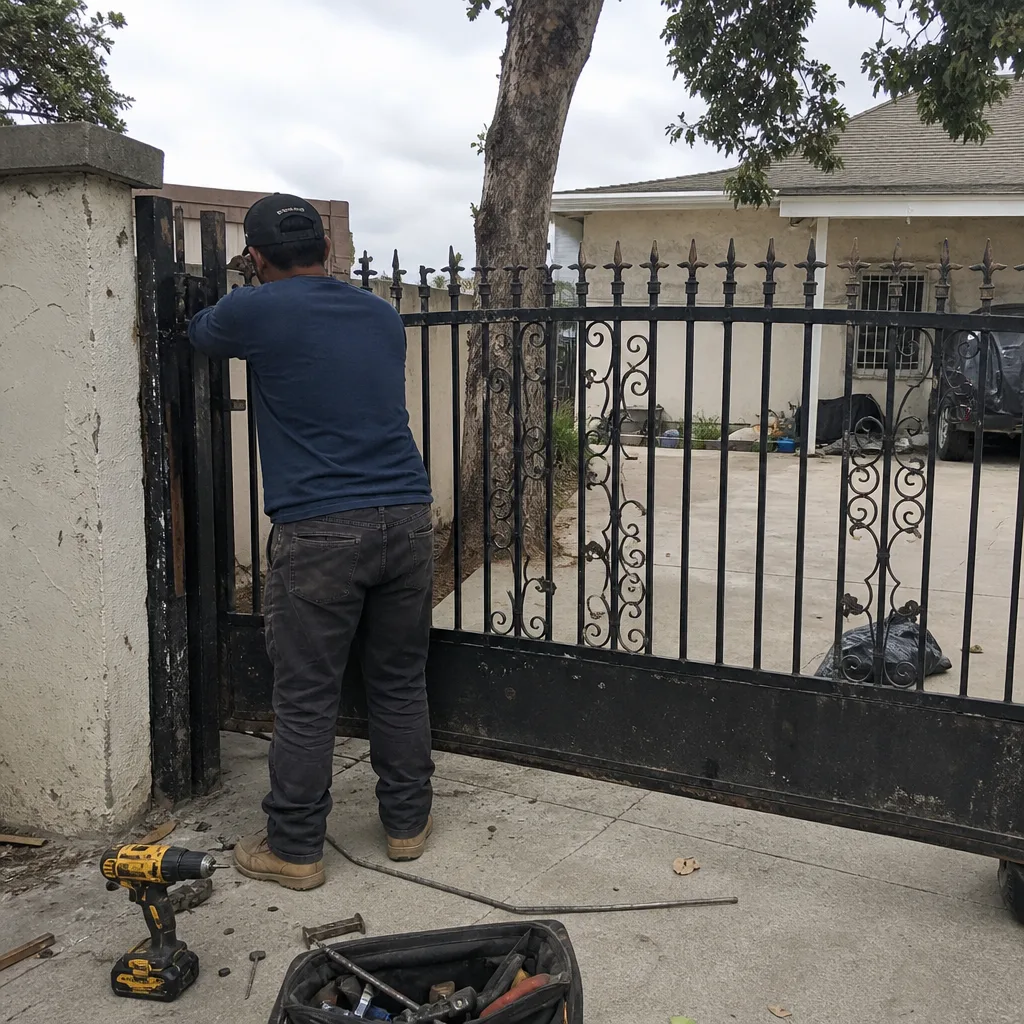 Before
 After
 Before
 After
 Before
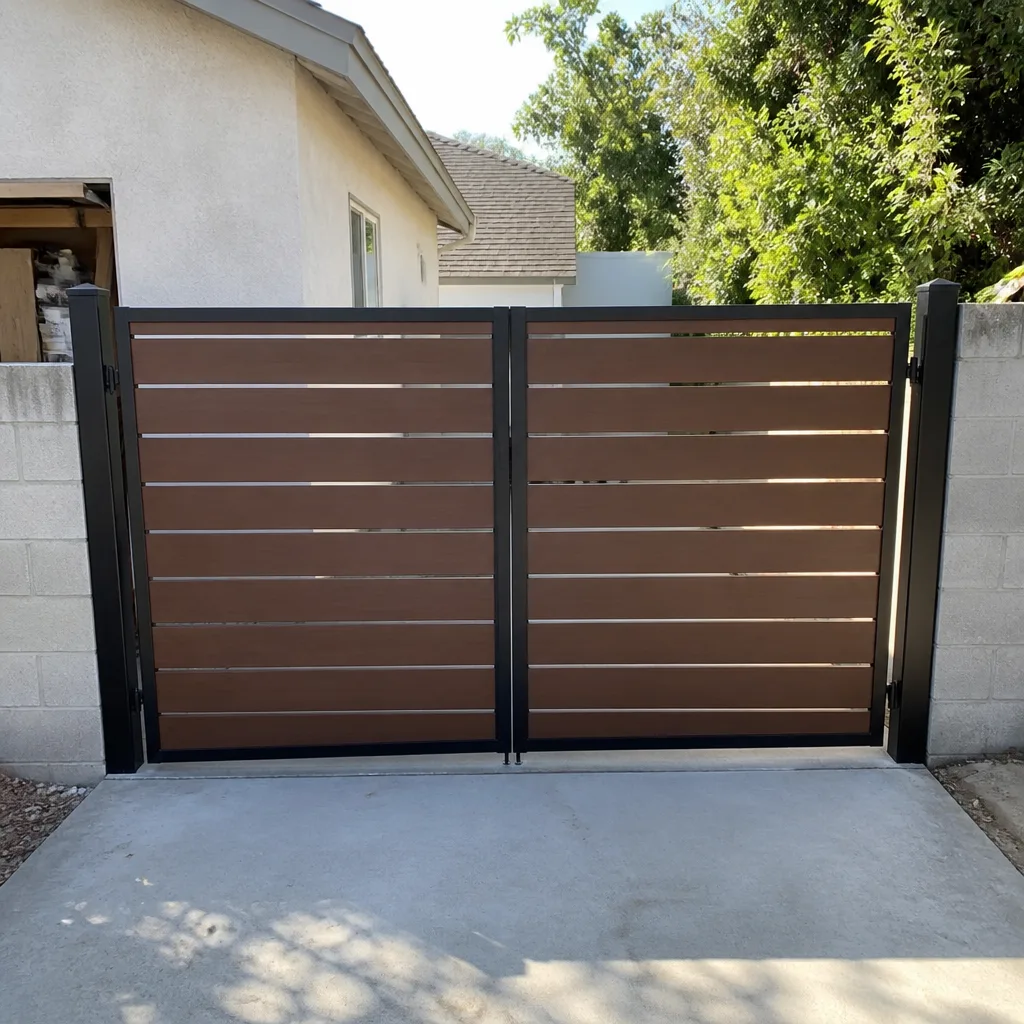 After