
Last updated November 2, 2026
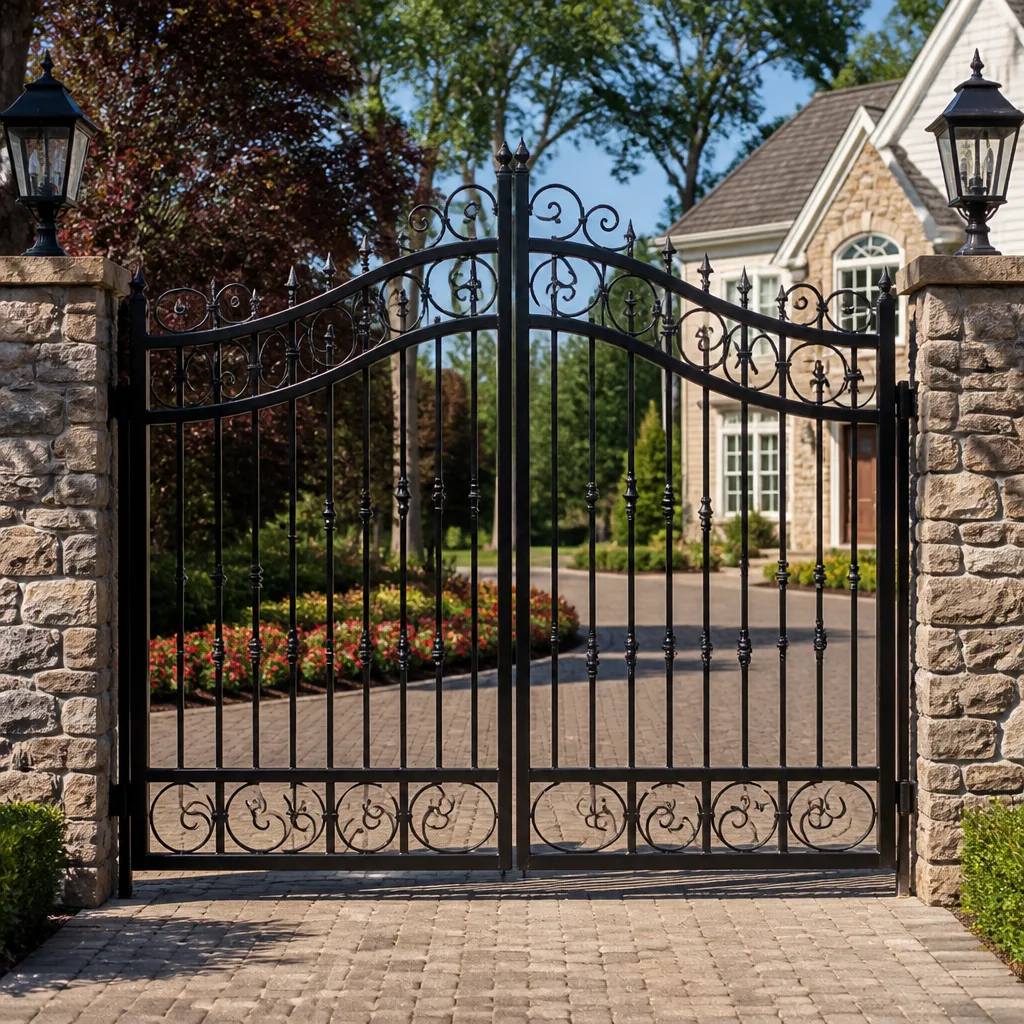 Wrought iron
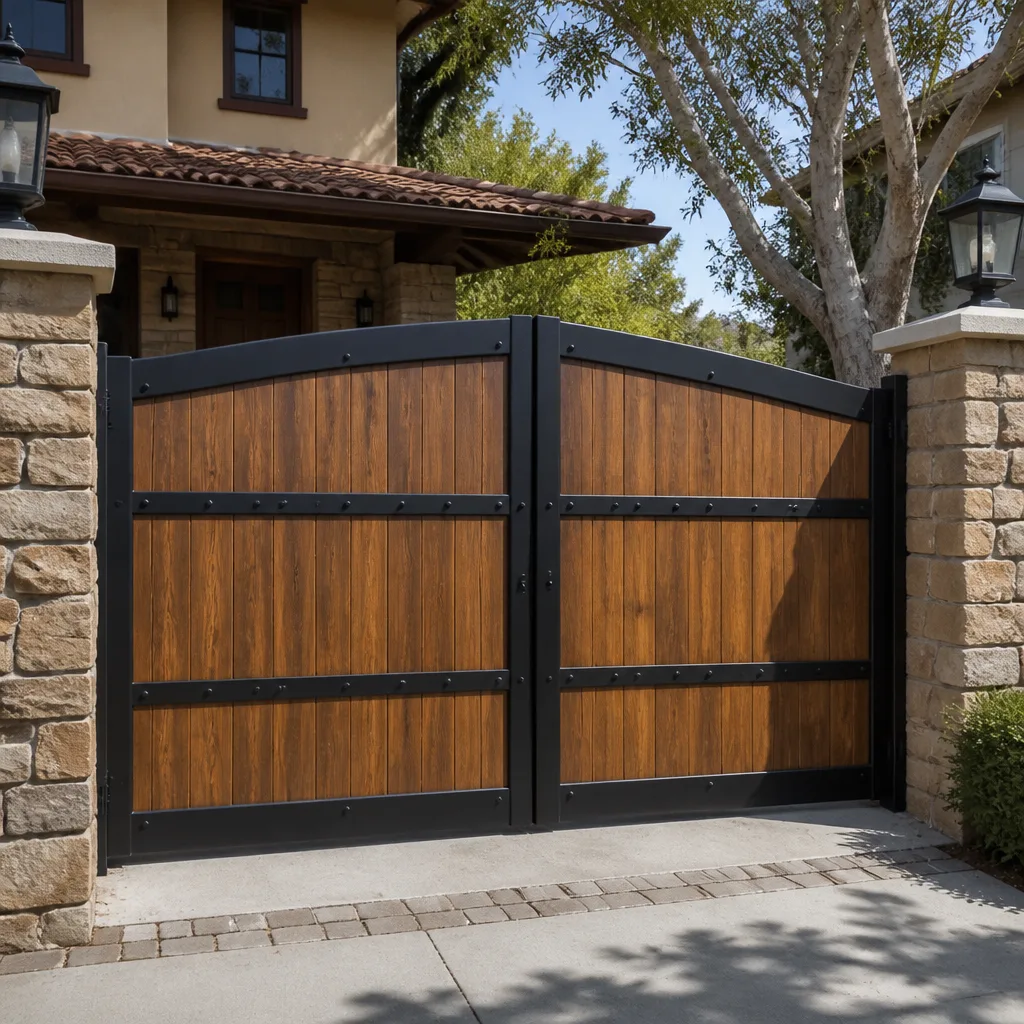 Wood & steel frame
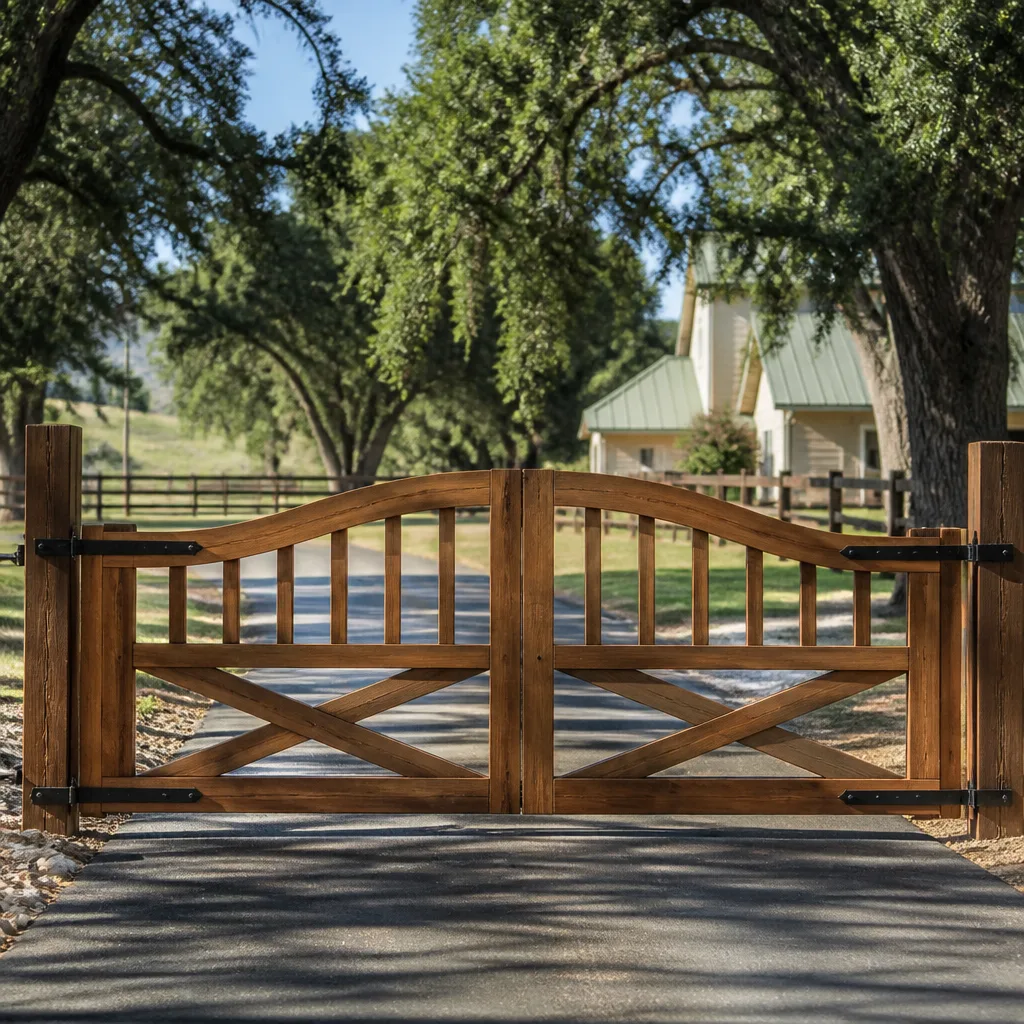 Farm & ranch
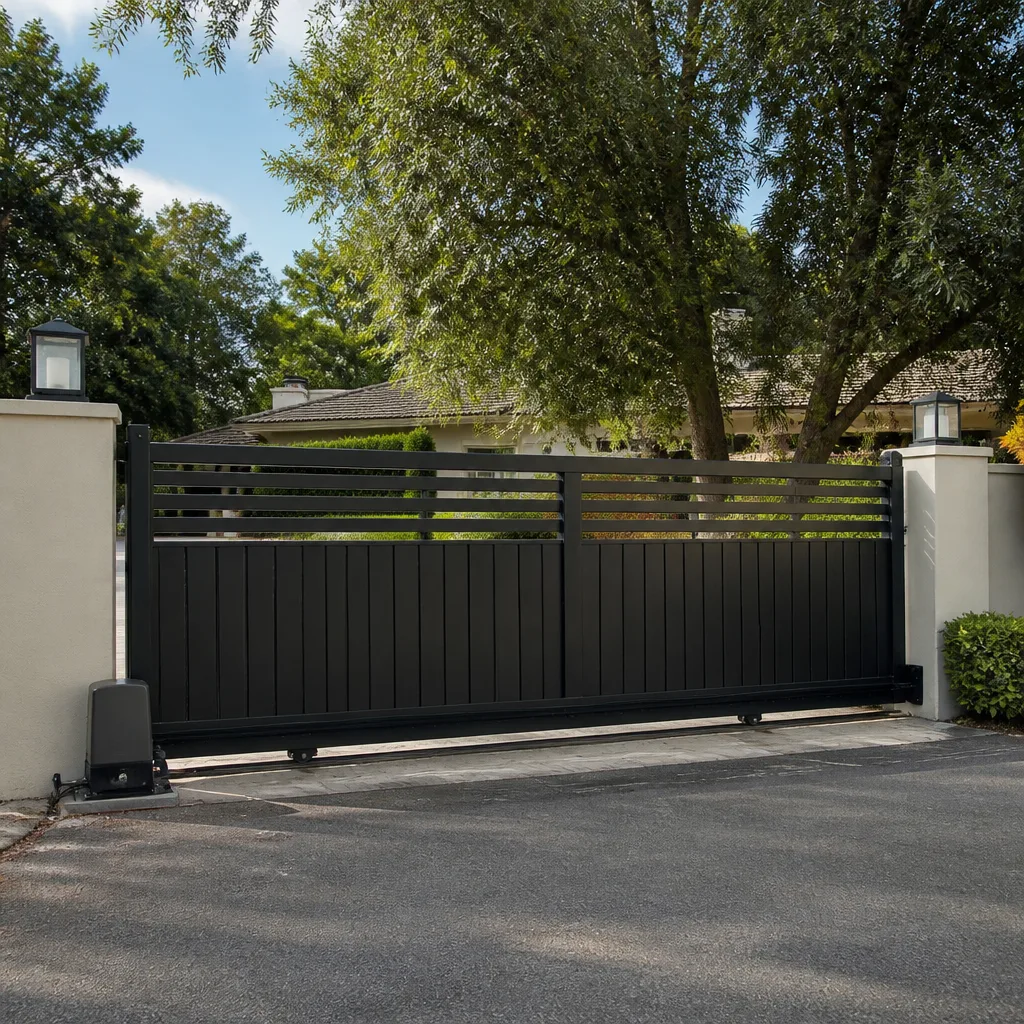 Sliding driveway gates
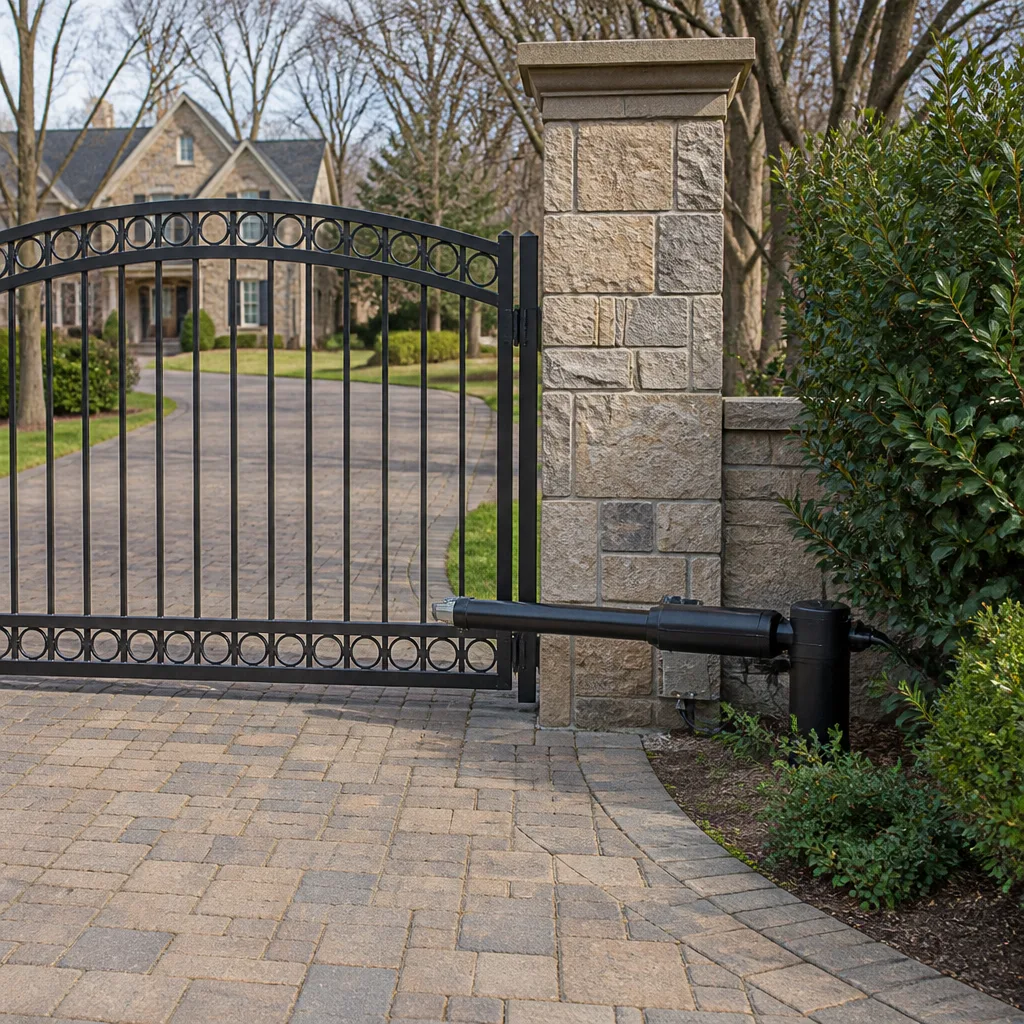 LiftMaster operators
Free on-site gate assessment - hinges, posts, and your LiftMaster or Nice gate operator checked before anything is quoted
The assessment is free and the quote is the invoice.
Get your free estimateGate Repair Permits, Codes & Inspections in CA: What You Need to Know
A homeowner in unincorporated East Los Angeles nearly lost a sale at escrow last year. His automated driveway gate, installed without a permit three years earlier, showed up on a presale inspection as noncompliant with UL 325 entrapment standards. The fix required new photoelectric sensors, a revised control board, and a retroactive permit, and the final bill ran higher than the original installation. This is not a rare story. Across East Los Angeles, we routinely see gate work that was never permitted or inspected, and it surfaces at the worst possible moment: during a sale, after an injury, or when an insurance adjuster asks for documentation. This guide explains where the permit line actually sits in California, what codes apply, and how to keep your gate legal, safe, and insurable.
Quick Answer
Most simple gate repairs, such as replacing a hinge, latch, or wheel, do not require a permit anywhere in California. For anything beyond that, our Gate Repair services can help determine if your project needs permitting. However, any structural modification to a gate post or footing, any change to the opening dimensions, and most automated gate operator installations or control system replacements trigger permit and inspection requirements under the California Building Code. In Los Angeles County, including East Los Angeles, automated gates must also comply with UL 325 entrapment protection standards regardless of whether a permit was pulled, and noncompliant gates can expose the property owner to liability and insurance complications.
Styles & brands we work with
- Wrought iron
- Wood & steel frame
- Farm & ranch
- Sliding driveway gates
- LiftMaster operators
Table of Contents
- What Gate Work Triggers a Permit in California
- LA County vs. City of Los Angeles: Which Rules Apply in East Los Angeles
- UL 325 Entrapment Protection: The Standard That Governs Every Automated Gate
- HOA vs. Municipal Authority: Who Actually Controls Gate Modifications
- How to Retroactively Permit an Existing Gate Without a Full Tear-Down
- Documentation to Keep After Any Permitted Gate Repair
- What Electric Gate Repairs Have to Do With Building Codes
- Permits for New Gate Installation: What Gets Checked
What Gate Work Triggers a Permit in California
California’s permit thresholds are written into the California Building Code (CBC), which local jurisdictions adopt and sometimes amend. The key principle: work that is cosmetic or involves replacing like-for-like components generally does not need a permit. Work that changes structure, load paths, electrical systems, or safety features generally does. The line is not always intuitive, and that is where homeowners in East Los Angeles get into trouble.
Here is what typically does not require a permit:
- Replacing a worn gate hinge, latch, or drop rod with a new part of the same type.
- Replacing a gate wheel or caster on a slide gate.
- Adjusting an existing gate closer, hinge tension, or limit switch.
- Repainting, sanding, or surface-treating an existing gate leaf.
- Replacing a keyed lock cylinder or manual latch hardware.
- Welding a cracked weld seam on an existing gate frame, provided the structural design is not changed.
Here is what typically does require a permit:
- Setting a new gate post, column, or footing, especially if it supports a cantilevered slide gate or a heavy swing gate.
- Converting a manual gate to an automated system, because this introduces electrical circuits and entrapment safety obligations.
- Replacing an automated gate operator with a unit that has a different horsepower rating or power requirement, since the branch circuit may need to change.
- Widening or heightening the opening, which changes structural loads and sometimes requires an engineered detail.
- Installing a new gate across a driveway that previously had no gate, particularly where it affects the public right-of-way or fire department access.
- Adding an access control pedestal, keypad bollard, or card reader post that requires a new electrical feed.
The repair-versus-replacement threshold confuses many property owners. Replacing a damaged steel post with a new steel post in the same location and same size is usually treated as a repair. But if the new post is larger, deeper, or repositioned, the building department will likely classify it as new construction. In East Los Angeles, where many homes date from the 1940s through the 1960s, we frequently encounter gate posts that were never built to current embedment standards, and any excavation around them exposes the owner to a code compliance conversation.
LA County vs. City of Los Angeles: Which Rules Apply in East Los Angeles
East Los Angeles is not a city. It is an unincorporated area, which means building permits and inspections fall under the Los Angeles County Department of Public Works, not the City of Los Angeles Department of Building and Safety. This distinction matters because the two jurisdictions have slightly different administrative processes, fee schedules, and interpretations of the same underlying California codes. A gate contractor who only knows city rules can mislead a homeowner in East Los Angeles about what needs to happen.
Both jurisdictions enforce the California Building Code, the California Electrical Code, and the state Fire Code. Both require permits for the same categories of structural and electrical gate work. The differences are procedural:
- Permit application: LA County processes permit applications through its Building and Safety Division, and because East Los Angeles is unincorporated, there is no city-level counter. Everything goes through county channels.
- Plan review: For complex automated gate installations, LA County may require a site plan showing the gate, the operator, the location of entrapment protection devices, and the electrical feed. The City of Los Angeles has similar requirements but uses its own forms and review staff.
- Inspection scheduling: County inspection windows in East Los Angeles tend to run longer than city inspection windows for adjacent areas. We tell customers to expect a one-to-three week wait for a county gate inspection depending on the season.
- Fees: Permit fees for gate work under LA County jurisdiction are calculated from the declared valuation of the work. A $1,500 gate repair or operator swap will carry a much lower fee than a $12,000 automated gate installation, but the permit requirement is the same.
One of the most common mistakes we see is a homeowner in East Los Angeles assuming that because a neighbor in nearby unincorporated Commerce or Maywood did unpermitted gate work without consequence, the same applies to them. Jurisdictions are not consistent block to block in this part of the county, and enforcement is up to the individual inspector. The safest approach is to call the LA County Building and Safety office, describe the work, and ask directly whether a permit is required. If the answer is yes, the permit is cheap compared to the resale and insurance risk.
UL 325 Entrapment Protection: The Standard That Governs Every Automated Gate
UL 325 is a safety standard published by Underwriters Laboratories. It applies to every automatic gate operator sold or installed in the United States, and California enforces it through the building and electrical codes. The standard exists for one reason: to keep an automated gate from crushing, pinning, or dragging a person, a child, or a pet. A gate leaf that weighs several hundred pounds can exert enough force to kill a small child. UL 325 compliance is not a paperwork formality. It is the primary engineering defense against a catastrophic injury on your property.
The standard requires that every automated gate system include a minimum of two independent entrapment protection devices or features. These include:
- Photoelectric sensors (photo eyes): An infrared beam that spans the gate opening. If the beam is interrupted while the gate is moving, the operator must stop and reverse. UL 325 requires photo eyes to be monitored, meaning the control board checks the sensor’s presence and wiring continuously. If a sensor is wired incorrectly or removed, the gate must refuse to run.
- Contact edges or edge sensors: Pressure-sensitive strips mounted on the leading edge and sometimes the trailing edge of the gate leaf. Physical contact with an object or person triggers an immediate stop and reverse.
- Inherent entrapment protection (Type A): Built into the operator itself, often in the form of a clutch or current-sensing circuit that detects an obstruction from motor amperage spikes and reverses the gate. Inherent systems are accepted for some gate types but are increasingly supplemented by external devices.
- Audio alarms: Required on installations where the gate is operated remotely and the operator cannot visually clear the gate path from the activation point.
What this means for a homeowner in East Los Angeles is practical and immediate. If your automated gate was installed before 2001, it almost certainly does not meet current UL 325 requirements. If it was installed by a previous owner without a permit, there is a high probability the photo eyes were never added or were bypassed. When we diagnose an older FAAC, BFT, or Viking operator on a gate in this area, we commonly find entrapment protection that was disconnected during a troubleshooting call years ago and never restored. The gate still opens and closes, so the owner believes everything is fine. It is not fine. It is a live liability and an insurance exclusion waiting to be discovered.
HOA vs. Municipal Authority: Who Actually Controls Gate Modifications
In planned communities along Whittier Boulevard and the adjacent corridors of East Los Angeles, homeowners often face two overlapping approval processes: the municipal permit process and the HOA architectural review process. Many people assume that if the HOA approves a gate change, the county requirements are satisfied. They are not. The HOA controls appearance, placement, and community standards. The county controls life safety, structural integrity, and electrical compliance. Both approvals are separate and both are required where applicable.
The HOA’s authority comes from the CC&Rs, the covenants, conditions, and restrictions recorded against the property. In most East Los Angeles communities with HOAs, any visible modification to the front yard or the street-facing elevation, including a new gate or a change in gate style or finish, requires architectural committee review. If the gate is a shared community entry gate rather than an individually owned driveway gate, the HOA is typically the responsible party for the gate’s compliance, and individual homeowners rarely need to do anything with the county directly. But for a homeowner’s own driveway gate, the situation reverses: the owner is responsible for the county permit and the UL 325 compliance, and the HOA only cares about how the gate looks.
Here is the order of operations we recommend for an East Los Angeles homeowner planning any gate modification in an HOA community:
- Review the CC&Rs to determine whether the planned work requires architectural approval. If unsure, ask the HOA management company in writing.
- Get the HOA’s written approval first, or at least confirm in writing that no approval is needed.
- Apply for the county permit through LA County Building and Safety, referencing the HOA approval if the plan reviewer asks about it.
- Schedule the work after both approvals are in hand. Do not let a contractor start work with only one of the two.
- Retain both the HOA letter and the county permit and inspection sign-off in the same file.
Skipping the HOA step can trigger a forced restoration demand, even if the county permit was obtained. Skipping the county step can trigger code enforcement. Both problems are avoidable, and both are far more expensive than the approvals themselves.
How to Retroactively Permit an Existing Gate Without a Full Tear-Down
The most useful piece of information in this guide might be this: unpermitted gate work can usually be legitimized without demolishing the gate. The process is called retroactive permitting or “as-built” permitting, and many contractors never mention it because it requires additional paperwork and sometimes an inspection that exposes their previous shortcuts. But the process exists precisely for situations like the escrow case described at the top of this guide.
The retroactive permit process in Los Angeles County generally follows these steps:
- Determine what was built. Document the gate’s dimensions, post sizes and depths (if known), operator type, electrical feed, and existing entrapment protection. A gate specialist can produce this documentation in a single site visit.
- Apply for a permit for the existing installation. LA County accepts applications for as-built conditions. The application describes the gate as it exists, not as it will be built, which is a materially different route than a standard permit application.
- Prepare for the compliance items the inspector will require. This is where the cost comes in. An inspector reviewing an automated gate will verify that the operator is UL 325 compliant, that photo eyes are present and monitored, that the circuit has proper overcurrent protection, that the gate structure is sound, and that the gate does not swing across the public sidewalk or into the right-of-way. Any of these items that are missing will need to be corrected before the inspection passes.
- Pass the inspection. Once the inspector signs off, the gate is legally recognized as a permitted installation. The permit record becomes part of the property’s building history.
- File everything. Keep the permit, the inspection sign-off, the operator’s safety label, and any engineering calcs in your property file. This is what you will produce at escrow.
In our experience working on automated gates across East Los Angeles, the most common retrofit corrections are missing photo eyes, a control board that does not support monitored sensors, and an electrical circuit that was tapped off a garage receptacle instead of being fed from a dedicated branch with proper protection. We covered Gate Repair Warning Signs: An East Los Angeles Homeowner’s Reference Guide in a previous article worth reviewing before scheduling service. None of these require tearing out the gate. They require a gate specialist who understands both the operator electronics and the code requirements, because the two are inseparable in a compliant installation.
Documentation to Keep After Any Permitted Gate Repair
Paperwork is the difference between an easy resale and a delayed close. After any permitted gate repair, installation, or retrofit, the property owner should maintain a small file of documents that proves the gate is legal and safe. We tell every East Los Angeles customer the same thing: the county will not maintain this file for you, and fifteen years from now, you will not remember the details.
The documents to retain include:
- The permit itself. The actual permit card or a copy of the digital permit record showing the permit number, the date, and the scope of work.
- The inspection sign-off. The signed or stamped inspection report showing the final approval. In LA County, this may be a sticker on the permit card or a digital record in the county’s system.
- The operator’s safety label. Every UL 325 compliant operator carries a manufacturer’s label showing the model, serial number, and the standard to which it was tested. A photograph of this label stored with the permit is sufficient.
- Installation and service records. If a gate specialist installed or corrected the entrapment protection, retain the work order showing what was done and when.
- Photos of the completed work. Digital photos of the gate, the operator, the photo eyes, and the control board, dated and stored in the same file.
- Any engineering documentation. For unusually heavy gates or long slide gates, a stamped engineering page may have been required. If it exists, it belongs in the file.
For an East Los Angeles homeowner planning to sell within the next decade, this file is worth its weight in escrow delays. Buyer’s inspectors in this area are increasingly flagging automated gates, and a seller who can produce a permit, an inspection sign-off, and a UL 325 label closes faster than one who cannot.
What Electric Gate Repairs Have to Do With Building Codes
Electric gate repair occupies an odd space in the code world. Many component-level repairs, such as replacing a control board, a keypad, a receiver, or a limit switch, do not require a permit because they do not change the branch circuit or the gate structure. They are treated like replacing a light switch in an existing wall box. But the line shifts when the repair changes the operator’s power demands, adds new wiring, or relocates the operator. At that point, the California Electrical Code applies, and an electrical permit is typically required.
Here is a practical breakdown for the brands we commonly service on automated gates in East Los Angeles:
- FAAC and BFT operators are widely installed on hydraulic and electromechanical swing gates in this area. A control board swap on a FAAC 412 or a BFT Deimos is a repair, not a permit event, provided the operator housing and power rating are unchanged. But if the repair involves running new low-voltage cable for an edge sensor or a photo eye across the driveway, some inspectors will want the trenching and conduit covered under a permit, especially if it crosses a public walkway.
- Linear and Viking operators appear frequently on slide gates and commercial properties. Replacing a Viking loop detector or a Linear receiver board is a straightforward repair. Replacing an entire slide gate operator with a different model often crosses into permit territory because the motor amperage and the power circuit may change.
For a homeowner, the safest question to ask is not “does this repair need a permit?” but “does this repair change the electrical circuit or the gate structure?” If the answer is no, the work is likely a code-exempt repair. If the answer is yes or maybe, check with LA County Building and Safety before the work starts. A gate specialist who works on these systems daily can tell you which side of the line your repair falls on, and that clarity is worth more than the service call.
If you are dealing with a dead operator, a control board that will not respond, or entrapment sensors that were never installed correctly, our Electric Gate Repair in East Los Angeles service covers diagnosis and code compliance in the same visit.
Permits for New Gate Installation: What Gets Checked
New gate installation is the most heavily regulated category of gate work, and the permit requirements are not simply a formality. A new automated driveway gate in East Los Angeles will typically require a building permit and an electrical permit, and the inspection will cover the structure, the operator, the entrapment protection, and the electrical feed in a single visit or a short sequence of visits.
What a LA County inspector checks on a new gate installation:
- Gate structure: Post embedment depth and footing details, hinge and bracket sizing, and gate leaf clearances. The gate must not drag or bind, and the posts must be rigid enough to carry the gate through decades of use.
- UL 325 entrapment protection: Photoelectric sensors positioned at the correct height and location, monitored by the control board. Contact edges where required by the gate type and travel path. The inspector may test the reversal function on site.
- Electrical requirements: The operator branch circuit must be GFCI protected where required, fed from an appropriate overcurrent device, and installed in approved conduit where exposed or underground. The operator disconnect must be accessible.
- Fire access: In many East Los Angeles neighborhoods, driveway gates are checked against Fire Department access standards. The gate must not block emergency vehicle access, and many jurisdictions require a Knox key switch or a siren-activated release so firefighters can open the gate in an emergency.
- Pedestrian safety: A gate that swings across a public sidewalk has different requirements than a gate that stays within the property line. Gates that sweep over a public walkway face additional scrutiny.
A new gate installation is not a place to save money by skipping the permit. The inspection is the only independent verification that the gate will not injure someone, and it is the document that protects you if it ever does. For homeowners planning a new gate, Gate Installation in East Los Angeles covers the full scope from permit plan review through final inspection, and we handle the code compliance items that most often fail an inspection.
Common Mistakes to Avoid
- Assuming every gate repair is permit-free. Hinge and latch repairs are exempt. Structural and electrical changes are not. The cost of checking is a phone call. The cost of guessing wrong is a retroactive permit and possible corrections.
- Treating the HOA approval as a substitute for a county permit. The HOA governs appearance. The county governs safety. Neither approval satisfies the other, and a gate installed with only HOA sign-off is still unpermitted in the eyes of LA County.
- Ignoring UL 325 because the gate “has always worked fine.” Entrapment protection is not about whether the gate opens and closes. It is about whether the gate will stop before it hurts someone. Noncompliant gates are invisible liability.
- Bypassing photo eyes to stop a false reversal problem. Technicians sometimes bypass a persistent sensor issue instead of diagnosing it. If your gate runs with the photo eyes disconnected or jumped out, it is noncompliant and dangerous, regardless of who did the work.
- Filing away the permit but losing the inspection sign-off. The permit application proves you intended to do the work. The inspection sign-off proves the work passed. At escrow, only the sign-off matters.
- Hiring a generalist instead of a gate specialist for automated gate repairs. Electric gate systems combine structural, electrical, and control logic in one machine. A technician who does not work on your specific operator brand is more likely to recommend a replacement when a targeted repair would do, and less likely to catch the compliance problems an inspector will find.
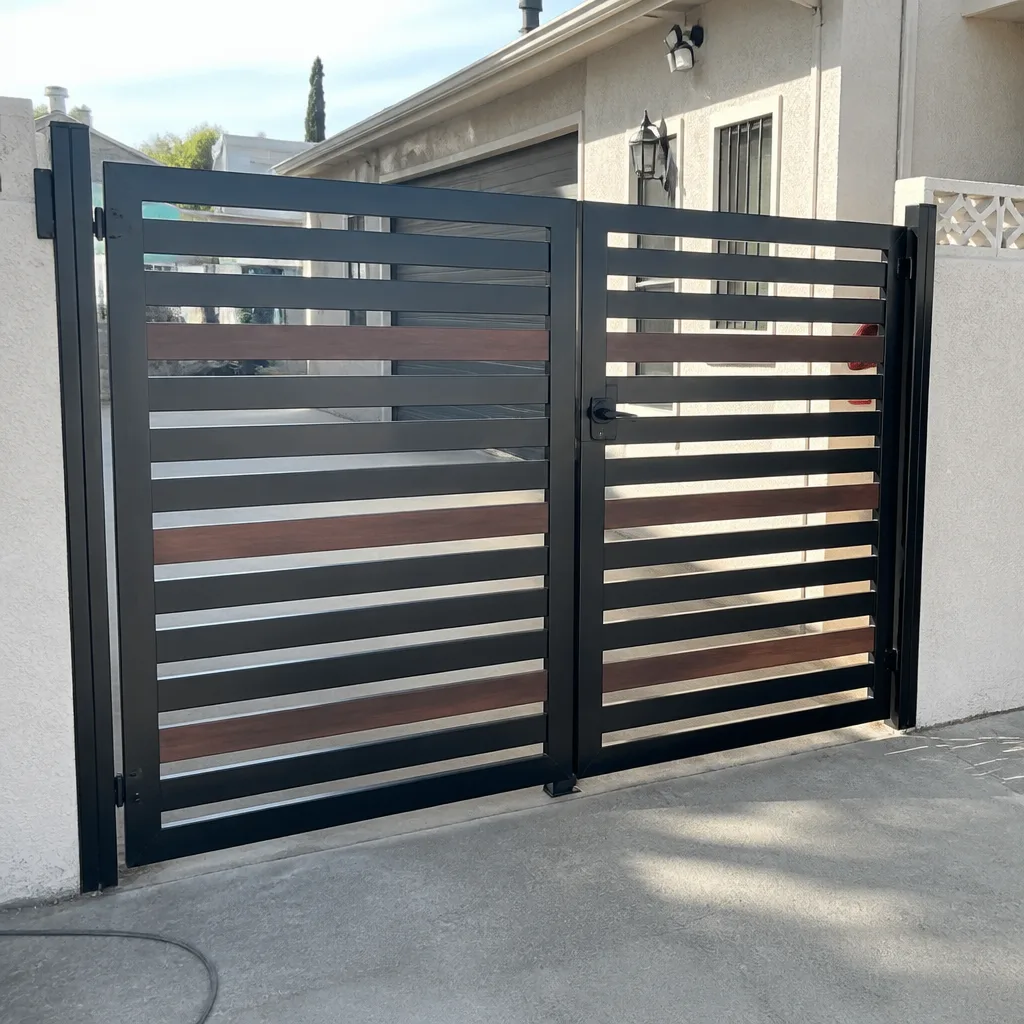
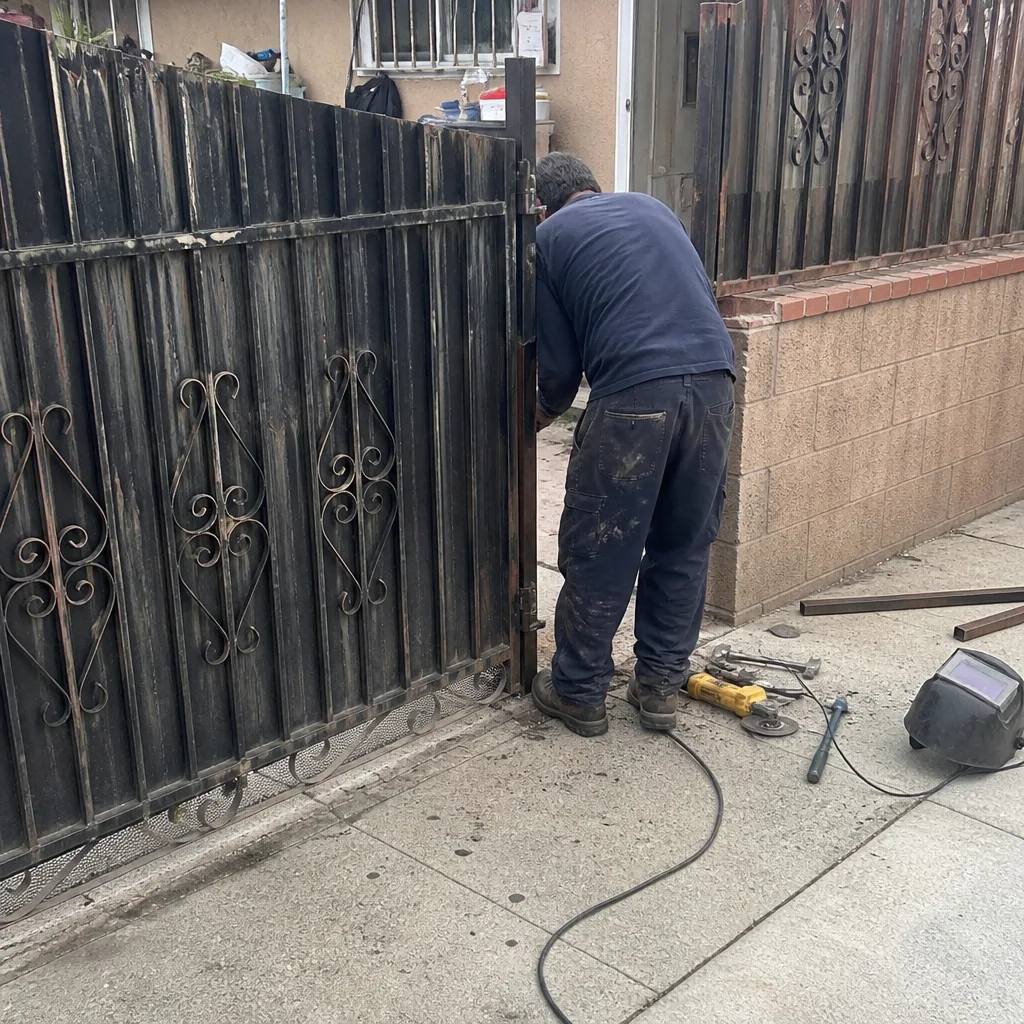
See the difference
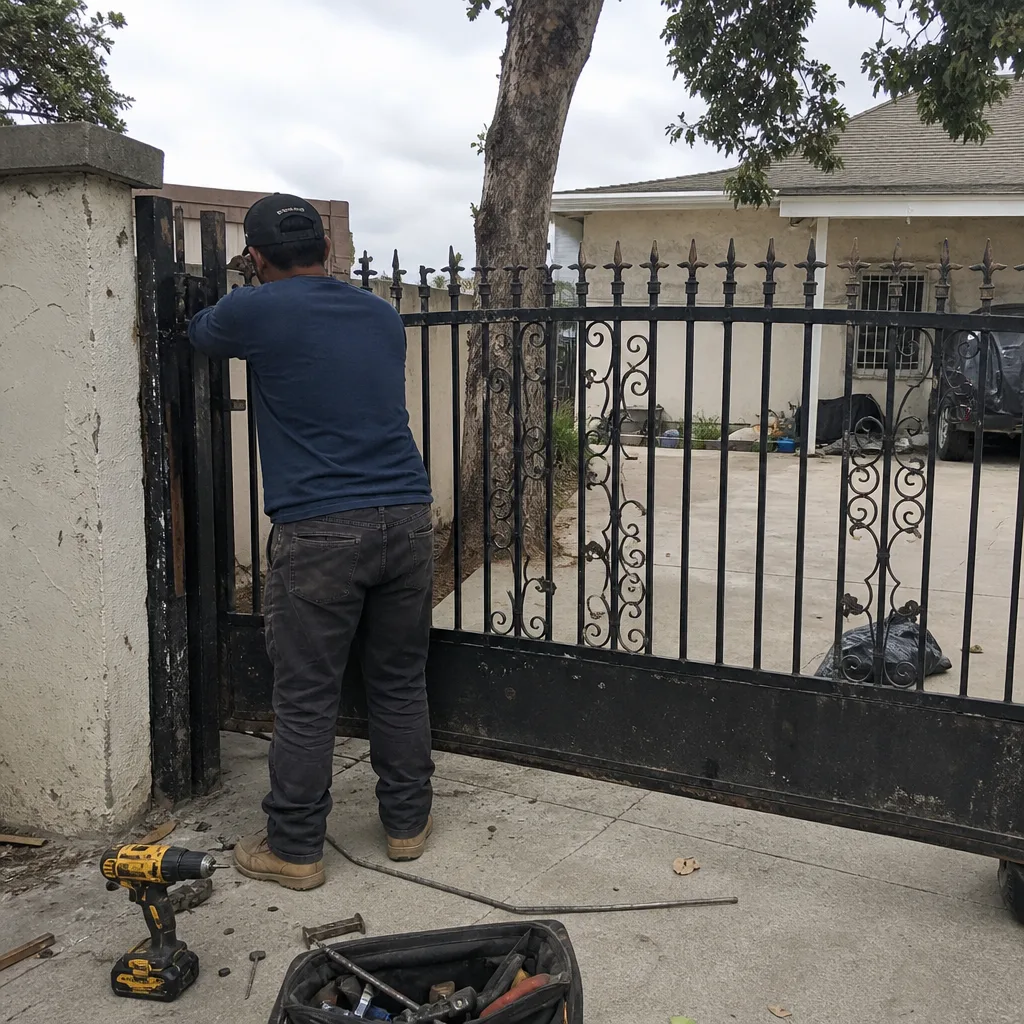 Before
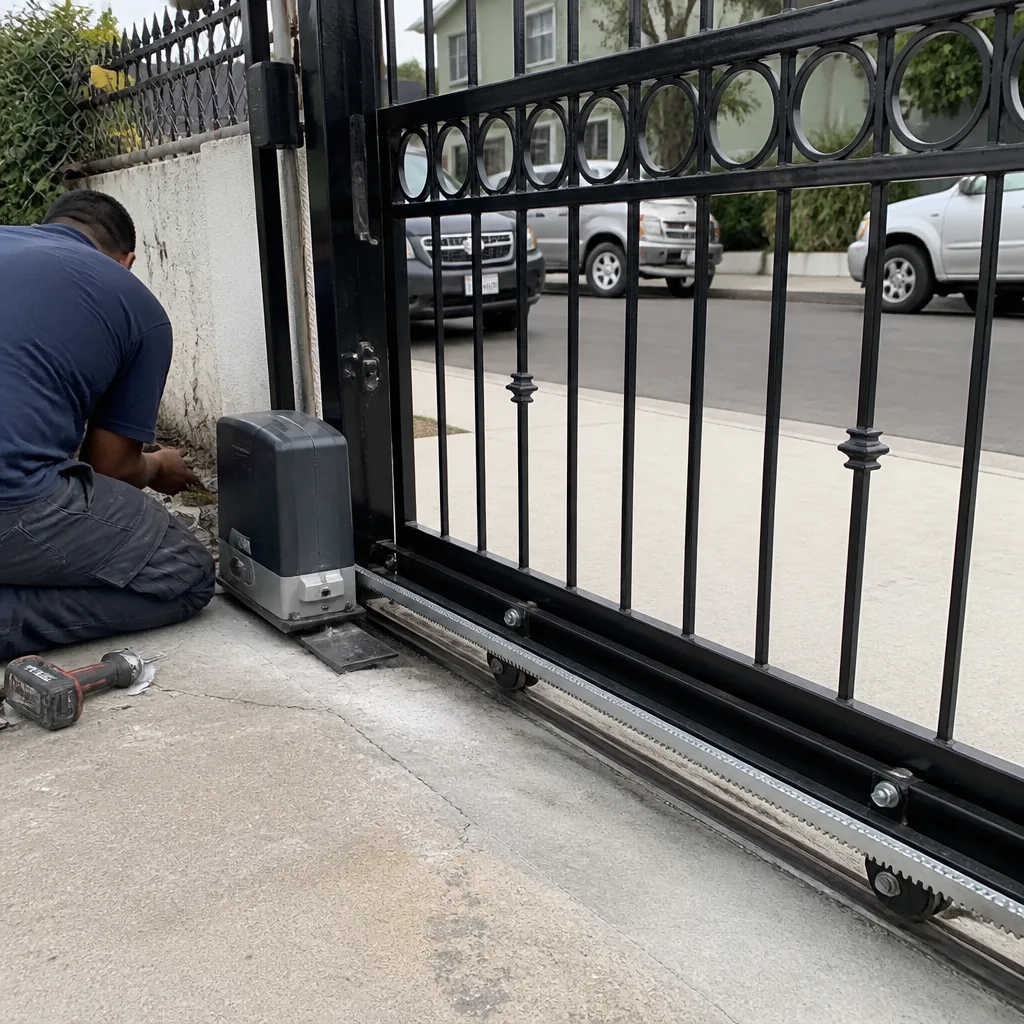 After
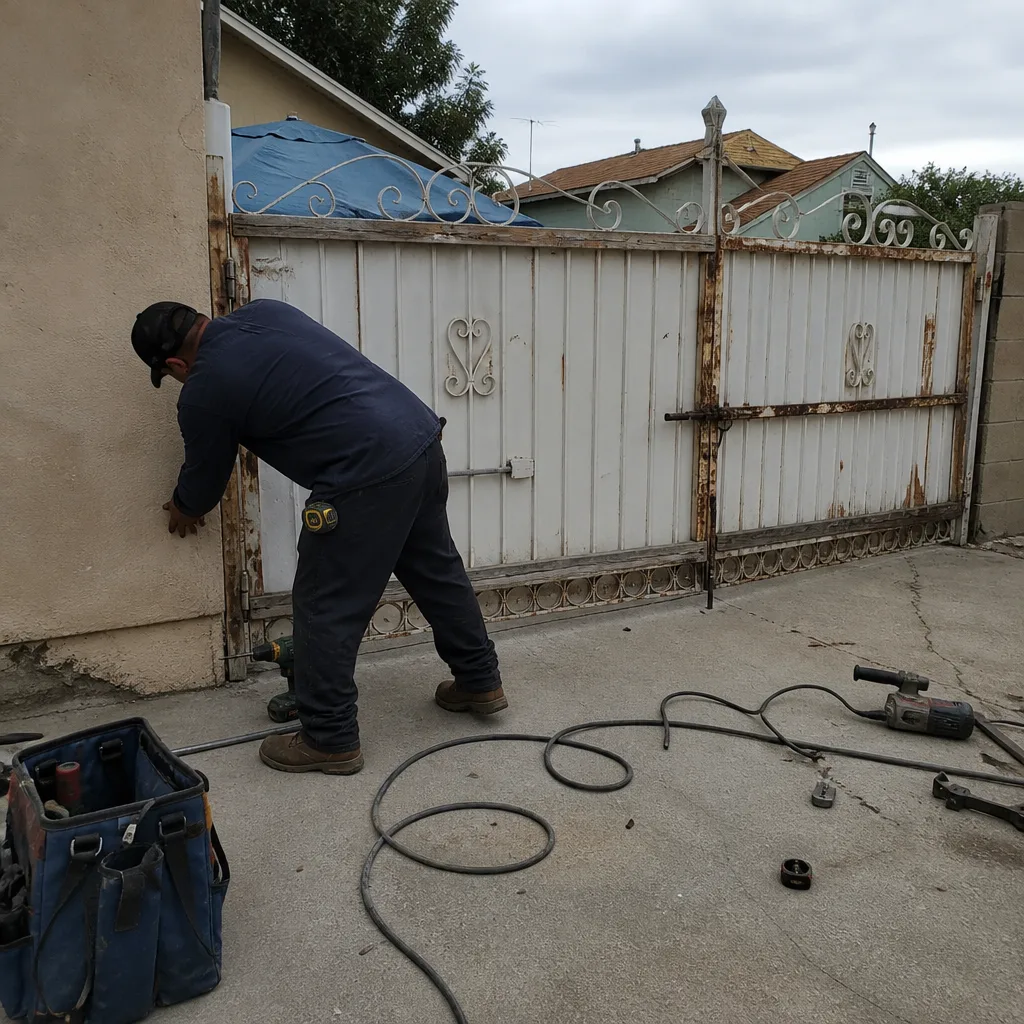 Before
 After
 Before
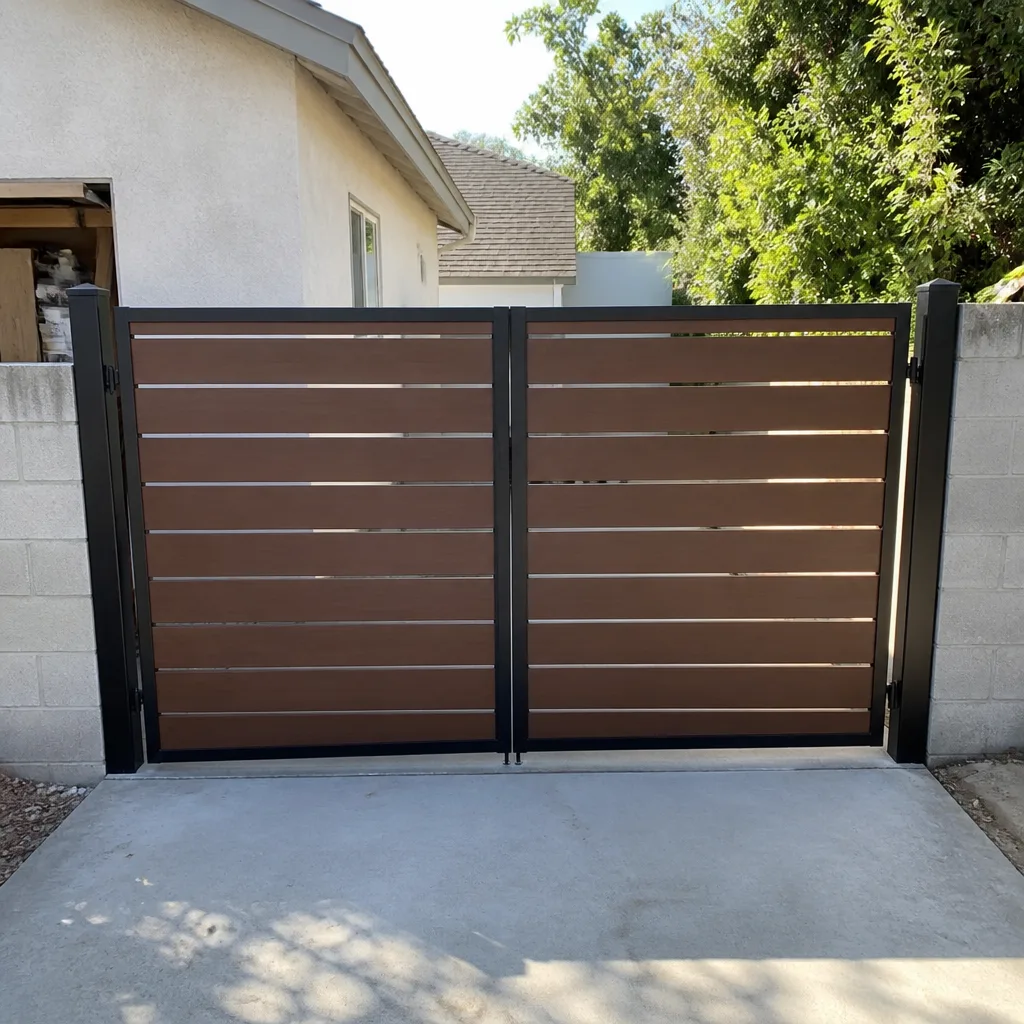 After
When to Call a Professional
Call a gate specialist when your automated gate stops responding, reverses without obstruction, makes grinding noises, or trips its breaker repeatedly. Call one before you list your home if the gate has never been inspected or permitted, because the presale corrections are faster and cheaper when they are not discovered at escrow. Call one when you are replacing an older operator and you want the new system installed to current UL 325 standards. And call one when you are simply not sure whether your gate is compliant, because the consultation is far less expensive than the liability of guessing. Gate Repair East Los Angeles home offers free estimates in East Los Angeles, and we identify the root cause, motor, control board, sensor, or wiring, before recommending a single repair. Call (833) 620-4315.
Frequently Asked Questions
Simple component repairs like replacing hinges, latches, wheels, or lock cylinders do not require a permit. Structural changes, new posts, automation conversions, and electrical circuit changes do require a permit. If you are unsure, call LA County Building and Safety and describe the work before it starts.
The gate is not automatically illegal, but it is unpermitted, which means the county has no record of its safety compliance. You can apply for a retroactive permit through LA County, correct any UL 325 or electrical deficiencies an inspector finds, and bring the gate into legal status without tearing it out.
No. HOAs in East Los Angeles and adjacent communities govern aesthetics and neighborhood standards. The county governs life safety, structural, and electrical compliance. Both approvals are separate, and both are required for any gate work subject to HOA review.
UL 325 is the national safety standard for automatic gate operators. It mandates entrapment protection like monitored photo eyes and contact edges that stop and reverse the gate if a person or object is in its path. A noncompliant gate is a serious injury risk and an insurance liability for the property owner.
Many common electric gate repairs, including control board swaps, sensor replacements, and limit switch adjustments, can be completed in a single visit if the needed parts are on the truck or available locally. For an exact quote and the soonest availability, call (833) 620-4315 and we will let you know before any work is scheduled.
Yes. Converting a manual gate to an automated system introduces electrical wiring and entrapment safety requirements that trigger both an electrical permit and a compliance review under UL 325. The work must pass inspection, and the photo eyes and control system must meet current monitored-sensor standards. For help with a compliant automation conversion, see Gate Repair in East Los Angeles.
The Bottom Line
California’s gate permit requirements are more forgiving than most homeowners assume at the repair level, and more demanding than most assume at the automation and installation level. The governing principle is simple: cosmetic repairs are exempt, structural and electrical work are not, and every automated gate must meet UL 325 entrapment standards regardless of permit status. In East Los Angeles, LA County rules apply everywhere, but HOA communities add a second approval layer that no county permit replaces. Unpermitted gates can be retroactively legalized without demolition, and the paperwork from that process is the property owner’s protection at resale, during insurance claims, and in the event of an injury. When in doubt, ask a gate specialist who works on your specific brand. The consultation is free. The exposure from guessing is not. For more guides & resources, visit our blog.
Written by the team at Gate Repair East Los Angeles, serving East Los Angeles since 2014.